

 English
 Français
 中文简体
中文简体How Does a Tire Pressure Sensor Work? Understanding Direct and Indirect TPMS
Date:2026-10-08
Content
A driver is cruising at 70 mph when the dashboard shows a yellow tire pressure icon. The tire is not visibly flat, and the vehicle still handles normally. What happened is that a MEMS pressure sensor mounted inside the wheel detected that the absolute pressure had dropped from a 2.2 bar baseline to about 1.9 bar. That sensor converted physical pressure into a voltage, digitized it, and transmitted it at 433.92 MHz to the body control module, which then triggered the warning. This scenario repeats millions of times every day on roads worldwide. Knowing how a tire pressure sensor works is not just engineering trivia; it is the foundation for choosing the right component and for designing a reliable automotive pressure monitoring system.
What a Tire Pressure Sensor Actually Measures
A tire pressure sensor measures the absolute air pressure inside the tire cavity, typically over a range of 100 to 400 kPa (1.0 to 4.0 bar), and transmits that reading wirelessly to the vehicle's ECU with a resolution of about 1 kPa.
The sensing element is a MEMS pressure sensor chip: a small silicon die with a thin responsive diaphragm. When tire air pressure pushes against this diaphragm, the membrane bends by a few tenths of a micrometer. That mechanical deflection is the physical event that eventually becomes the number on your dashboard. The sensor is constructed as an absolute pressure device because it needs to compare the internal tire pressure against a sealed vacuum reference. Atmospheric pressure changes with altitude and weather, so a gauge reference would introduce errors of up to 30 kPa in a single drive.
An absolute pressure sensor is a pressure sensing element in which the diaphragm sits over a sealed vacuum cavity. It measures pressure relative to a zero-pressure reference, so the output is independent of ambient atmospheric pressure.
How the MEMS Chip Converts Pressure into Data
The conversion from mechanical deflection to digital data follows a four-step chain: diaphragm displacement, resistance change across a Wheatstone bridge, analog signal conditioning, and radio frequency transmission.
- Diaphragm deflection: one bar of pressure moves a typical silicon diaphragm by 0.5 to 1 micrometer.
- Wheatstone bridge: piezoresistive elements patterned on the diaphragm change resistance by 1 to 3 percent over the full pressure scale.
- Signal conditioning: an ASIC amplifies the bridge voltage, applies temperature compensation, and processes the result into 10 to 12 bit digital data.
- RF transmission: the processed frame is modulated onto a 433.92 MHz or 315 MHz carrier and broadcast to the receiver unit.
Temperature is the largest variable that corrupts the pressure reading. A sensor calibrated at 20 C would see the air pressure rise by 50 kPa across the range shown above. Without compensation, an uncompensated unit would report a value that is too low by roughly 20 kPa on a winter morning, enough to trigger a false warning.
Key insight: A TPMS sensor's job is not simply to measure pressure; it is to measure pressure with the same accuracy at -40 C and at +80 C.
For a broader look at the technology behind these devices, see this guide to MEMS pressure sensors.
Direct vs Indirect TPMS: How the Two Approaches Differ
Direct TPMS uses a physical pressure sensor in each wheel. Indirect TPMS uses the vehicle's existing ABS wheel speed sensors to estimate pressure. Only direct TPMS returns a real pressure value.
| Pressure reading | Actual, in bar | Estimated, not directly measured |
| Accuracy | 0.1 bar typical | 0.3 bar or worse |
| Hardware | One MEMS sensor per wheel | No additional sensor |
| Cost | Higher | Lower |
| Battery | 5 to 10 years | Not required |
Most modern vehicles use direct TPMS because it provides an accurate reading for each tire, which is critical for detecting slow leaks and preventing uneven tread wear. The same MEMS pressure sensor technology also appears in pressure sensors in modern vehicles beyond TPMS, including oil pressure monitoring and brake systems.
Four Specifications That Dictate Tire Pressure Sensor Selection
Pressure range, accuracy, output signal, and packaging are the four parameters that determine whether a tire pressure sensor will perform reliably in the field.
For a passenger car running at 2.2 to 2.5 bar, the warning threshold is normally set at 25 percent below the manufacturer's recommended pressure. A 0 to 4 bar range covers that application without becoming so wide that it sacrifices sensor resolution.
Accuracy is the next constraint. A 0.3 bar offset could conceal a slow leak or produce a false alarm, which is why the best automotive-grade MEMS pressure sensors reach +/-0.2 percent of full-scale span. On a 4 bar sensor, that is roughly 8 kPa of error allowance.
The output signal is the third decision point. Analog voltage output in the range of 0.5 to 4.5 V is simple and widely used, while digital outputs such as I2C and SPI reduce susceptibility to electromagnetic noise in the vehicle harness. For direct TPMS in a high-vibration route, digital signals are increasingly preferred.
Packaging determines how easily the sensor can be integrated into the tire valve or wheel rim. DIP and SIP packages support PCB mounting, while SOP packages are common when the sensor sits in the valve stem assembly. The device also has to survive vibration levels around 50 g at frequencies up to 1 kHz.
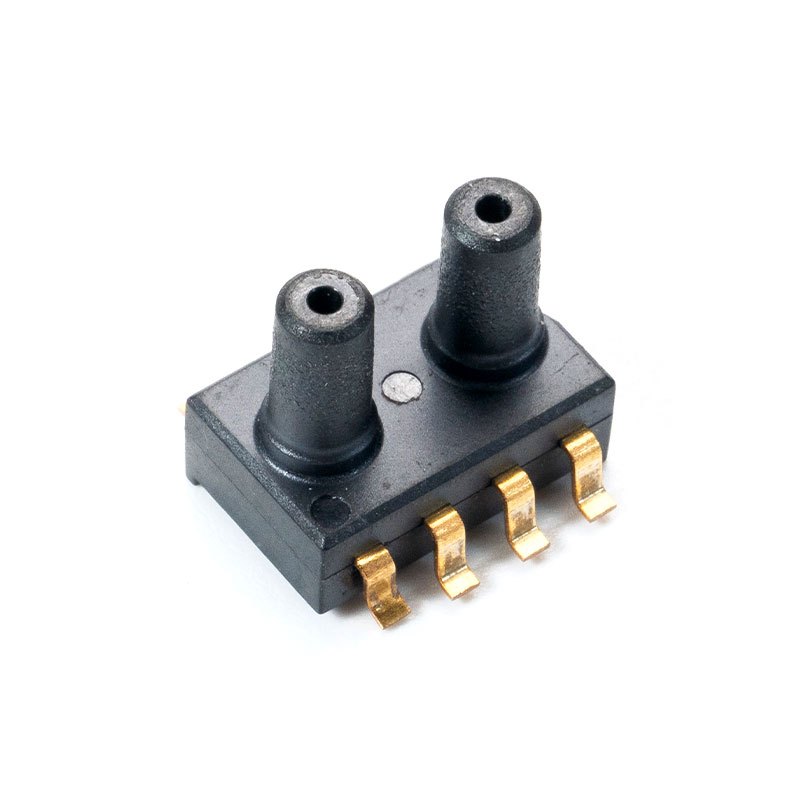
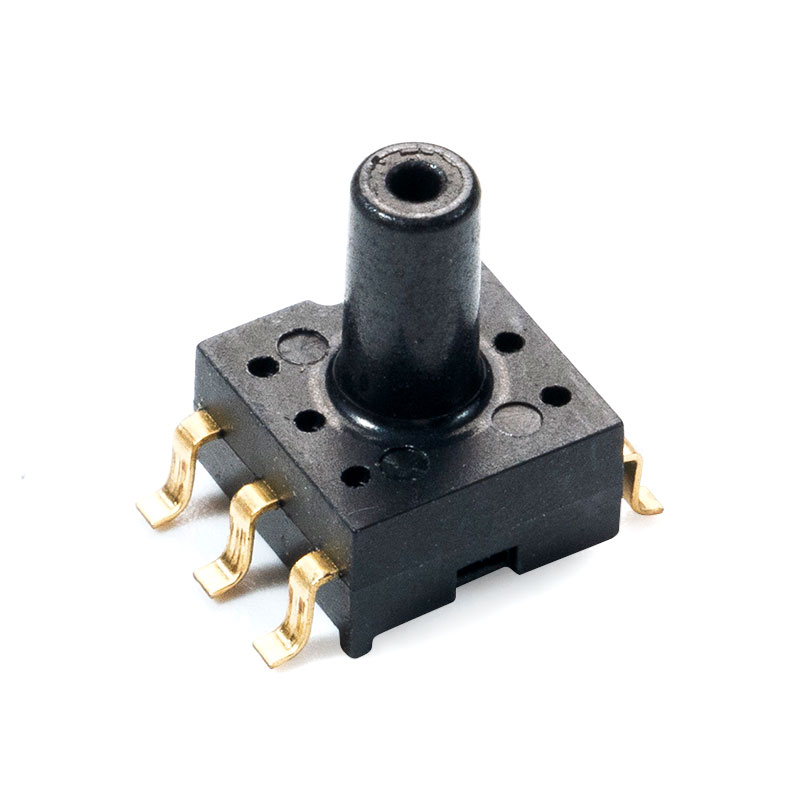 MCP-J10, MCP-J11, and MCP-J12 Absolute Pressure Sensors for Automotive UseThese calibrated absolute pressure sensors offer analog or digital output, measure up to 4 bar, and are temperature-compensated over the full vehicle span, making them suitable for tire pressure monitoring systems.View Product →
MemsTech, based in Wuxi's National High-Tech Industrial Development Zone, builds automotive pressure sensors around these requirements. The MCPJ10, MCPJ11 and MCPJ12 series are absolute pressure sensors with a 0 to 4 bar measuring range, available in both analog and digital output versions, and their calibration process covers the full vehicle temperature span.
For a tire pressure sensor, the difference between a good and a bad component is typically measured in 8 kPa increments at the warning threshold.
Why Temperature Compensation Is Critical in a Tire Pressure Sensor
The temperature inside a tire can swing from -40 C in a winter parking lot to 80 C at highway speed. If the sensor is not compensated, this drift alone can introduce a 15 to 20 kPa error, which is large enough to trigger a false low-pressure warning.
Every unit is factory calibrated at several temperature points. The compensation coefficients are stored in the sensor's internal ASIC during production, so the final output is automatically corrected as the tire heats and cools. MemsTech follows this process inside its 2,000 square meter facility, with internal capabilities covering packaging, welding, temperature compensation and performance calibration. Each device is tested at zero and full scale before shipment to ensure batch consistency.
Without temperature compensation, a tire that is cold on a winter morning would appear 20 kPa low, and the warning light would illuminate even though the tire has no leak.
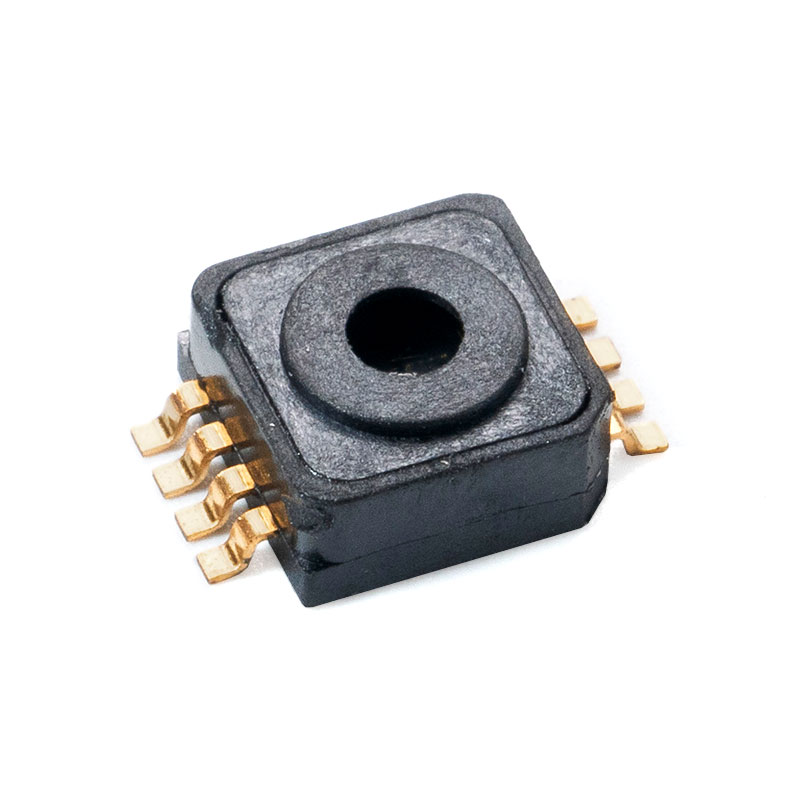
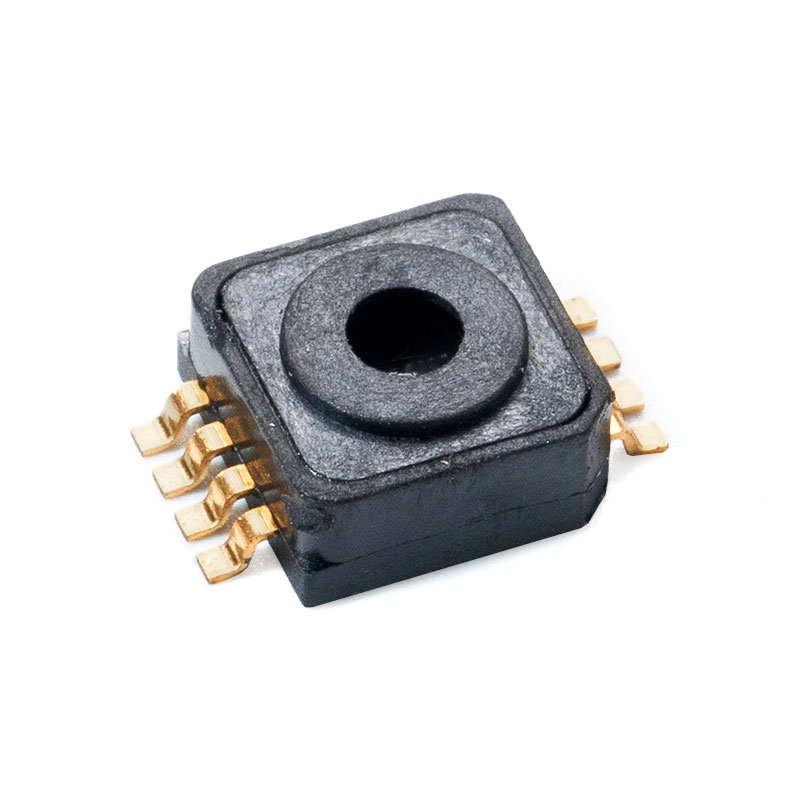 MCP-J20 Series Pressure Sensor for Automotive and Motorcycle Manifold ApplicationsDesigned for intake manifold pressure sensing in cars and motorcycles, this series provides analog output with optional ranges up to 1000 kPa, and is calibrated for accuracy without customer-side calibration.View Product →
The MCPJ20 series extends the same absolute sensing architecture to a broader set of automotive applications, including larger SUV and light truck platforms with higher cold inflation pressures.
FAQ
These are the questions that buyers ask most often when specifying tire pressure sensors for direct TPMS programs.
How long does a tire pressure sensor battery last?
Direct TPMS sensors are sealed units with a battery life of 5 to 10 years. When the battery is depleted, the entire sensor assembly must be replaced, because the battery is not serviceable inside a sealed valve unit.
Can I replace a tire pressure sensor without changing the valve stem?
In most direct TPMS systems, the sensor is integrated with the valve stem. Some aftermarket kits allow a sensor-only replacement, but replacing the whole assembly is the standard service procedure and is more reliable.
What tire pressure should a TPMS sensor read?
For most passenger cars, the recommended cold tire pressure is 2.2 to 2.4 bar (32 to 35 psi). The TPMS warning threshold is typically set at about 25 percent below that recommendation.
Why does my TPMS light come on when the weather is cold?
Cold air contracts. For a 10 C drop in ambient temperature, tire pressure can fall by 7 to 10 kPa. If the tire was already close to the warning threshold, this drop is enough to activate the alert.

Mems Tech has specialized in the field of pressure sensors for over 14 years.
-
 [email protected]
-
 +86-18068257393
-
 50-1125 Zhongbang City Garden, No.2008 Taihu East Avenue, Xinwu District, Wuxi City, Jiangsu Province, China
Copyright © 2025 byWuxi Mems Tech Co., Ltd. Rights Reserved.
Custom MEMS Pressure Sensor Manufacturers
