

 English
 Français
 中文简体
中文简体How Do Tire Pressure Sensors Get Power? TPMS Battery & Harvesting Explained
Date:2026-10-01
Content
- 1 How Do Tire Pressure Sensors Get Power in a Direct TPMS System?
- 2 How Much Power Does a TPMS Sensor Use Each Day?
- 3 How Do Tire Pressure Sensors Get Power from Energy Harvesting?
- 4 How Do Tire Pressure Sensors Get Power in Wired Fleet Systems?
- 5 How Battery Life Shapes MEMS Pressure Sensor Design
- 6 Choosing a MEMS Sensor for a TPMS Module
- 7 FAQ
Most drivers never think about the battery that keeps a tire pressure sensor alive. The module that reports "low tire pressure" sits inside the wheel, spinning at highway speed, and still has enough energy to measure and broadcast every few seconds. The answer to how do tire pressure sensors get power is usually simpler than people expect: a small lithium coin cell, sealed inside the sensor assembly, powers the entire package for five to ten years. If you are designing a TPMS module, that one battery determines the current budget for the sensor, the radio, and the microcontroller.
Direct TPMS is a tire-pressure monitoring system where a sensor and radio transmitter are mounted inside each tire and wirelessly report pressure and temperature to a central receiver on the vehicle.
How Do Tire Pressure Sensors Get Power in a Direct TPMS System?
Every direct TPMS sensor in a passenger car gets its power from a non-rechargeable lithium coin cell.
The battery is part of the sensor module that clips onto the valve stem. It is not serviceable. Once the cell reaches end of life, the whole sensor has to be cut off the wheel and replaced. This is why TPMS sensor service life is almost always defined by battery life, not by the sensing element itself.
The industry has standardised on a few formats. A CR1632 holds roughly 130 mAh, a CR2032 holds around 220 mAh, and a CR2450 pushes closer to 520 mAh. The larger the cell, the longer the sensor can stay in the tire, but the more space it takes up at the valve stem. A 3V coin cell also has to survive vibration, heat from braking, and temperatures down to -40 C, so the electrolyte chemistry matters as much as the capacity.
Common TPMS coin cells and typical capacity
How Much Power Does a TPMS Sensor Use Each Day?
A TPMS sensor sleeps most of its life, and that is exactly what makes a tiny battery last years.
The controller wakes the sensor to measure pressure and temperature, then sends a short RF burst. In sleep mode, the device draws about 1 uA. During a measurement, it jumps to around 2-3 mA for a few milliseconds. During transmission, it can pull 5-10 mA for less than ten milliseconds. The average daily energy consumption is therefore very small.
- Wake up from sleep mode
- Measure pressure and temperature
- Convert the result into a digital frame
- Transmit the RF packet
- Return to sleep
This pattern runs thousands of times a day without the battery ever being charged.
| Operating state | Typical current draw | Duration per cycle |
| Sleep / standby | 0.5-1.5 uA | 99.9% of time |
| Measurement | 1.5-3.0 mA | 5-15 ms |
| RF transmission | 5-10 mA | 3-10 ms |
A 220 mAh cell can support this duty cycle for years, which is why a 3V lithium battery is still the default choice.
How Do Tire Pressure Sensors Get Power from Energy Harvesting?
Energy harvesting TPMS sensors are real products, but they have not replaced batteries in mass-market passenger cars.
Piezoelectric elements capture vibration from the tire, electromagnetic coils harvest rotational energy, and some prototypes use RF power beamed from the vehicle. These approaches remove the battery from the equation and promise maintenance-free sensors. But they add cost, size, and complexity. For a car that will be scrapped in ten years, a $1 coin cell still makes more sense than a $20 harvester.
- Piezoelectric vibration harvesting
- Electromagnetic rotational energy harvesting
- Radio-frequency power beaming
Key engineering trade-off: a piezoelectric harvester must produce a stable supply voltage across a range of vibration frequencies and tire temperatures, which is harder to guarantee at -40 C than a simple coin cell.
How Do Tire Pressure Sensors Get Power in Wired Fleet Systems?
Commercial vehicles and industrial equipment use wired TPMS modules that draw power straight from the chassis battery.
Truck, bus, and trailer systems route 12V or 24V supply lines to each sensor. This eliminates battery replacement and enables continuous monitoring. The trade-off is more wiring, more connectors, and a greater risk of cable damage. Many fleet managers accept this because the sensors are installed once and never touched again. These systems are also a useful reminder of how pressure sensors power modern vehicles in a broader electrical architecture.
Hardwired modules often use a different sensing topology, because there is no power constraint from a coin cell. The sensor can run continuously and the receiver can poll it multiple times per second.
How Battery Life Shapes MEMS Pressure Sensor Design
The battery constraint determines the electrical budget for the whole TPMS module, including the MEMS pressure sensor chip.
When a product designer selects a MEMS pressure sensor for a battery-powered TPMS, the questions are direct: what is the supply voltage, how much current does the bridge consume, and does the sensor support a sleep mode? MemsTech - Wuxi Mems Tech Co., Ltd., the MEMS pressure sensor manufacturer, addresses this by designing automotive-grade sensors for low-power operation and stable output across the temperature ranges found in tires.
Supply voltage and current are the key specifications
Most TPMS modules use a 3V rail from the coin cell, so the sensor must work from about 2.1V to 3.6V. The sensing element should draw only a few hundreds of microamps in active mode, and a fraction of a microamp in standby. A sensor that draws 1 mA more than expected will cut battery life by years.
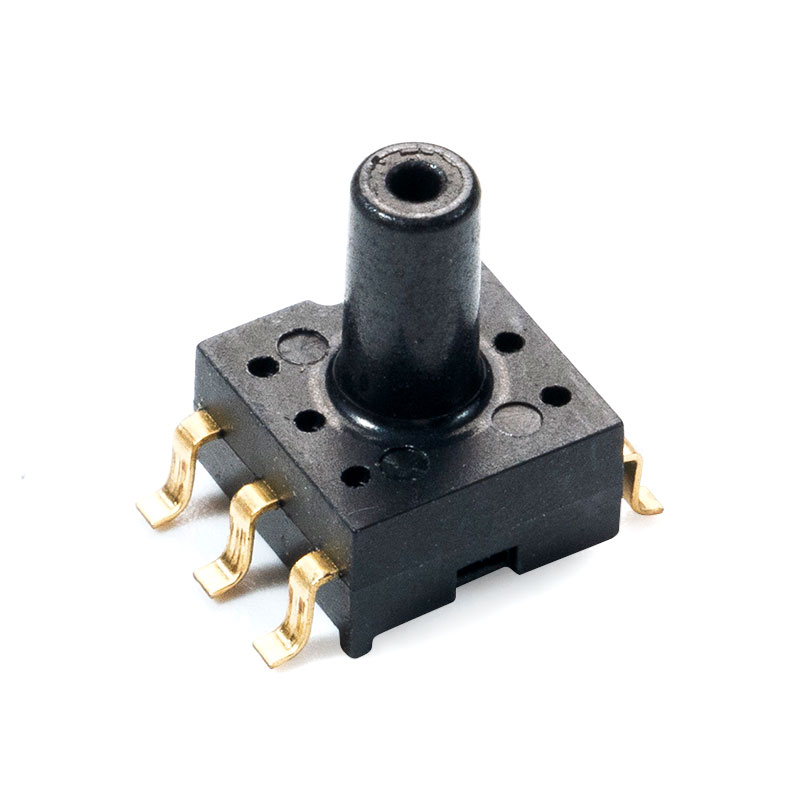 MCPJ10, MCPJ11, and MCPJ12 Absolute Pressure Sensors for AutomotiveThese calibrated absolute pressure sensors offer analog or digital output, operate from 2.1V to 3.6V, and suit TPMS battery constraints. Their low power consumption helps extend coin cell life.View Product →
The MCPJ10, MCPJ11, and MCPJ12 series are absolute-pressure sensors built for automotive environments, with supply voltage ratings that match the 3V battery stack used in most TPMS modules.
Wuxi Mems Tech Co., Ltd. also runs 2,000 square metres of standardised production space and reports an annual output of 60 million units, with every sensor passing zero/full-scale calibration, temperature drift testing, and long-term stability checks before shipment.
Choosing a MEMS Sensor for a TPMS Module
Selecting a sensor for a tire pressure module comes down to three specifications: pressure range, supply voltage, and package size.
Tire pressure sensors typically measure absolute pressure between 100 kPa and 450 kPa. The sensing element is referenced to a vacuum inside its sealed package, which is why absolute-pressure sensors are the standard choice for TPMS. Digital output is common because it reduces the load on the microcontroller and avoids additional ADC noise. Package size matters because the sensor lives in a very small space at the valve stem. The MemsTech MCPJ20 series is designed to meet these requirements.
| Feature | MCPJ10 / 11 / 12 | MCPJ20 / 20A / 20B / 20C |
| Pressure type | Absolute | Absolute |
| Output signal | Analog / digital | Analog |
| Application | Passenger car TPMS | Passenger car TPMS |
| Supply voltage | 2.1-3.6 V | 2.1-3.6 V |
The best choice depends on whether the module needs a digital interface and how much calibration effort the customer wants to take on. MCPJ10, MCPJ11, and MCPJ12 offer a digital output option, while the MCPJ20 family stays analogue for simpler signal chains. For more background, read the comprehensive guide to MEMS pressure sensor technology.
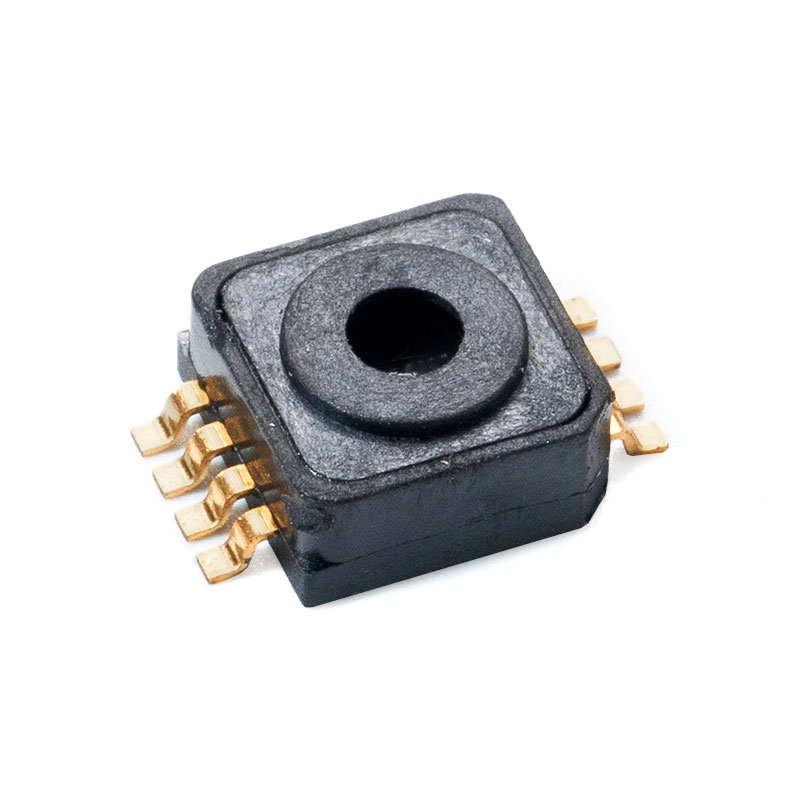 MCPJ20 Series Analog Pressure Sensors for Automotive Manifold UseThe MCPJ20 family provides calibrated analog output for intake manifold pressure measurement, with customizable range and low power. It fits automotive modules needing simple signal chains.View Product →
FAQ
How long does a tire pressure sensor battery last?
A typical direct TPMS sensor uses a 3V lithium coin cell and lasts between 5 and 7 years in normal use. Cold climates and frequent short trips can shorten that life because the sensor wakes up more often.
Can you replace the battery in a TPMS sensor?
No. Consumer TPMS sensors are sealed units. The battery is moulded inside the module, so the entire sensor is replaced when the cell dies.
Do tire pressure sensors need a battery if the vehicle is hardwired?
Wired fleet systems do not use batteries. They draw power from the vehicle's electrical system, which allows continuous monitoring without battery replacement.
Why is a MEMS pressure sensor used in TPMS?
A MEMS pressure sensor is small, accurate, and draws very little current, making it the only practical choice for a battery-powered module that has to fit inside a tire valve.
If you are designing a TPMS module and need a sensor that operates reliably from a small coin cell, the MCPJ20A, MCPJ20B, and MCPJ20C variants cover different output ranges for the same 3V supply rail.
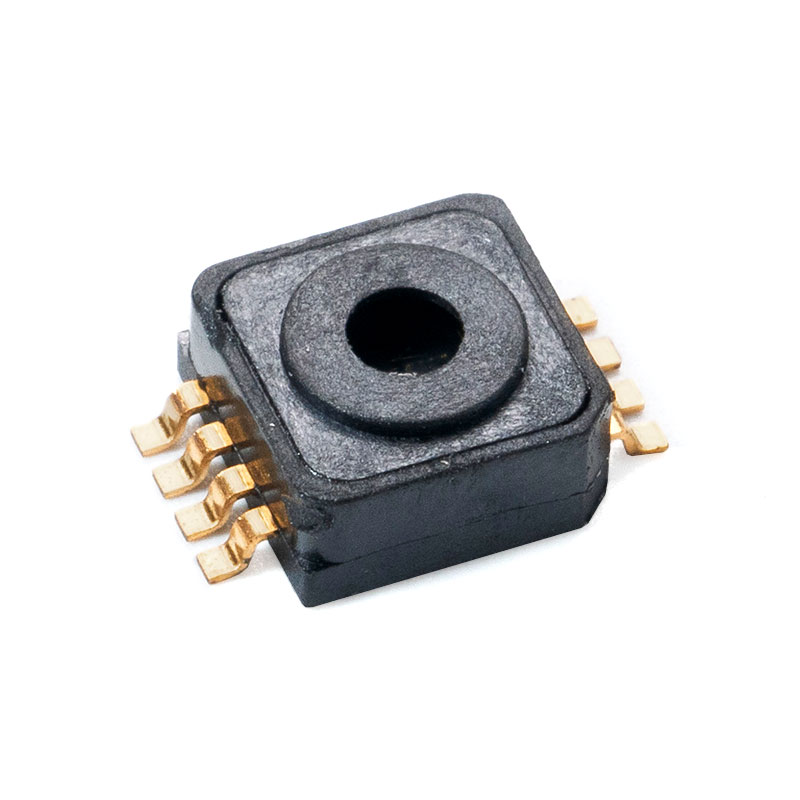 MCPJ20A, J20B, and J20C Pressure Sensors for 3V ApplicationsThese variants cover different pressure ranges (10-1000kPa or 10-400kPa) on a 3V supply, offering flexibility for TPMS modules. Their precision and compact package support reliable coin-cell operation.View Product →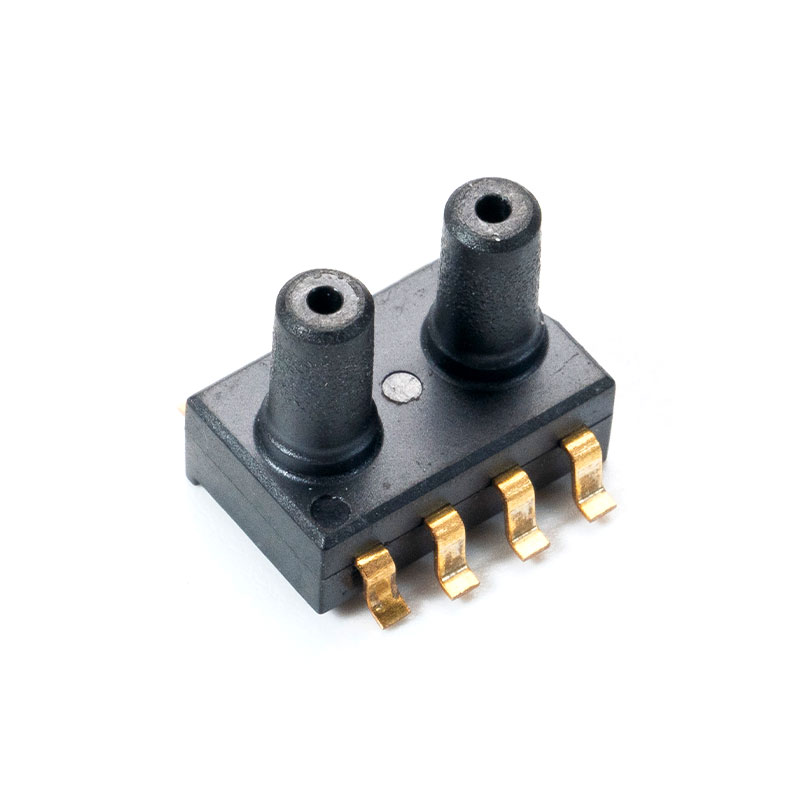

Mems Tech has specialized in the field of pressure sensors for over 14 years.
-
 [email protected]
-
 +86-18068257393
-
 50-1125 Zhongbang City Garden, No.2008 Taihu East Avenue, Xinwu District, Wuxi City, Jiangsu Province, China
Copyright © 2025 byWuxi Mems Tech Co., Ltd. Rights Reserved.
Custom MEMS Pressure Sensor Manufacturers
