

 English
 Français
 中文简体
中文简体Pressure sensor for drones Manufacturers
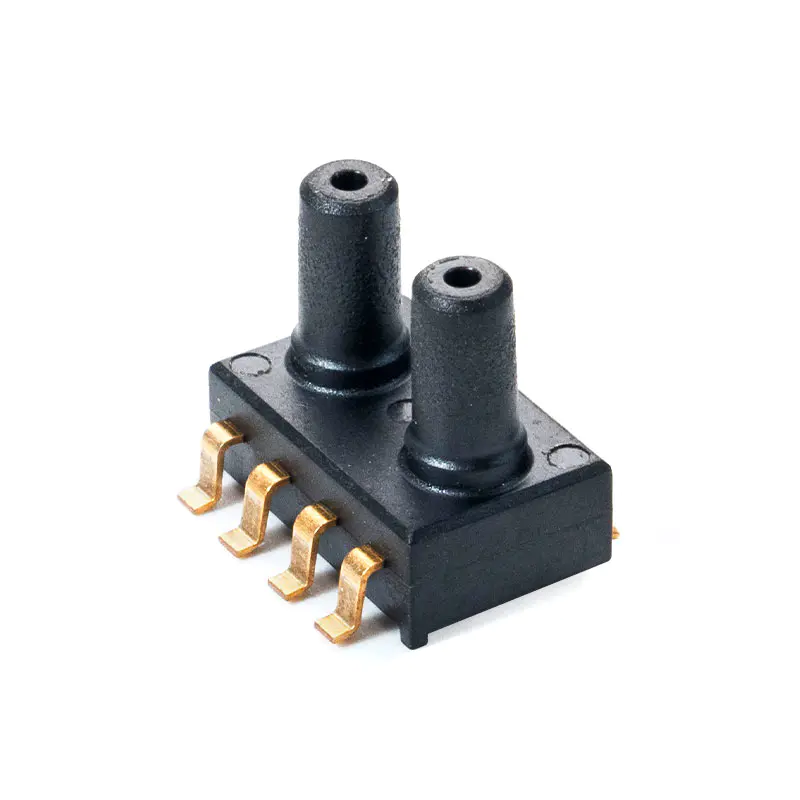
Pressure sensors for drones are high-performance sensing devices designed for key applications such as aircraft pneumatic pressure monitoring and fuel tank pressure management. Such sensors need to maintain stable operation under extreme temperatures, severe vibrations, and complex environmental conditions to ensure flight safety and system reliability. Core features include high-precision signal output, shock and vibration resistance, and wide temperature range adaptability (such as -40°C to 125°C or even higher).
Mems
Wuxi Mems Tech Co., Ltd.
Founded in 2011 and located in Wuxi National Hi-tech District—China’s hub for IoT innovation. We are China Pressure sensor for drones Manufacturers and Custom Pressure sensor for drones Exporter, Company. MemsTech is enterprise specializing in the R&D, production, and sales of MEMS pressure sensors.Our sensor products are widely used in medical, automotive, and consumer electronics sectors. With professional development, scientific production management, rigorous packaging and testing, and competitive pricing, we consistently deliver high-performance, cost-effective sensing solutions.
News
-
A driver is cruising at 70 mph when the dashboard shows a yellow tire pressure icon. The tire is not visibly flat, and the vehicle still handles normally. What happened is that a MEMS pressure sensor mounted inside the wheel detected that the absolute pressure had dropped from a 2.2 bar baseline to about 1.9 bar. Tha...
VIEW MORE
-
Most drivers never think about the battery that keeps a tire pressure sensor alive. The module that reports "low tire pressure" sits inside the wheel, spinning at highway speed, and still has enough energy to measure and broadcast every few seconds. The answer to how do tire pressure sensors get power is usually simp...
VIEW MORE
-
At 5,000 feet, a 10 hPa barometric error translates into roughly 84 meters of altitude error. For a fixed-wing UAV flying terrain-following missions, that margin is the difference between a clean pass and a controlled crash. UAV pressure sensors are the instruments that tell the flight controller where the aircraft i...
VIEW MORE
Pressure sensor for drones Industry knowledge
5 Professional Industry Knowledge Titles on Pressure Sensors for Drones
1. Precise Altitude Hold and Autonomous Navigation: Demystifying Core Principles and Selection Guide for Drone Barometers
Detailed Elaboration
This section delves into the conversion relationship between atmospheric pressure and altitude, explaining why MEMS barometers are the key sensor for drones to achieve precise altitude locking, terrain following, and autonomous takeoff and landing.
Key Parameters
- Absolute Accuracy: e.g., ±0.5 hPa (equivalent to approximately ±0.5 meters of altitude error).
- Temperature Compensation Range: e.g., -40°C to +85°C, ensuring stable readings across various flight environments.
- Long-Term Stability: e.g., ±0.1 hPa per year, guaranteeing long-term sensor reliability.
- Noise Level: Low noise level contributes to smoother altitude data during hover.
Connection to Wuxi Mems Tech Co., Ltd.
As a professional MEMS sensor company, Wuxi Mems Tech leverages its precision manufacturing and temperature compensation technology accumulated in the consumer electronics sector to produce cost-effective, high-stability barometer modules suitable for consumer and industrial drones, assisting drone manufacturers in resolving altitude drift issues.
2. Beyond Altitude Hold: Pressure Sensing Technology in Drone Airspeed Monitoring and Motor Health Diagnostics
Detailed Elaboration
This section elaborates on the advanced applications of pressure sensors in drones – serving as the core of pitot-tube systems for measuring airspeed, and conducting early fault diagnosis by monitoring the cooling air pressure of motors.
Key Parameters
- Differential Pressure Range: Used for airspeed measurement, the range can be as low as ±500 Pa, requiring extremely high sensitivity.
- Response Time: Rapid response to pressure changes to reflect airspeed fluctuations in real-time.
- Overpressure Capability: Ability to withstand accidental high-pressure impacts from installation or operational errors.
Connection to Wuxi Mems Tech Co., Ltd.
Wuxi Mems Tech possesses experience in developing highly reliable and sensitive pressure sensors for the automotive and medical fields. This cross-industry technological expertise enables them to offer commercial airspeed monitoring solutions for high-end drones and UAVs, as well as reliable system status monitoring sensors.
3. From Chip to Sky: MEMS Pressure Sensor Design and Challenges of Drone Environmental Adaptability
Detailed Elaboration
This section analyzes the severe challenges posed by the drone flight environment (such as vibration, shock, rapid temperature changes, electromagnetic interference) to pressure sensor performance, and explains how advanced MEMS design, packaging, and compensation technologies address these challenges.
Key Parameters
- EMC/EMI Immunity: Ensures signal integrity is not compromised during the operation of powerful Electronic Speed Controllers (ESCs) and motors.
- Mechanical Vibration and Shock Tolerance: e.g., capable of withstanding 20g vibration or 2000g mechanical shock.
- Media Compatibility: Isolation and protection technology for the sensor chip from the external environment (air).
Connection to Wuxi Mems Tech Co., Ltd.
Located in Wuxi National Hi-tech District, a hub for China's IoT industry, Wuxi Mems Tech's "scientific production management" and "rigorous packaging and testing" processes are crucial here. Through advanced packaging technology and comprehensive testing, the company ensures that every sensor shipped performs stably in the demanding flight environments of drones.
4. Multi-Sensor Fusion: The Role of Barometers in Drone IMU/GPS Navigation Systems and Data Calibration
Detailed Elaboration
This section explores how barometer data is deeply fused with IMU (Inertial Measurement Unit) accelerometer and gyroscope data, as well as GPS position information. Algorithms like Kalman filtering are used to output smoother, more reliable position and altitude information, compensating for the shortcomings of each individual sensor.
Key Parameters
- Data Output Rate: High output rate (e.g., 100 Hz) to meet the real-time data requirements of fusion algorithms.
- Interface Type: Compatibility and communication speed of digital interfaces like I²C and SPI.
Connection to Wuxi Mems Tech Co., Ltd.
Wuxi Mems Tech not only provides sensor hardware but also has a professional technical support team with a deep understanding of sensor data characteristics. They can assist drone algorithm teams in understanding sensor behavior and optimizing fusion algorithms to maximize the performance of their sensors within the entire system.
5. The Key Behind Long Endurance and High Reliability in Industrial Drones: Pressure Sensor Selection and Application
Detailed Elaboration
Focusing on industrial drone applications such as mapping, agriculture, and power line inspection, this section analyzes their higher requirements for pressure sensors in terms of accuracy, reliability, durability, and adaptability to extreme environments, providing selection recommendations for different missions.
Key Parameters
- Operating Temperature Range: Industrial grade requires a wider range, e.g., -40°C to +125°C.
- Total Error Band: The maximum error across the entire operating temperature and pressure range, considering factors like accuracy, temperature drift, and hysteresis.
- Lifespan and Reliability: Metrics such as MTBF (Mean Time Between Failures).
Connection to Wuxi Mems Tech Co., Ltd.
With its "professional development" capabilities and experience supplying to high-end industries like automotive and medical, Wuxi Mems Tech possesses the strength to develop and manufacture pressure sensors that meet industrial-grade standards. Its "competitive pricing" strategy allows industrial drone manufacturers to access high-performance, highly reliable sensing solutions at optimized costs, thereby enhancing their products' overall market competitiveness.
Overview of Drone Pressure Sensor Applications
| Application Scenario | Core Function | Key Technology/Advantage | Problem Solved |
| Flight Altitude Control & Navigation | Measures atmospheric pressure data, converted via calculation to altitude (altimeter). | Enables precise altitude locking and autonomous takeoff/landing. | Provides stable altitude reference in absence or inaccuracy of GPS signal (e.g., indoors, canyons), preventing drift. |
| Motor/Propeller Status Monitoring | Monitors air pressure from motor cooling systems or airflow generated by propellers. | Real-time diagnosis of system health status. | Early warning for motor overheating, propeller damage, or efficiency loss, preventing flight incidents. |
| Airspeed Management | Measures the drone's relative speed to air (airspeed) via a pitot tube. | Maintains stable flight speed and attitude in windy conditions. | Relying solely on ground speed (GPS speed) can cause stall in headwinds or excessive speed in tailwinds; airspeed management ensures flight efficiency and safety. |
| Fuel/Energy Management | Monitors gas pressure within fuel cells or tanks. | Optimizes energy usage efficiency and accurately estimates endurance. | Ensures stable operation of the energy system, avoiding loss of control due to energy depletion, especially critical for industrial long-endurance drones. |
| Ground Station Weather Monitoring | Functions as part of a portable weather station, providing precise local barometric data. | Real-time meteorological data collection and forecasting. | Provides critical on-site meteorological information for takeoff decisions and route planning, ensuring flight safety. |

Mems Tech has specialized in the field of pressure sensors for over 14 years.
Quick
Product Categories
Contact Us
-
 [email protected]
-
 +86-18068257393
-
 50-1125 Zhongbang City Garden, No.2008 Taihu East Avenue, Xinwu District, Wuxi City, Jiangsu Province, China
Wuxi Mems Tech Co., Ltd.
Copyright © 2025 byWuxi Mems Tech Co., Ltd. Rights Reserved.
Custom Pressure sensor for drones Manufacturers
