

 English
 Français
 中文简体
How does the MCP-H10’s 0℃ to 85℃ operating: Practical Applications, Selection
Date:2026-11-05
Content
- 1 What the 0°C to 85°C Window Actually Guarantees
- 2 Why the Lower Bound Fails First, Not the 85°C Ceiling
- 3 Automotive Qualification Begins at -40°C, Not 0°C
- 4 Industrial Installations Face the Same Cold Without a Grade Label
- 5 Alternatives Inside the Same Supplier Portfolio
- 6 Verification Steps Before You Release the Design
- 7 Direct Answers for Design Reviewers
What the 0°C to 85°C Window Actually Guarantees
An operating temperature range is the ambient band over which a pressure sensor's published offset, span, accuracy and long-term stability figures remain valid. Outside that band the part may still produce an output signal, but no datasheet parameter is guaranteed.
Operating range versus compensated range: the operating range is the ambient window in which the sensor survives and functions; the compensated range is the narrower window in which the internal temperature compensation keeps offset and span inside the stated limits. A part with a 0°C to 85°C operating range has a compensated band no wider than that, and frequently narrower.
Where the MCP-H10 fits comfortably
- Indoor medical analyzers and infusion equipment held between 15°C and 30°C
- Consumer electronics modules inside a sealed enclosure
- HVAC and building controls installed in conditioned spaces
- Bench-top test fixtures and calibration rigs
Where the window becomes a design risk
The risk appears in three specific places, and all three sit below the lower bound rather than above the upper one.
- Cold start: a vehicle parked overnight at -25°C, or an outdoor cabinet in northern China in January, presents sub-zero ambient before any self-heating occurs
- Thermal shock: moving a sensor from a 60°C process line into a -10°C washdown creates a gradient the package reads as mechanical stress
- Condensation and frost: moisture inside the pressure port can freeze and block the impulse line, producing an offset the electronics cannot correct
Why the Lower Bound Fails First, Not the 85°C Ceiling
Cold failures in MEMS pressure sensors are usually mechanical and permanent, while heat excursions below 85°C mostly shift the reading. That asymmetry is why a 0°C floor is a harder stop than an 85°C ceiling.
Below 0°C three mechanisms converge at the same time. The silicone gel or oil fill inside the pressure port stiffens and stops transmitting pressure faithfully. The coefficient of thermal expansion mismatch between the silicon die, the gel and the plastic housing loads the wire bonds and the die attach. Any residual moisture freezes, and the volume change exerts pressure on the diaphragm that the calibration curve never accounted for.
The test standards that buyers write into purchase specifications assume the sensor can be pushed below freezing in the first place:
- IEC 60068-2-1 cold test, run at -40°C for 16 hours in the standard automotive profile
- IEC 60068-2-14 change of temperature, procedures Na and Nb, cycling between extremes
- IEC 60068-2-30 damp heat cyclic, where condensation forms during the cooling phase
A 0°C floor gives up the coldest 40°C of the standard automotive envelope, and that 40°C band is exactly where the permanent mechanical failure modes live.
Automotive Qualification Begins at -40°C, Not 0°C
A sensor whose operating range starts at 0°C does not map onto any AEC-Q100 temperature grade: Grade 4 begins at 0°C but stops at +70°C, and Grades 1 through 3 all begin at -40°C.
| Temperature grade | Ambient range | Typical vehicle position |
| AEC-Q100 Grade 0 | -40°C to +150°C | Underhood and transmission-mounted |
| AEC-Q100 Grade 1 | -40°C to +125°C | Engine bay and chassis |
| AEC-Q100 Grade 2 | -40°C to +105°C | Harsh passenger-compartment |
| AEC-Q100 Grade 3 | -40°C to +85°C | Cabin electronics |
| AEC-Q100 Grade 4 | 0°C to +70°C | Legacy and limited-scope positions |
| MCP-H10 | 0°C to +85°C | No AEC-Q100 grade alignment |
AEC-Q103-002 governs MEMS pressure transducer qualification and inherits the same temperature grading structure. ISO 16750-4 specifies climatic loads for electrical equipment on road vehicles, with cold-start profiles that begin at -40°C for exterior-mounted parts. Taken together, a 0°C floor rules out qualification rather than merely complicating it, and a Tier 1 reviewer will reject the part at design review rather than at validation.
- Cold start at -40°C for exterior positions
- AEC-Q103-002 qualification documentation
- ISO 16750-4 climatic load validation
- Damp heat cycling with condensation
- Misses the cold-start point by 40°C
- Not gradeable under any AEC-Q100 band
- Cold profile falls outside the published window
- Frost risk inside the pressure port below 0°C
Cabin-only applications deserve a separate note. A heated passenger compartment does stay above 0°C in normal use, which keeps the MCP-H10 viable for comfort and HVAC sensing; the disqualification applies to exterior, chassis and underhood positions, and to the unheated soak the vehicle experiences before the heater runs.
Industrial Installations Face the Same Cold Without a Grade Label
Industrial buyers rarely quote an AEC grade, but outdoor process, cold-chain and unheated-plant installations still demand a -20°C to -40°C start, which makes a 0°C limit just as disqualifying as it is in automotive work.
Industrial specifications express the requirement through IEC 60068-2-1 cold testing, IP-rated enclosures and media compatibility rather than through a single letter grade. The installations in question are ordinary:
- Outdoor cabinets and pipeline manifolds that soak at ambient overnight
- Cold-chain monitors running continuously at -25°C
- Unheated plant rooms and rooftop air-handling units
- Washdown bays cycling between 70°C water and near-freezing air
The MCP-H10 remains a sound choice for the conditioned side of those same plants, including instrument panels and laboratory benches. The sensor is not the failure point; the installation position is. Buyers who need the wider envelope can review the supplier's industrial pressure sensor platform before locking a footprint into the mechanical drawing.
Alternatives Inside the Same Supplier Portfolio
Wuxi Mems Tech Co., Ltd., trading as MemsTech, publishes separate automotive and industrial product lines: the MCPJ series is the family listed on the automotive application page, while the MCPh20, MCPh21, DPTR8 and MCP5700DP families appear under industrial duty. Every temperature figure must still be confirmed on the individual datasheet before release.
| Design requirement | Family in the range | Why it is the closer match |
| Underhood or exterior automotive | MCPJ10, MCPJ11, MCPJ12, MCPJ20, MCPJ20A/B/C | Listed on the automotive application line, with absolute, analog and digital variants |
| Industrial differential pressure | MCP5700DP | Differential-pressure class listed on the industrial page |
| Micro-pressure monitoring | DPTR8 | Appears under both the micro-pressure and industrial pages |
| Digital output for drones or industrial | MCPh21 | Digital signal sensor listed for drone and industrial applications |
| Medical and low-pressure analog | MCPh10, MCPh11, MCP5xxx, MCPV5xxx/MCPV7xxx | Low and differential ranges intended for instrument designs |
The automotive path is straightforward for most programs: the MCPJ series covers absolute-pressure sensing across the pressure ranges that engine and chassis measurements typically use.
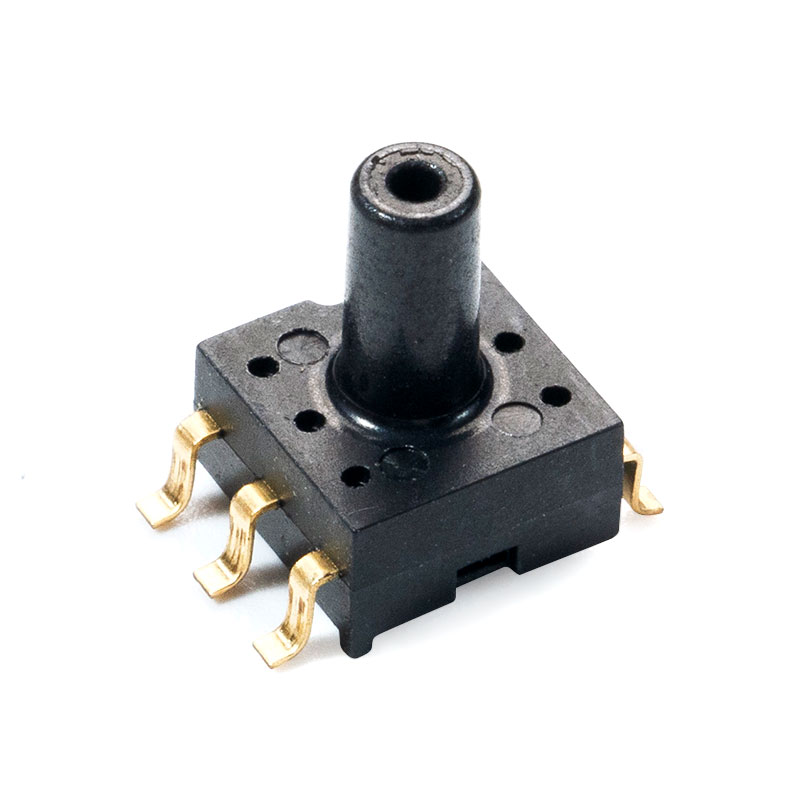 MCP-J10/J11/J12 Automotive Pressure Sensor SeriesCalibrated absolute pressure sensors for automotive and industrial use, with analog or I²C output and 10–1500 kPa ranges.View Product →
Industrial digital designs that need a compensated output can step sideways to the MCPh21, which the supplier lists for both drone and industrial platforms.
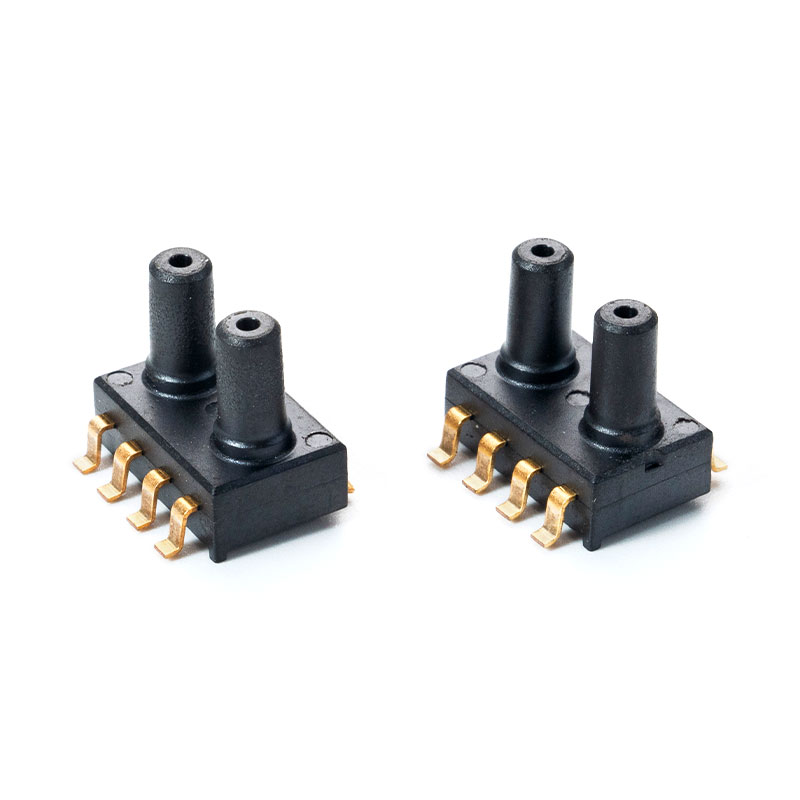 MCP-H21 Industrial Differential Pressure SensorDual-port SOP sensor with compensated 24-bit pressure and temperature output, suited to PCB integration in industrial and medical designs.View Product →
For very small differential ranges where a 0°C floor is the only obstacle, the DPTR8 sits in the micro-pressure class and carries an industrial listing.
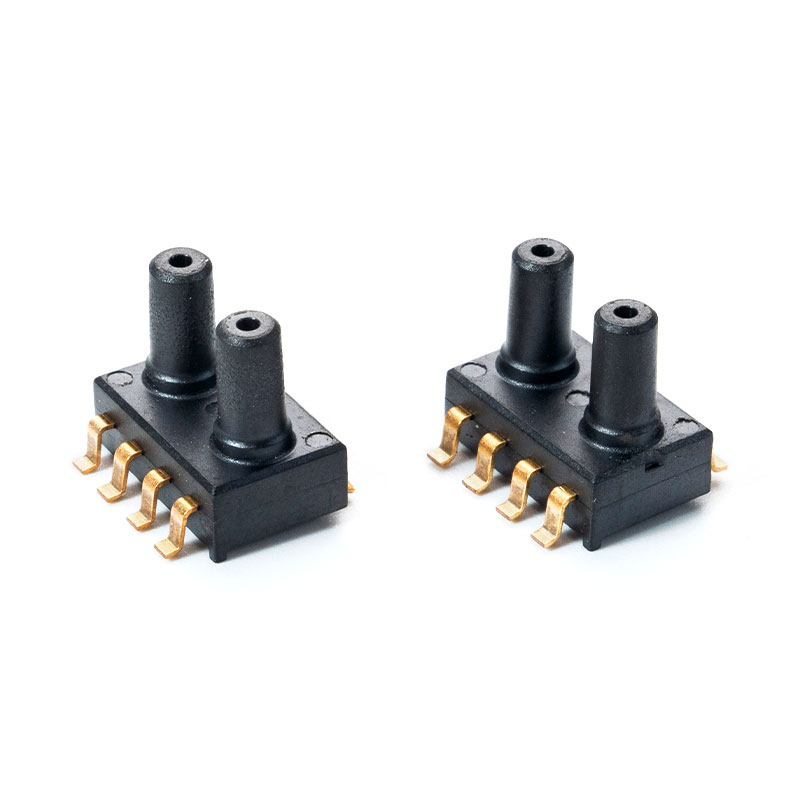 DPT-R8 Micro Differential Pressure TransmitterMicro differential pressure transmitter with 0–10 V and MODBUS RTU outputs, configurable ranges, and offset calibration for low-pressure measurements.View Product →
What stays the same after the switch
Moving within one supplier keeps the procurement and quality chain intact: the same 2,000 m² facility, the same published annual capacity of 60,000,000 units, the same zero and full-scale calibration before shipment, and one purchase order covering both the original and the replacement part. For a program already in validation, that continuity is worth more than a marginal unit price difference.
Verification Steps Before You Release the Design
Four checks separate a safe substitution from a re-spin, and each one takes less than a day if the request is written clearly.
- Request the temperature characterisation curve, not just the headline range, so the offset drift at the coldest installation point is visible before commit.
- Confirm the compensated band separately from the operating band; the two are frequently different numbers.
- Map the coldest and hottest installation ambient and add a 15°C engineering margin on both sides, which is standard practice for outdoor enclosures.
- Match the qualification documents to the market: AEC-Q103-002 for automotive programs, IEC 60068-2-1 and IEC 60068-2-14 for industrial specifications.
Direct Answers for Design Reviewers
Can the MCP-H10 be used in a vehicle at all?
Only in a heated passenger compartment where the surrounding design keeps ambient above 0°C. Any exterior, chassis or underhood position is outside the published range during cold start and cannot be qualified under AEC-Q100 or AEC-Q103-002, because every relevant grade except Grade 4 begins at -40°C.
Is -40°C genuinely necessary for an indoor industrial machine?
Not always. Equipment that never leaves a room held between 10°C and 35°C can use a 0°C to 85°C part without risk. The requirement appears the moment the machine is shipped, stored in an unheated warehouse, or installed in a plant room that drops below freezing, and winter storage in northern China routinely reaches -25°C.
Does a wider temperature range cost more?
Usually yes. A part characterised at three temperature points costs less to test than one characterised at five, and the added screening time shows up in unit price. The offset is typically small against the cost of a field failure at -20°C, which involves a return, a root-cause report and a replacement cycle.
What is the difference between operating range and compensated range?
The operating range is the ambient window in which the sensor survives and functions; the compensated range is the narrower window in which offset and span stay within the published limits. A component with a 0°C to 85°C operating range can have a compensated band no wider than that, so the compensated figure is the one that governs measurement accuracy.
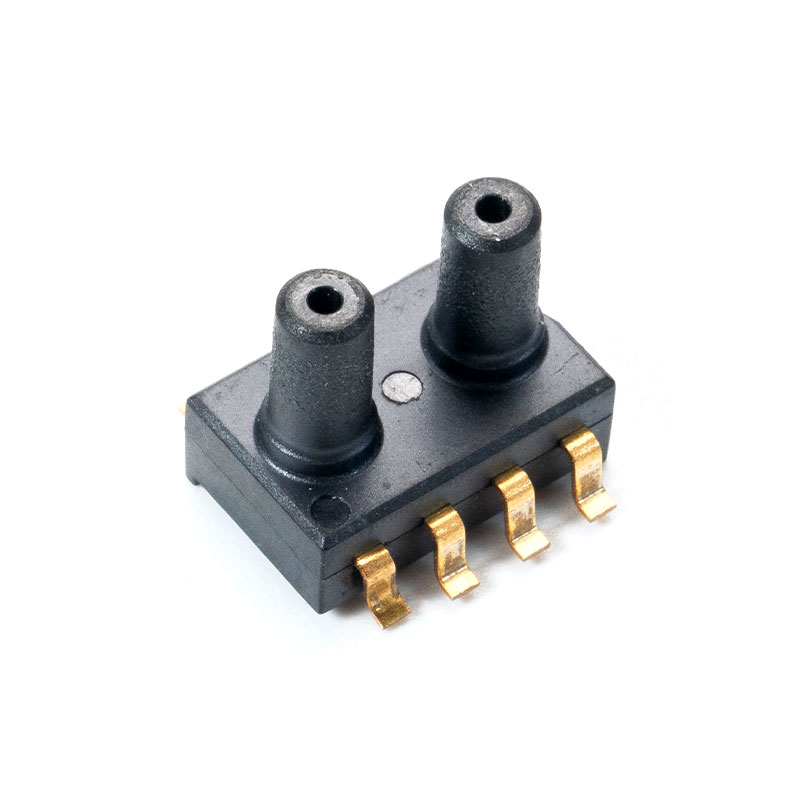

Mems Tech has specialized in the field of pressure sensors for over 14 years.
-
 [email protected]
-
 +86-18068257393
-
 50-1125 Zhongbang City Garden, No.2008 Taihu East Avenue, Xinwu District, Wuxi City, Jiangsu Province, China
Copyright © 2025 byWuxi Mems Tech Co., Ltd. Rights Reserved.
Custom MEMS Pressure Sensor Manufacturers
