

 English
 Français
 中文简体
中文简体Medical MEMS Pressure Sensor Selection: Specs, Drift, and Sourcing Checks
Date:2026-10-16
Content
- 1 What a Medical MEMS Pressure Sensor Actually Measures
- 2 Absolute, Gauge, or Differential: Choose the Reference Before the Range
- 3 The Specs That Decide a Design Review
- 4 Where Medical MEMS Pressure Sensors Are Used in Clinical Equipment
- 5 Temperature Compensation and Drift: The Errors That Surface Later
- 6 Package, Interface, and Sourcing Checks Before You Release a PO
- 7 Medical MEMS Pressure Sensor FAQ
- 7.1 What is the difference between a MEMS pressure sensor and a piezoelectric pressure sensor?
- 7.2 Can a medical MEMS pressure sensor survive autoclave sterilisation?
- 7.3 How do I choose between an analog and a digital medical pressure sensor?
- 7.4 What accuracy can a medical MEMS pressure sensor realistically deliver?
A 40 Pa offset in a ventilator's inspiratory limb is enough to push a spontaneous breath outside its trigger window, and that offset almost never comes from the tubing. It comes from the medical MEMS pressure sensor sitting on the patient-circuit board. Design teams that specify this part quickly tend to spend the next six months chasing zero drift, alarm nuisance complaints, and a calibration routine nobody budgeted for. Every one of those problems is cheap to prevent at the datasheet stage and expensive to fix after tooling.
Pressure sensing is one of the few places in a medical device where a part costing a few dollars decides whether a clinician trusts the number on the screen. The specifications below are the ones that change clinical behaviour.
What a Medical MEMS Pressure Sensor Actually Measures
A medical MEMS pressure sensor converts a pressure difference into a voltage by measuring how far a micromachined silicon diaphragm deflects, then compensates and calibrates that voltage into a defined output.
Two numbers explain why the bare die is never the product. Full-scale deflection is usually under one micrometre, and the raw bridge output is measured in tens of millivolts. The isolation gel, the port geometry, the signal-conditioning ASIC, and the calibration record therefore do as much work as the silicon itself.
Solid-state parts displaced fluid-filled catheters in monitoring lines for a practical reason: a fluid column has compliance and traps air, which damps fast waveforms and forces a flush before every reading. A silicon diaphragm has no column to de-bubble and responds in the kilohertz range. Published reviews of miniature pressure sensors describe devices small enough to measure pressure inside blood vessels with an inner diameter of 200 to 1,000 micrometres, which is the same sensing principle scaled down.
Absolute, Gauge, or Differential: Choose the Reference Before the Range
Get the pressure reference wrong and every later decision is wrong by roughly one atmosphere. Absolute, gauge, and differential parts answer different questions, and a single patient monitor often needs two of the three.
| Type | Reference side | Typical medical role | What to watch |
| Absolute | Sealed vacuum cavity | Invasive blood pressure, altitude on flight controllers | The reference cannot be vented, so barometric changes never cancel out |
| Gauge | Open to ambient air | Non-invasive cuff pressure, gas delivery, wound therapy | Readings shift with weather and with altitude |
| Differential | Two active ports | Ventilator flow, filter clogging, dialysis transmembrane pressure | Port symmetry, common-mode limit, and line-length mismatch |
Differential parts dominate ventilator and flow designs because flow is inferred from the pressure drop across a known restriction. The sensor therefore measures a small difference riding on a large common-mode pressure. A part rated for 10 kPa differential but only 30 kPa common mode will fail in a circuit that presents 60 cm H2O of airway pressure to both ports.
Gauge parts remain the workhorse for cuff-based blood pressure and gas delivery lines, where an ambient reference is acceptable. Absolute parts are required whenever the reference has to travel with the patient, as in an invasive line or a barometric altitude channel. A blood-pressure module built around a gel-isolated gauge element is a common starting point.
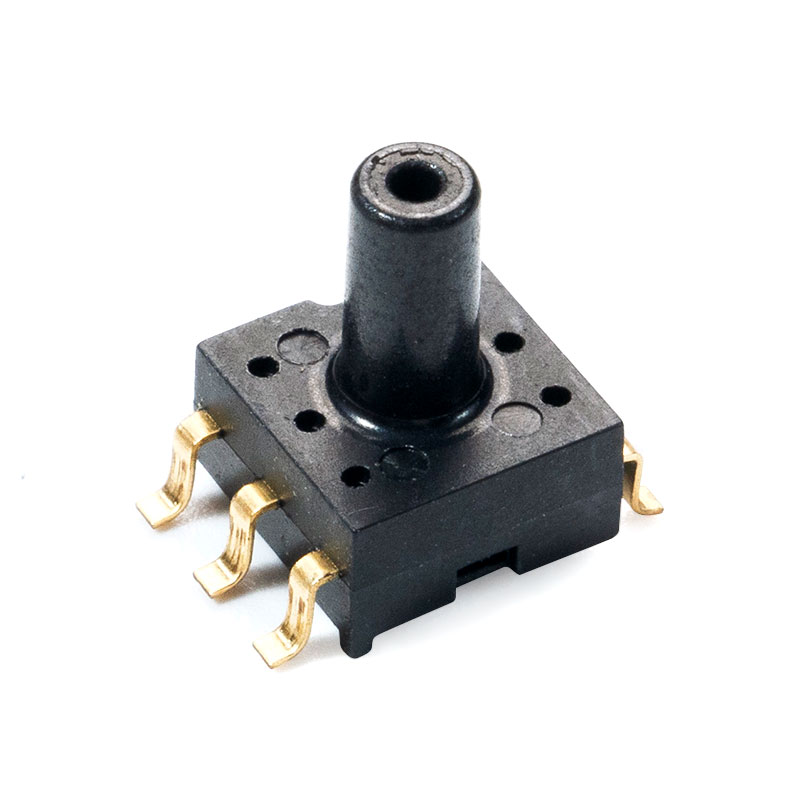 MCP-H10 and MCP-H11 Medical Pressure SensorsMCP-H10 provides analog voltage output; MCP-H11 adds I2C digital pressure and temperature output, covering -100 to 1000 kPa for medical and consumer designs.View Product →
The Specs That Decide a Design Review
Five numbers decide whether a pressure sensor survives a design review: full-scale range, the accuracy basis, thermal drift, long-term stability, and burst pressure. Everything else is packaging detail.
- Full-scale range and headroom. Place the normal operating point between 25% and 75% of full scale. A 10 kPa part used at 9.5 kPa has no room left for alarm limits, and its error budget is spent before temperature is even considered.
- The accuracy basis. Percent of full scale, percent of reading, and percent of span are three different numbers. Convert all of them into pascals at the pressure you actually have to resolve.
- Thermal drift. Ask for offset and span drift across the clinical band, not the commercial band. A part compensated from 0 to 70 C says very little about behaviour at 41 C skin contact.
- Long-term stability. Drift per year, expressed as a percentage of full scale, decides whether the device needs recalibration during its service life or can be sealed and forgotten.
- Burst and proof pressure. A line occlusion or a slammed valve can exceed full scale by a large factor. The sensor has to survive it and return to specification, not merely avoid cracking.
Where Medical MEMS Pressure Sensors Are Used in Clinical Equipment
Five device families account for most medical demand for these parts, and each one stresses a different specification.
| Application | Pressure type | Typical full scale | Design note |
| Mechanical ventilation | Differential | 5 to 10 kPa | Fast response and low noise; port symmetry matters more than span accuracy |
| Invasive blood pressure | Absolute | Up to 40 kPa | Gel isolation and a sterile barrier; zero stability across a multi-hour procedure |
| Hemodialysis transmembrane pressure | Differential | Up to 67 kPa | Dialysate compatibility and resistance to cleaning agents |
| Intraocular pressure | Gauge or absolute | Up to 8 kPa | Miniaturisation and biocompatibility dominate the choice |
| Intracranial pressure | Absolute | Up to 3 kPa | Zero drift over days matters more than span accuracy |
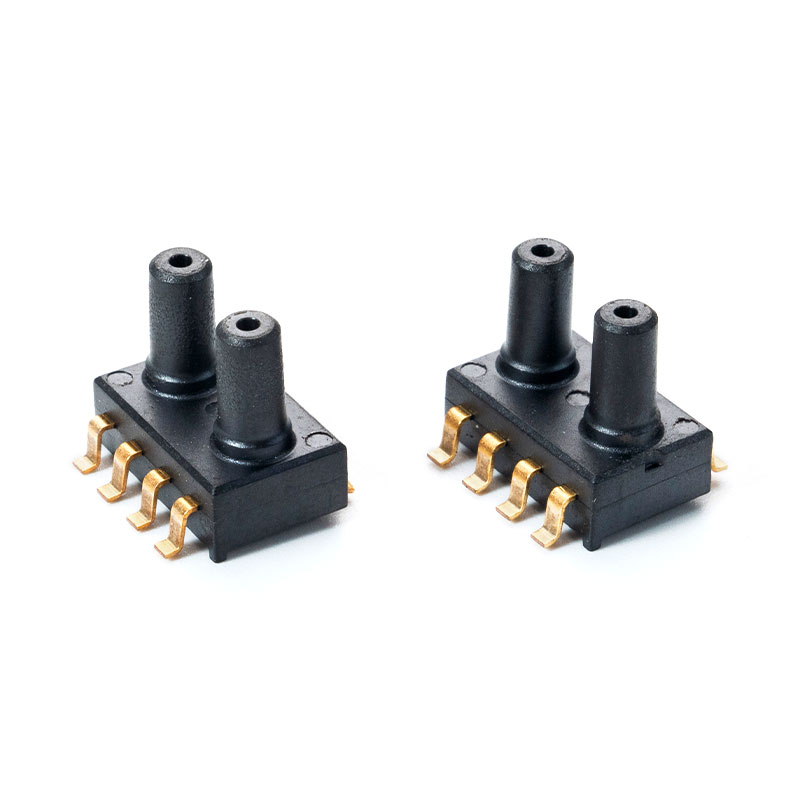 MCP-H20 and MCP-H21 Differential Pressure SensorsDual-port differential sensors with analog or high-speed I2C output, spanning -100 to 200 kPa for medical, pneumatic, and environmental measurement.View Product →
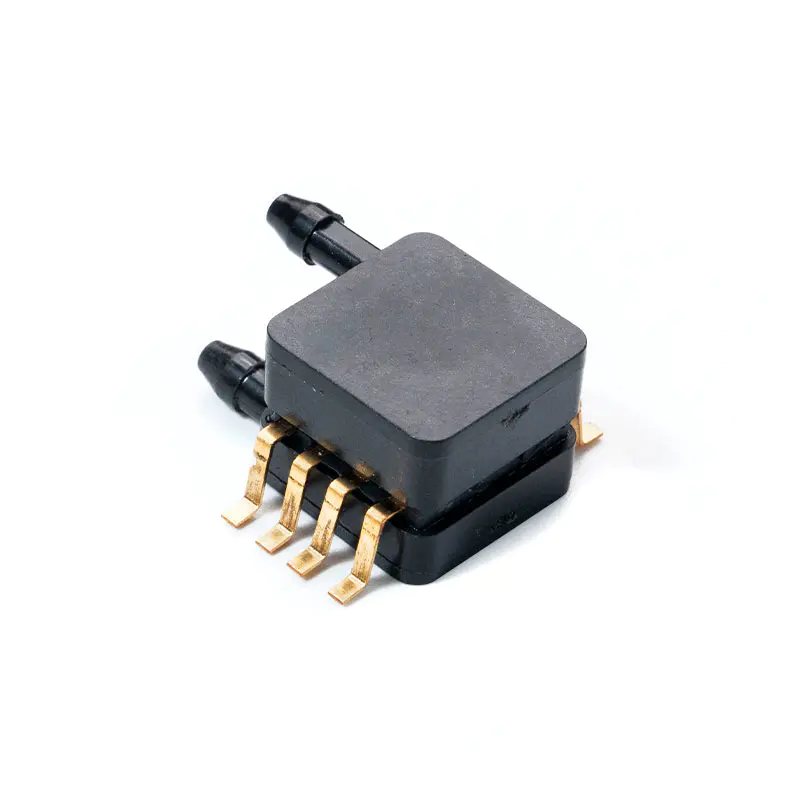
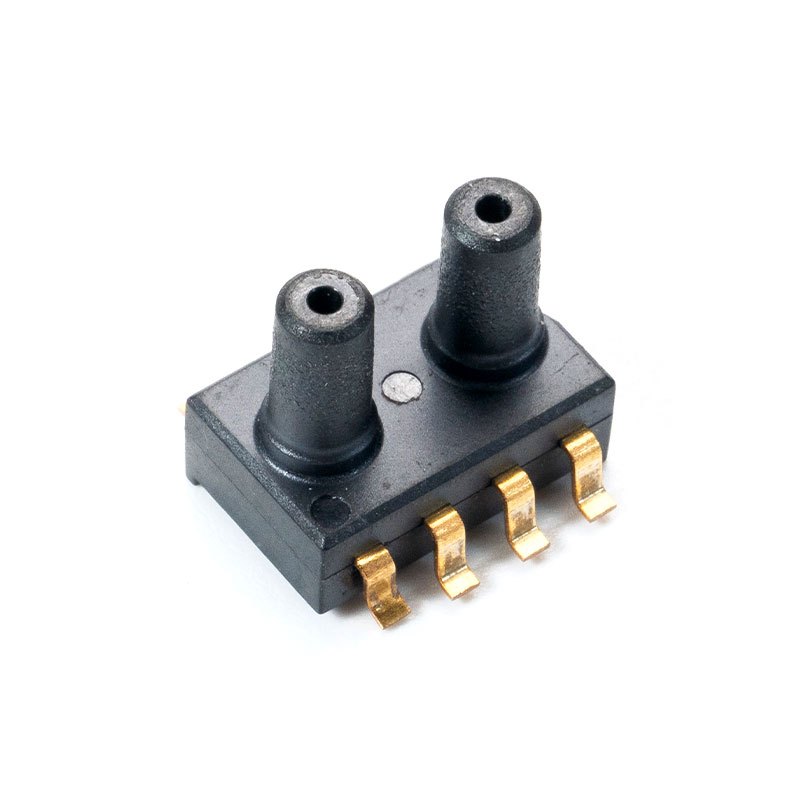
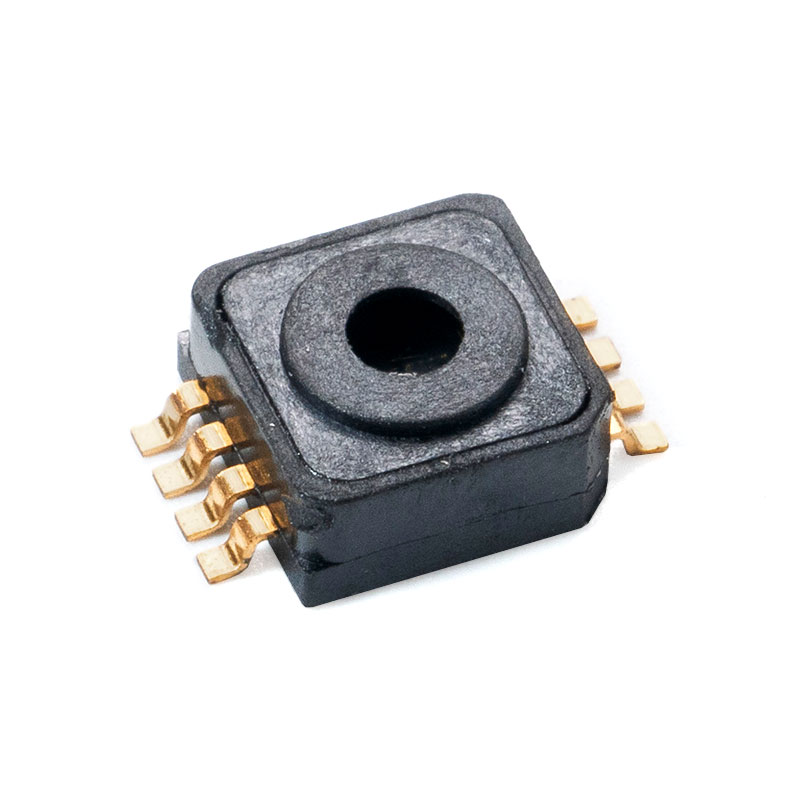
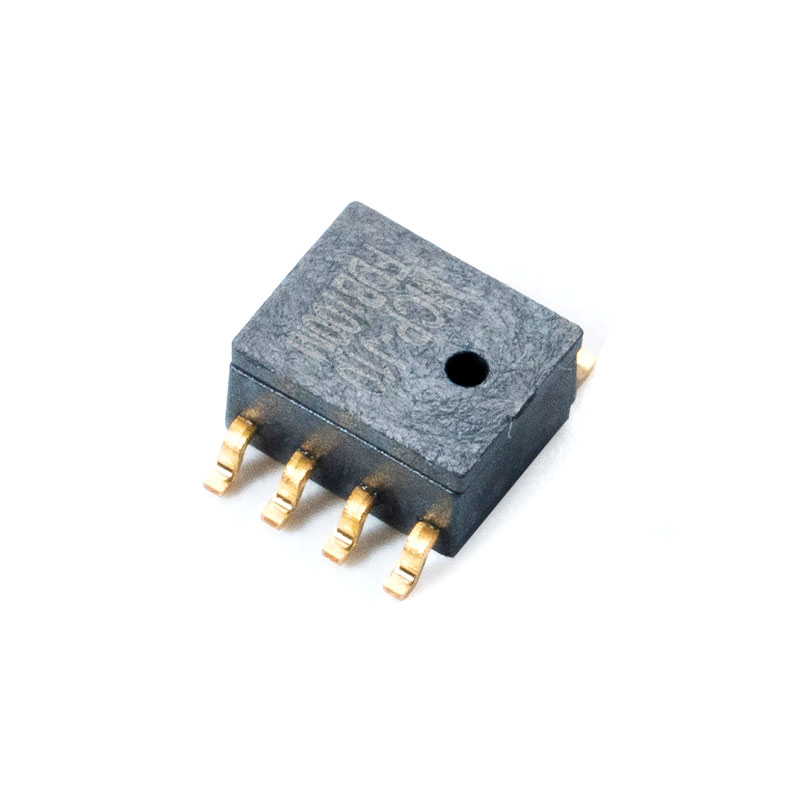
MemsTech (Wuxi Mems Tech Co., Ltd.), a sensor manufacturer based in the Wuxi National High-Tech District, organises its medical range across exactly these families and publishes a medical pressure sensor portfolio that maps each model to a pressure type, output signal, measurement range, and package. That mapping matters more than a single headline accuracy figure, because a ventilator engineer and a dialysis engineer are optimising different constraints out of the same catalogue.
Temperature Compensation and Drift: The Errors That Surface Later
Temperature is the largest single error source in a medical pressure sensor, and it is the specification quoted least consistently. Two parts with identical room-temperature accuracy can differ by a factor of five at 45 C.
Offset and span drift over a stated band, most often 0 to 70 C, expressed as a percentage of full scale with a typical and a maximum column.
Warm-up drift in the first 20 minutes, hysteresis after repeated sterilisation cycles, and zero shift after autoclave exposure at 121 C or 134 C.
Three habits close most of that gap before it reaches a patient:
- Test the exact part number in the exact housing at both ends of the clinical temperature band, not the commercial band.
- Log zero offset at power-on and again after 20 minutes of continuous operation, then compare the two across ten units from three lots.
- Add a zeroing valve and a firmware offset routine, so the system corrects what the sensor cannot guarantee.
Manufacturers with in-house calibration absorb part of this work. Every unit shipped by MemsTech is zero and full-scale calibrated, thermally cycled, and evaluated for long-term stability before release, with best-case accuracy quoted at 0.2% FSS. The remaining verification still belongs in your own test plan, because only you know the media, the mounting stress, and the sterilisation cycle the part will actually see.
Package, Interface, and Sourcing Checks Before You Release a PO
Two choices close out the specification: how the sensor mounts and how the signal leaves the board. Both are decided by production volume and by who owns the calibration step.
| Decision | Option A | Option B | Where each fits |
| Mounting | Surface mount (SOP) | Through-hole (DIP/SIP) | SOP for automated high-volume assembly; DIP/SIP for modules, low volume, and field-replaceable designs |
| Output | Analog, millivolt or ratiometric | Digital, factory-calibrated | Analog when your system already owns the ADC and calibration; digital when it does not |
| Media contact | Gel-isolated port | Bare diaphragm behind an external barrier | Gel for general use; external barrier for aggressive media or repeated sterilisation |
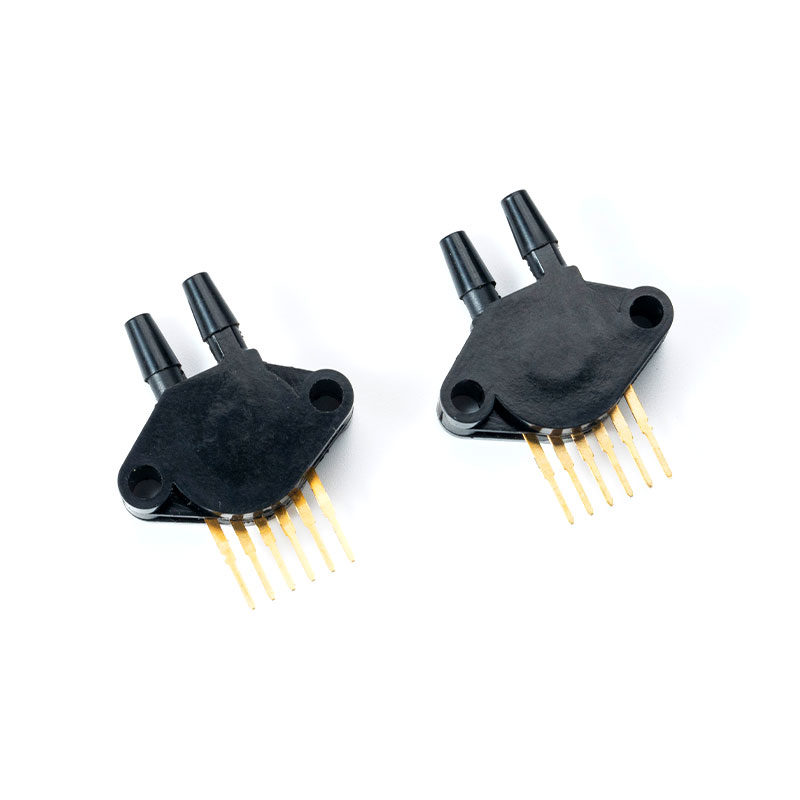 MCP5XXXDP Integrated Pressure Sensors for Medical and Industrial UseAbsolute, gauge, and differential pressure options with analog output, covering 0 to 700 kPa for microcontroller-based medical and industrial designs.View Product →
- Request the calibration record for the exact lot, including zero and full-scale values, not just a generic accuracy statement.
- Confirm the temperature compensation range in writing and ask what happens outside it.
- Verify media compatibility with the sterilisation method you actually use, including cycle count.
- Ask for the lot-to-lot zero distribution, because that number drives whether your assembly line needs a trim step.
- Confirm capacity and lead time against your ramp, and check whether the part is built in-house or resold.
For a wider technical background on die construction, packaging, and application trade-offs, the site's MEMS pressure sensor technology overview covers how these devices are built and where their practical limits sit.
Medical MEMS Pressure Sensor FAQ
What is the difference between a MEMS pressure sensor and a piezoelectric pressure sensor?
A MEMS pressure sensor measures diaphragm deflection and can read static pressure, so it holds a valid value for airway pressure, cuff pressure, or dialysis transmembrane pressure. Piezoelectric elements respond to changing force and cannot hold a static reading, which makes them suitable for dynamic events rather than continuous monitoring.
Can a medical MEMS pressure sensor survive autoclave sterilisation?
It depends on the package, not the die. Gel-isolated ports in sealed housings are commonly used with sterilisation, but the zero offset has to be re-verified after repeated cycles at 121 C or 134 C, because thermal hysteresis accumulates in the gel and the adhesive layers.
How do I choose between an analog and a digital medical pressure sensor?
Choose analog if your board already has a low-noise ADC and you own the calibration and temperature-compensation routine. Choose a factory-calibrated digital part if you would rather buy the accuracy than build it, which is usually the faster route for small teams and lower volumes.
What accuracy can a medical MEMS pressure sensor realistically deliver?
Best-case linearity and accuracy reach 0.2% of full scale on well-matched medical platforms, but the number that matters in the field is the sum of accuracy, thermal drift, and long-term stability across the clinical temperature band. That total is typically two to five times the headline figure.
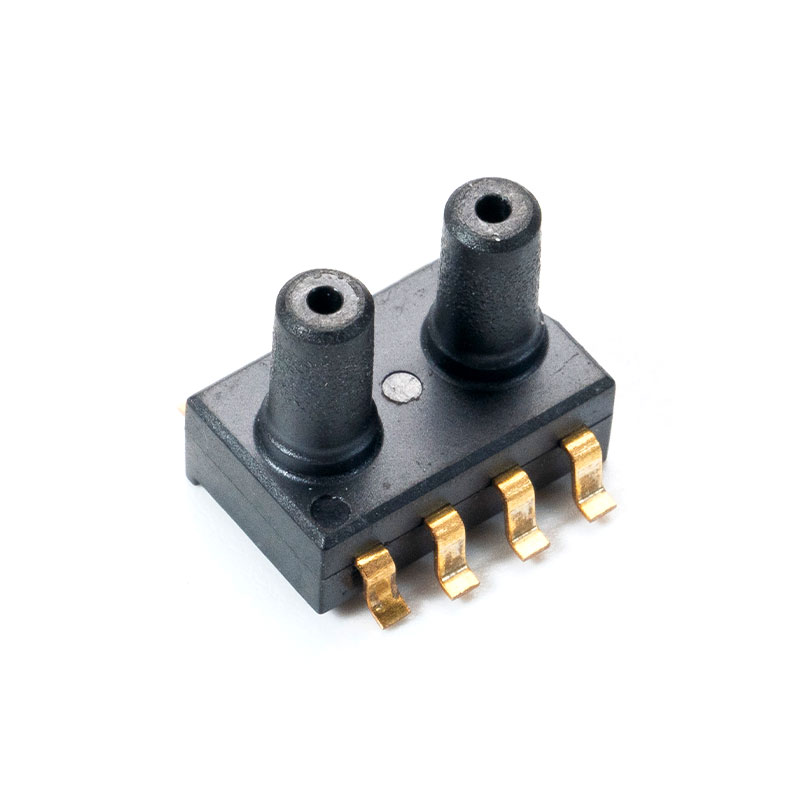

Mems Tech has specialized in the field of pressure sensors for over 14 years.
-
 [email protected]
-
 +86-18068257393
-
 50-1125 Zhongbang City Garden, No.2008 Taihu East Avenue, Xinwu District, Wuxi City, Jiangsu Province, China
Copyright © 2025 byWuxi Mems Tech Co., Ltd. Rights Reserved.
Custom MEMS Pressure Sensor Manufacturers
