

 English
 Français
 中文简体
中文简体Choosing an MCP Pressure Sensor for Medical Equipment: A Practical Guide
Date:2026-08-24
Content
- 1 What MCP Pressure Sensors Cover in Medical Measurement
- 2 Why Medical Applications Push Pressure Sensors Harder
- 3 Four Decision Axes for an MCP Medical Pressure Sensor
- 4 MCP Series for Medical: What Is Available
- 5 Supplier-Level Checks That Reduce Regulatory Risk
- 6 From Prototype to Production: A Practical Workflow
A ventilator that misreads airway pressure by even a few cmH2O can delay a breathing-mode transition. An infusion pump that fails to detect an occlusion can leave a patient underdosed for hours. In both failures, the component that drives the outcome was chosen months earlier: the pressure sensor on the PCB. When you evaluate an MCP pressure sensor for medical applications, compare repeatability, temperature behavior, and packaging fit before you compare unit price.
MCP is the MEMS pressure sensor family from MemsTech (Wuxi Mems Tech Co., Ltd.), a manufacturer that covers design, fabrication, packaging, temperature compensation, and calibration under one roof. This article explains what the MCP series offers for medical devices, how the four main selection axes work, and which supplier-level evidence you should collect before approving a sensor for a regulated product.
What MCP Pressure Sensors Cover in Medical Measurement
The MCP series is a piezoresistive MEMS pressure sensor line. Each die contains a silicon diaphragm with piezoresistors whose resistance changes with applied pressure, and signal conditioning converts that change into an analog voltage or a digital reading, depending on the version. For medical device designers, this architecture delivers four properties that map directly to product requirements:
- Compact footprint for ventilators, infusion pumps, patient monitors, and portable instruments.
- Low power consumption for battery-powered and handheld devices.
- Repeatable output after calibration when the sensor operates inside its compensated temperature window.
- Manufacturing scale — MemsTech reports an annual capacity of 60,000,000 units and a 2,000 m² standardized facility, which matters when a device moves from pilot to production.
The MCP family is therefore not a single product but a matrix of pressure types, output signals, measurement ranges, and package styles. The selection task is less about "which sensor is best" and more about "which combination fits this device's constraints."
Why Medical Applications Push Pressure Sensors Harder
Medical pressure sensing is not primarily about chasing a higher accuracy number. It is about repeatability across time and temperature. A ventilator measures airway pressure with a differential sensor that must hold its zero offset across hours of continuous operation. An infusion pump uses a gauge sensor to detect a downstream occlusion, which can require resolving a change of only a few cmH2O above the normal operating pressure. A patient monitor measuring invasive blood pressure needs low hysteresis and a stable calibration between clinical checks.
When evaluating an MCP pressure sensor for a medical function, look at three parameters before all others:
- Total error band — the combined effect of offset, span, nonlinearity, hysteresis, and temperature drift over the rated range. MemsTech quotes accuracy up to 0.2% for selected series, and a total error band below ±1% FSS is a reasonable starting target for many non-invasive and low-risk monitoring functions.
- Long-term stability — annual output drift determines how often the final device needs recalibration or service. The published stability specification should match the maintenance plan of the product.
- Media compatibility — the pressure port, gel, and die coating must tolerate the medium they contact, whether that is dry air, oxygen, saline, or a mildly aggressive agent. This is the specification most often discovered late, and late discovery is expensive.
These three parameters, rather than the headline accuracy on the datasheet, create the safety margin or the risk downstream.
Four Decision Axes for an MCP Medical Pressure Sensor
MemsTech organizes its product matrix along four axes, and each maps to a decision to make before sampling.
1. Pressure type: gauge, absolute, or differential
Differential sensors measure the pressure difference between two ports, which makes them the natural choice for ventilator flow resistance and inspiratory/expiratory pressure swing. Gauge sensors reference ambient air and fit infusion pump occlusion detection, wound drainage, and pneumatic actuation circuits. Absolute sensors measure against a sealed vacuum reference and appear where the measurement must not depend on weather-driven changes in ambient pressure, such as in altitude-compensated monitoring.
2. Output signal: analog or digital
Analog versions output a millivolt or amplified voltage that the system ADC samples directly. This gives the firmware team full control over filtering and resolution but assigns the calibration responsibility to the device manufacturer. Digital versions, such as the MCPh21, integrate conditioning and a digital interface inside the sensor, which simplifies the bill of materials and removes analog trimming from the firmware checklist. The tradeoff is higher component cost and, in some closed-loop controls, added response latency.
3. Measurement range
The portfolio is grouped into micro-pressure, low-pressure, and medium-pressure ranges. Ventilator differential pressure often lands in the micro- to low-pressure zone. Infusion pump occlusion detection typically needs a low-pressure gauge sensor with fine resolution. Specifying a range that is too wide reduces resolution near the operating point; too narrow a range risks saturation during transient events such as line priming or a patient cough in a breathing circuit.
4. Packaging: SOP or DIP/SIP
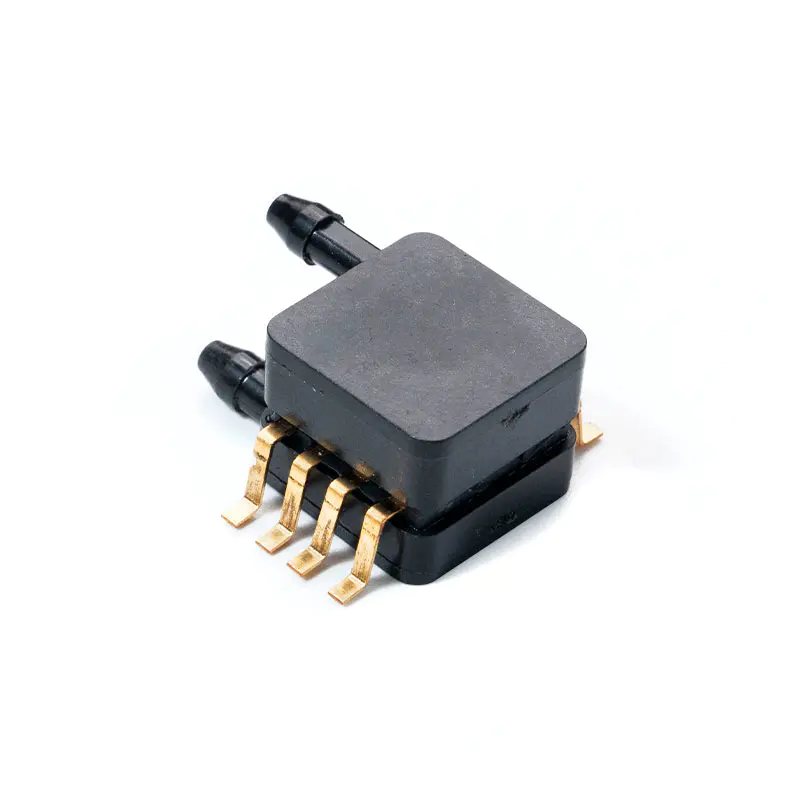
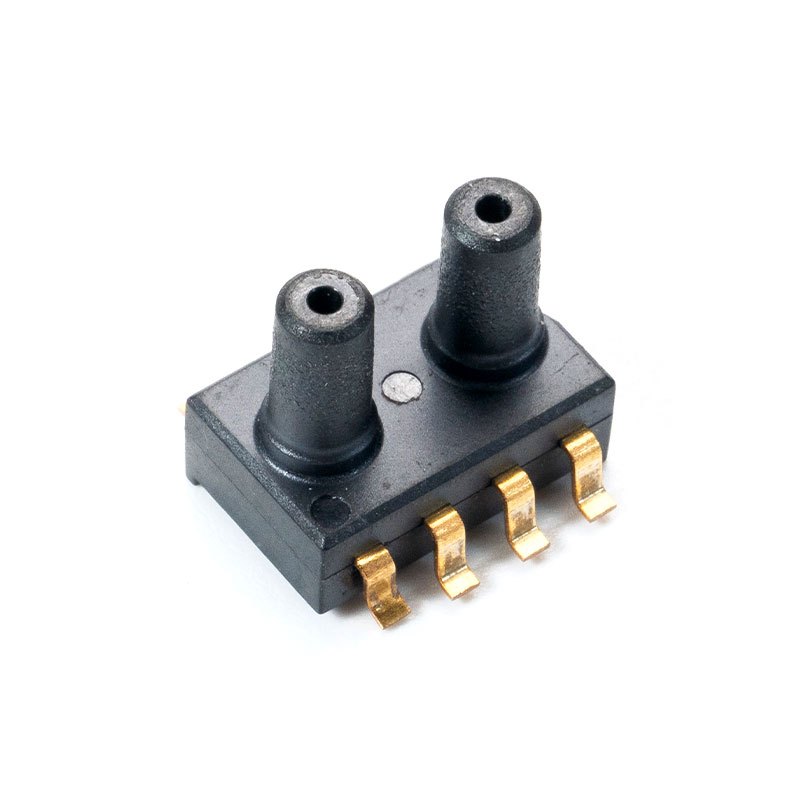
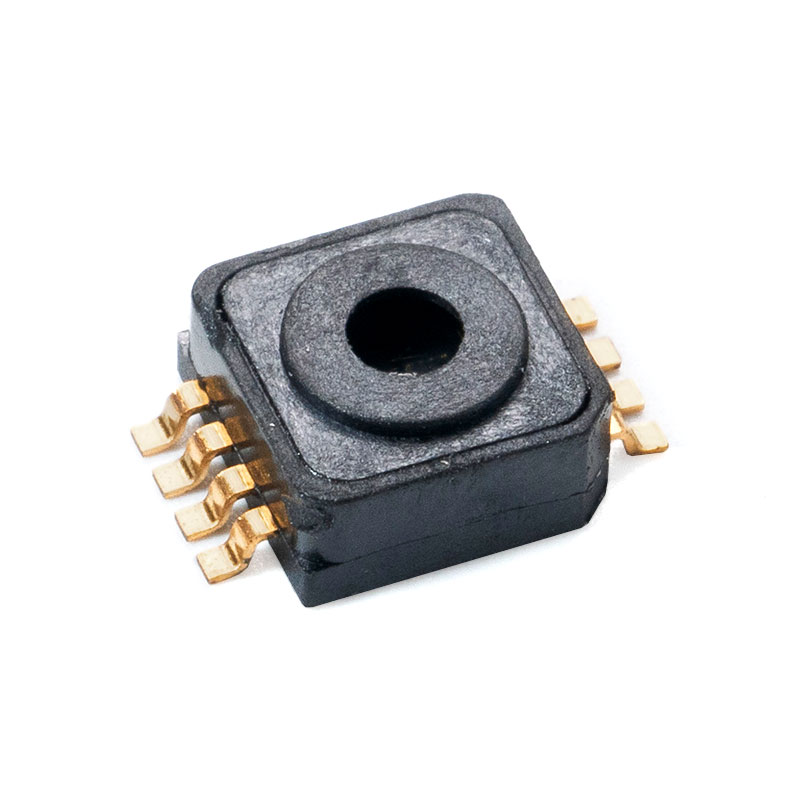
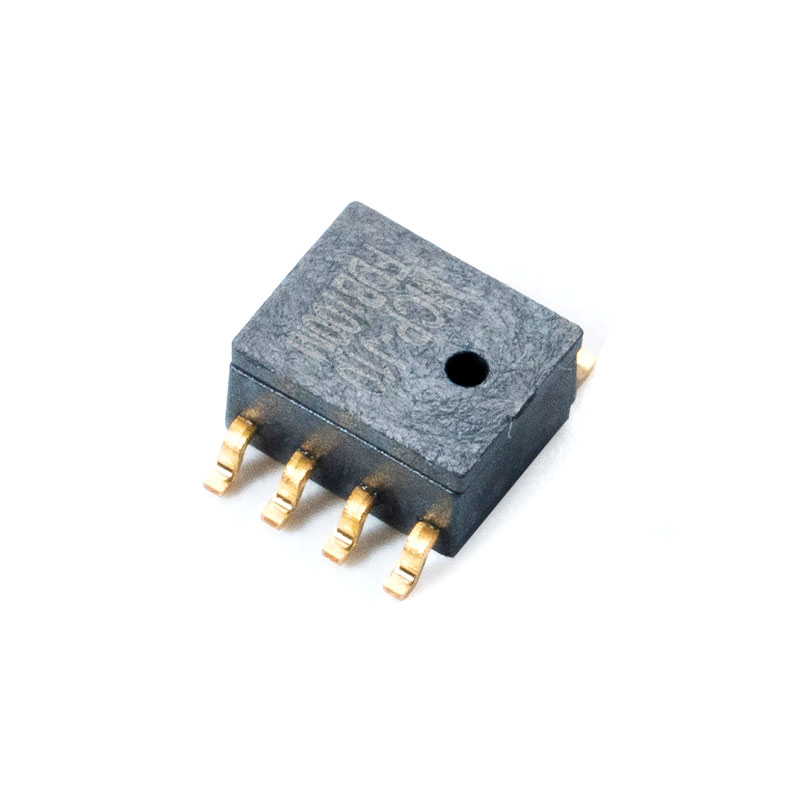
Surface-mount packages suit automated, high-density PCBs in compact monitors and wearable devices. Direct-plug DIP/SIP packages are easier to prototype, tolerate rework, and simplify tubing connections to a pressure port. The packaging decision is not purely mechanical: it defines how the pressure port connects to the fluid path, how the PCB is protected during cleaning, and how much layout area the sensor occupies. MemsTech offers both families, and its surface-mount package options page is a useful reference if your design is heading toward a compact PCB.
| Selection Axis | Typical Medical Choice | Alternative or Edge Case |
|---|---|---|
| Pressure type | Differential for ventilation; gauge for occlusion detection | Absolute for barometric context or sealed reference |
| Output signal | Analog amplified voltage for simple control loops | Digital interface for firmware-friendly integration |
| Measurement range | Micro-pressure for ventilator flow sensing | Low or medium pressure for infusion and general monitoring |
| Package | SOP for compact, high-volume PCBs | DIP/SIP for prototyping, tubing, and manual rework |
MCP Series for Medical: What Is Available
MemsTech's medical application page lists four series that cover the majority of mainstream medical pressure-sensing use cases. The MCP5xxx medical pressure sensor series is an analog line offered in low- and medium-pressure ranges with gauge or differential configurations. It appears in both SOP and DIP/SIP packaging, which makes it a practical starting point for bench testing several mounting options on one board layout.
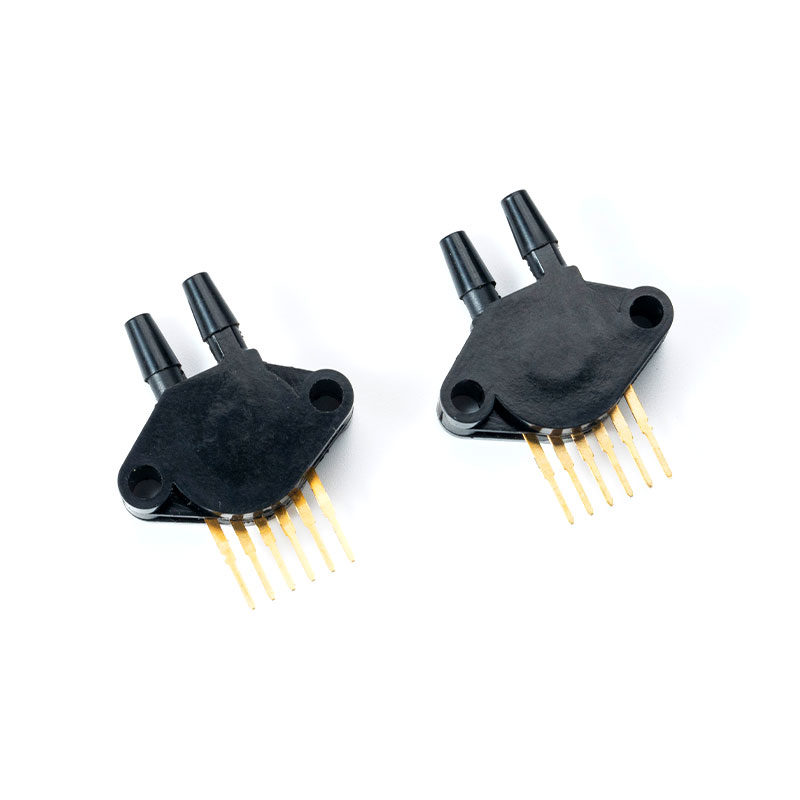 Wholesale MCP5XXX, Pressure sensor for medical Suppliers, FactoryWuxi Mems Tech Co., Ltd. Is a China wholesale MCP5XXX, Pressure sensor for medical Suppliers, factory,The MCP5XXXDP series has an integra...View Product →
The MCPh10 and MCPh11 gauge pressure sensors for medical use cover the low-pressure gauge range, an area used in infusion systems, pressure-monitoring accessories, and pneumatic control circuits where an atmospheric reference is acceptable.
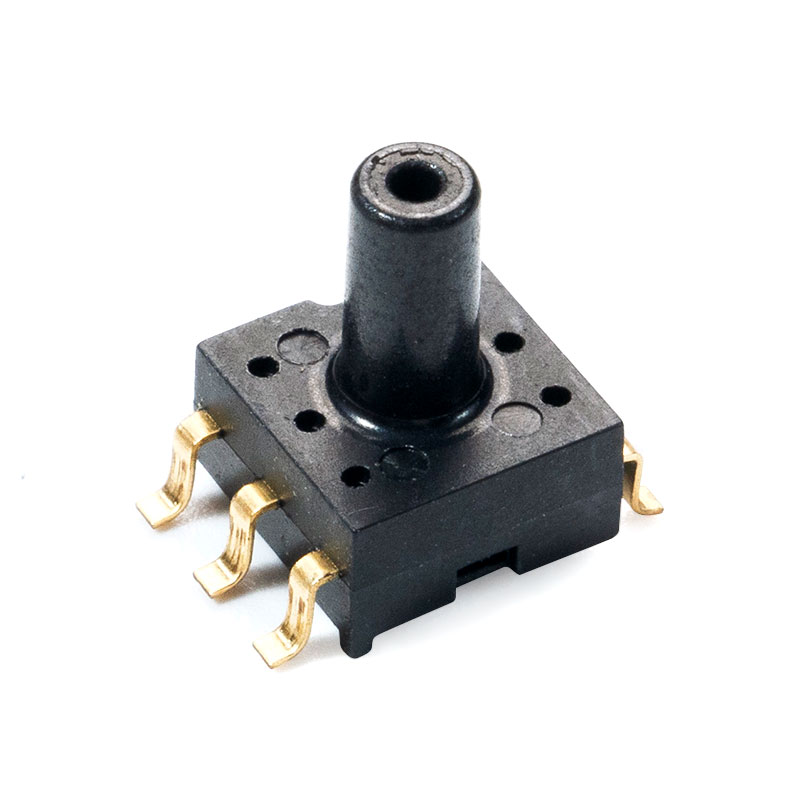 Wholesale MCP-H10, MCP-H11 Pressure sensor for medical Suppliers, FactoryWuxi Mems Tech Co., Ltd. Is a China wholesale MCP-H10, MCP-H11 Pressure sensor for medical Suppliers, factory,General DescriptionThe MCP-...View Product →
For differential work and small pressures, the MCPh20 and MCPh21 medical pressure sensors provide both analog and digital output variants. The digital MCPh21 is also deployed in drone and industrial products from the same factory, indirect evidence that its electrical baseline has been hardened across multiple market segments. The MCPV5xxx and MCPV7xxx series, also listed on the medical page, add further analog differential options; port geometry should be confirmed during sampling.
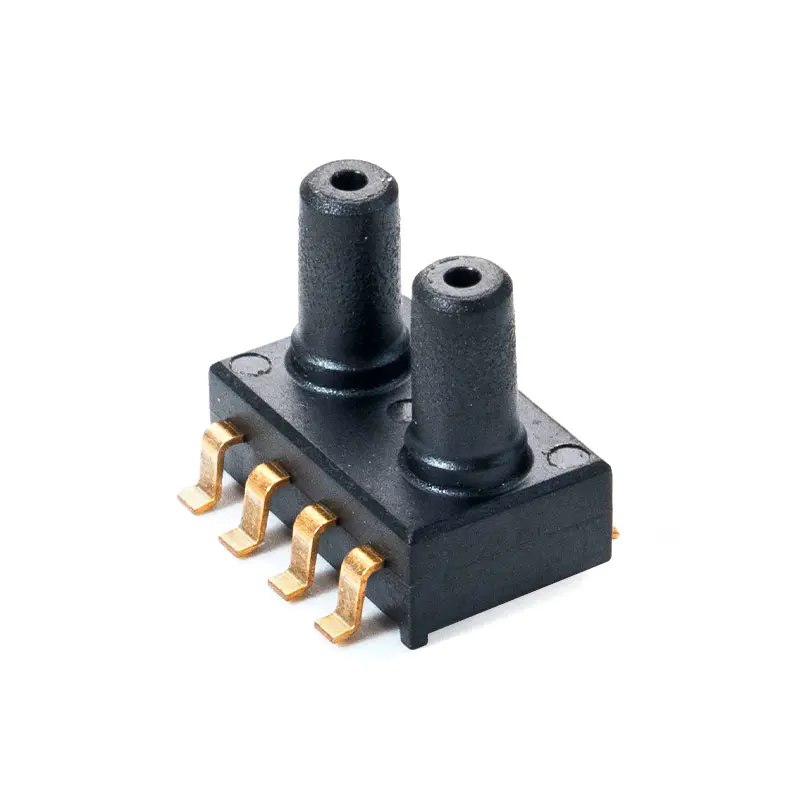 Wholesale MCP-H20, MCP-H21 Pressure sensor for medical Suppliers, FactoryWuxi Mems Tech Co., Ltd. Is a China wholesale MCP-H20, MCP-H21 Pressure sensor for medical Suppliers, factory,DESCRIPTION The MCP-H20 ser...View Product →
If you are still mapping requirements to a specific model, the medical pressure sensor portfolio page consolidates all relevant series in one view. For background on how MEMS sensors operate and where accuracy limits come from, the MEMS pressure sensor technology and application guide pairs well with the datasheets.
Supplier-Level Checks That Reduce Regulatory Risk
Once the electrical and mechanical selection is complete, the supplier becomes the dominant risk factor. Three capabilities separate a medical-grade sensor supplier from a purely commodity one.
First, in-house calibration and temperature compensation. MemsTech performs zero and full-scale calibration, temperature drift testing, and long-term stability evaluation on every outgoing unit inside its 2,000 m² facility. For a quality team, this means the datasheet value corresponds to a manufacturing step, not to a design simulation. The company also states that its manufacturing follows ISO quality standards. In a regulated market, ISO compliance is the entry condition; the calibration records supplied with each lot are the real evidence to review.
Second, documentation and traceability readiness. A sensor that cannot provide batch-level test data weakens a design history file. Ask how calibration is recorded, whether temperature sweep results are stored, and how a returned failed unit can be traced back to a production batch.
Third, change management and single-point responsibility. Because MemsTech controls die design, packaging, welding, and calibration in-house, a change in die layout, wire bonding, or calibration procedure is visible to you as the customer instead of being buried in a sub-supplier handoff.
From Prototype to Production: A Practical Workflow
The usual engagement starts with evaluation samples rather than a large order. The workflow that works best in practice is:
- Select the closest series from the medical portfolio page and order samples in the target pressure range, package, and output interface.
- Build a test jig that simulates the real operating condition — pressure source, temperature window, and mechanical mounting — and measure offset and span over at least one full temperature cycle.
- Compare the measured total error band with the application target. If the standard product does not fit, discuss a custom calibration point or a modified package; MemsTech's internal assembly line makes this feasible without committing to a full custom die design.
- Repeat with a second lot before freezing the design, to confirm batch-to-batch consistency.
In practice, the teams that move fastest through this process arrive with a clear specification table: pressure type, range, output interface, package, operating temperature, and target total error band. With that table, the sample phase usually confirms the initial selection rather than forcing a redesign.
Choosing an MCP pressure sensor for medical use comes down to alignment. Pressure type must match the measurement topology; range must cover the clinical extremes of the application; output interface must fit the firmware architecture; and packaging must suit the assembly line. The MCP portfolio covers all four axes at component level. The remaining question is whether the supplier's manufacturing and calibration practices match the traceability your device needs — and on that point, MemsTech's in-house production, unit-level calibration, and published accuracy figures offer evidence you can review rather than a datasheet you have to trust.
The fastest route for engineers starting selection is to request samples of the closest series on the medical application page and run your own temperature and pressure evaluation. Data from two weeks of testing will outperform any guide.
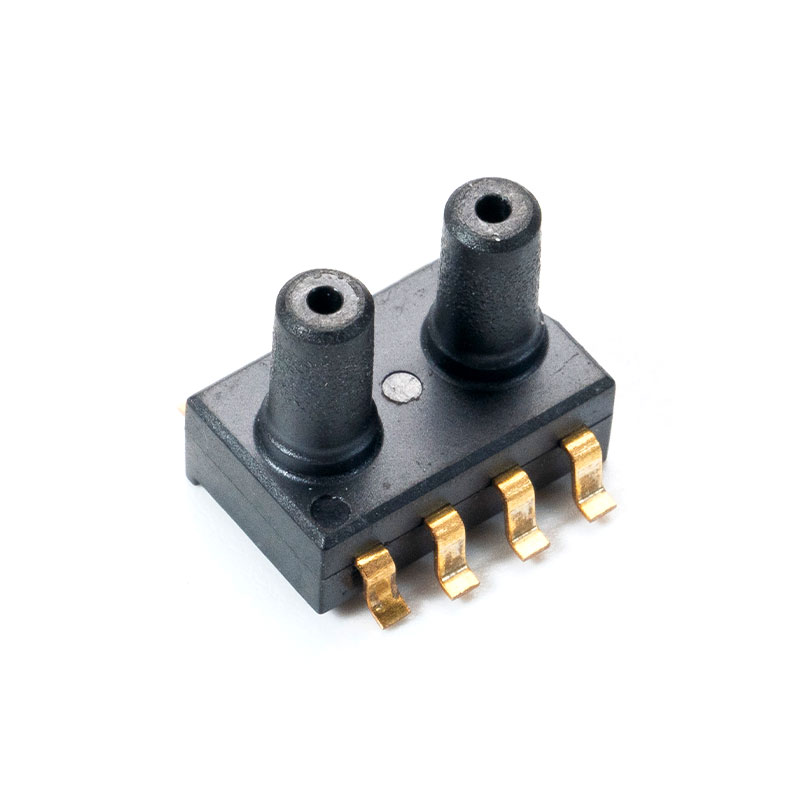

Mems Tech has specialized in the field of pressure sensors for over 14 years.
-
 [email protected]
-
 +86-18068257393
-
 50-1125 Zhongbang City Garden, No.2008 Taihu East Avenue, Xinwu District, Wuxi City, Jiangsu Province, China
Copyright © 2025 byWuxi Mems Tech Co., Ltd. Rights Reserved.
Custom MEMS Pressure Sensor Manufacturers
