

 English
 Français
 中文简体
中文简体Micro, Low, and Medium Pressure Sensors: How to Choose the Right MEMS Range
Date:2026-08-12
Content
An engineer configuring a ventilator airflow loop is told to "pick a low-pressure sensor." On the distributor's site, the same search returns micro-pressure chips, low-pressure modules, and medium-pressure transducers. The three families look nearly identical in their SMD packages, yet the sensing element inside each one is built for a different mechanical reality. Choose micro when the pressure difference is truly small. Choose low for general airflow and barometric-range readings. Choose medium for fluid power and fuel systems. This first decision defines physical limits that no software calibration can overcome.
This guide explains how the three pressure-range categories are defined on a MEMS sensor datasheet, why the differences matter for accuracy and reliability, and how to map an application to the right sensor family.
How Pressure-Range Categories Are Defined
No single global standard fixes the boundary between micro, low, and medium pressure. The division is practical rather than legal, and it shifts from one manufacturer to the next. The table below shows a breakdown commonly used in MEMS pressure sensor selection.
| Category | Typical full-scale range | Typical pressure type | Representative applications |
|---|---|---|---|
| Micro pressure | Hundreds of Pa to a few kPa | Differential or gauge | Filter monitoring, airflow, respiratory sensing |
| Low pressure | A few kPa to around 100 kPa | Gauge, absolute, or differential | HVAC, altitude, consumer electronics, medical devices |
| Medium pressure | 100 kPa to several MPa | Absolute or gauge | Hydraulics, fuel systems, industrial automation |
Micro-pressure sensors handle very small pressure differences, often below 1 kPa. Their diaphragms are thin and compliant, which makes them sensitive but also more vulnerable to temperature drift and mechanical shock. Low-pressure sensors cover the band used for manometric, barometric, and respiratory measurements. Medium-pressure sensors operate where the sensing element can be built more robustly, with thicker diaphragms that tolerate higher stress and occasional overpressure events.
For a component buyer, the practical consequence is simple: a micro-pressure sensor is not a low-pressure sensor with a different label. The two are engineered differently, calibrated differently, and require different handling during assembly.
Why the Range Matters for Sensor Construction
Diaphragm geometry and sensitivity
The pressure range determines the geometry of the MEMS diaphragm, and that geometry drives most of the sensor's key behaviors. A sensor made for micro-pressure measurement has a diaphragm thin enough to deflect measurably under a few hundred pascals. That thinness improves sensitivity but worsens the response to temperature expansion and package stress. Medium-pressure devices can use a thicker, stiffer diaphragm that resists overpressure better and is less affected by solder-induced mechanical stress.
Calibration and the true meaning of accuracy
Calibration routines also differ. Micro-pressure sensors typically need per-device zero-offset correction because even small package stress shifts the zero point. Medium-pressure sensors rarely show this problem to the same degree, so their zero-point stability is easier to maintain across a production batch. For this reason, the same 0.2 percent full-scale accuracy claim means different things in each range. On a 1 kPa micro-pressure sensor, 0.2 percent FSS corresponds to only 2 Pa of allowable error, which is excellent but requires careful temperature compensation. On a 2 MPa medium-pressure sensor, 0.2 percent FSS equals 4 kPa of allowable error, a much easier target for the calibration line to hit. Always check whether the supplier publishes both the accuracy at 25 °C and the total error band over the operating temperature range; for micro- and low-pressure parts, the latter is the number that will limit your design.
Analog and Digital Outputs: Matching the Range to Your Interface
The measurement range and the output signal are separate selection axes, but they interact in practice. Analog-output sensors provide a ratiometric voltage proportional to pressure, typically from a Wheatstone bridge with an ASIC-conditioned amplifier. They are inexpensive, easy to connect to a microcontroller ADC, and available in almost any range. Digital-output sensors integrate the ADC and an I²C or SPI interface on-chip, which removes external signal conditioning and simplifies board layout.
The trade-off appears at the extremes. For a micro-pressure sensor, an analog output of only a few millivolts per pascal becomes noisy if the trace length to the ADC is long, so a digital version with on-chip conversion is often safer. For medium-pressure sensors, the analog signal is larger, and many industrial boards already accept voltage output directly. Digital versions exist mainly for the low-pressure and micro-pressure families where signal integrity matters most, while medium-pressure products remain available in analog form for direct connection to existing control electronics.
When comparing parts, verify the output specification against the controller's input range. A ratiometric output tied to a 5 V supply behaves differently from a fixed 3.3 V output, and not every ADC handles both equally well.
Typical Application Patterns for Each Range
Medical, consumer, and drone devices
Medical equipment is the most demanding micro- and low-pressure market. Respiratory devices, anesthesia machines, and CPAP systems need to resolve pressures of a few kilopascals with repeatable accuracy and stable zero behavior over long periods. The same families used in medical settings, such as the MCPh10, MCPh11, MCPh20, and MCPh21, also appear in the low-pressure and differential categories. In practice, the biological pressure range and the "low pressure" range largely coincide, so the medical pressure sensor pages are a useful reference even for non-medical applications with similar pressure envelopes.
Consumer electronic products, including wearables and smart home devices, use low-pressure absolute sensors as barometric references, where consistency across temperature is the deciding factor. Drone designs use the same type of low-pressure sensing for altitude estimation, which explains why a single digital sensor model such as the MCPh21 appears in both the drone and low-pressure categories.
Industrial and automotive systems
Industrial equipment uses a wider spread of ranges. Filter-blockage detectors and air-flow monitors operate at micro-pressure and differential levels, where a blocked filter appears as a small pressure drop across two ports. Hydraulic presses, pneumatic actuators, and gas distribution lines operate at medium pressures, where absolute accuracy and ruggedness matter more than the ability to resolve tiny changes. Automotive applications cover the medium band as well: fuel rail, oil pressure, and intake manifold measurements sit above the fragile low-pressure diaphragm range and below industrial high-pressure transducers.
A Practical Selection Checklist
For an engineer facing a new design, the following sequence reduces the chance of a costly mis-selection.
- Define the pressure type first. Decide whether the application needs gauge, absolute, or differential pressure. This is more fundamental than the range because a differential sensor can measure a low gauge pressure, but a gauge sensor cannot measure the difference between two ports.
- Choose the range with at least 20 percent headroom. Operating a micro-pressure sensor at the very top of its range leaves no room for transient spikes. A rating roughly 1.5 times the expected maximum pressure is a good starting point.
- Compare total error band, not just accuracy. The accuracy at 25 °C is almost always better than the error over the full temperature span. For micro- and low-pressure sensors, request the total error band across the intended operating temperature and compare that value with your system budget.
- Check stability over time. Long-term stability is usually stated as a percentage of full scale per year. A stable zero matters more than a marginally better accuracy spec if the product must work without field calibration.
- Match the package to the assembly process. Surface-mount packages reduce assembly cost but expose the sensing die to reflow temperatures that can shift the zero point. DIP/SIP packages are easier to handle in prototype runs and manual assembly lines.
- Verify media compatibility. The sensing element may contact air, gases, or liquids depending on the port design. Confirm that the wetted materials are compatible with the media before committing to a package.
Two sourcing points are also worth remembering. First, ask the supplier for the calibration report that ships with each lot; it should document zero offset, full-scale output, and temperature drift measured on the actual production line. Second, confirm the minimum order quantity and lead time early, since custom calibration requirements can lengthen delivery schedules.
Matching MemsTech Product Families to Your Range
MemsTech (Wuxi Mems Tech Co., Ltd.) organizes its catalog around a product matrix rather than a single product line. The company manufactures MEMS pressure sensors in-house, with internal packaging, welding, temperature compensation, and calibration in a 2,000-square-meter facility. Its stated annual capacity of 60 million units and declared accuracy of up to 0.2 percent full-scale mean the range categories translate into concrete, repeatable products.
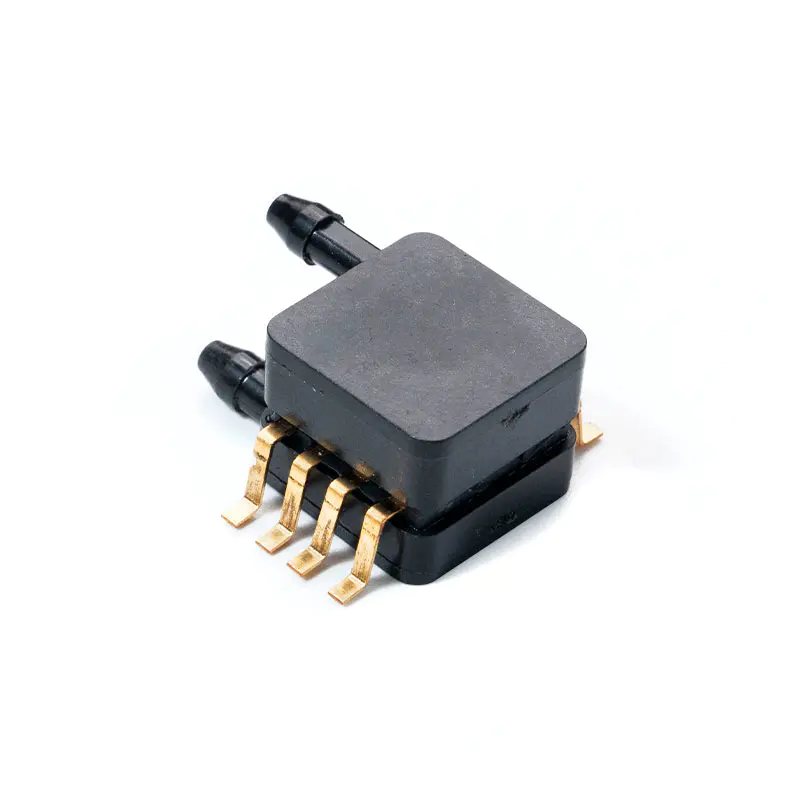
For micro-pressure measurement, the DPTR8 micro-pressure sensor belongs to both the micro-pressure and industrial categories. Its differential nature suits it to detecting small pressure changes in filter monitoring and airflow systems. If your application must resolve hundreds of pascals across two ports, this is the family to evaluate first.
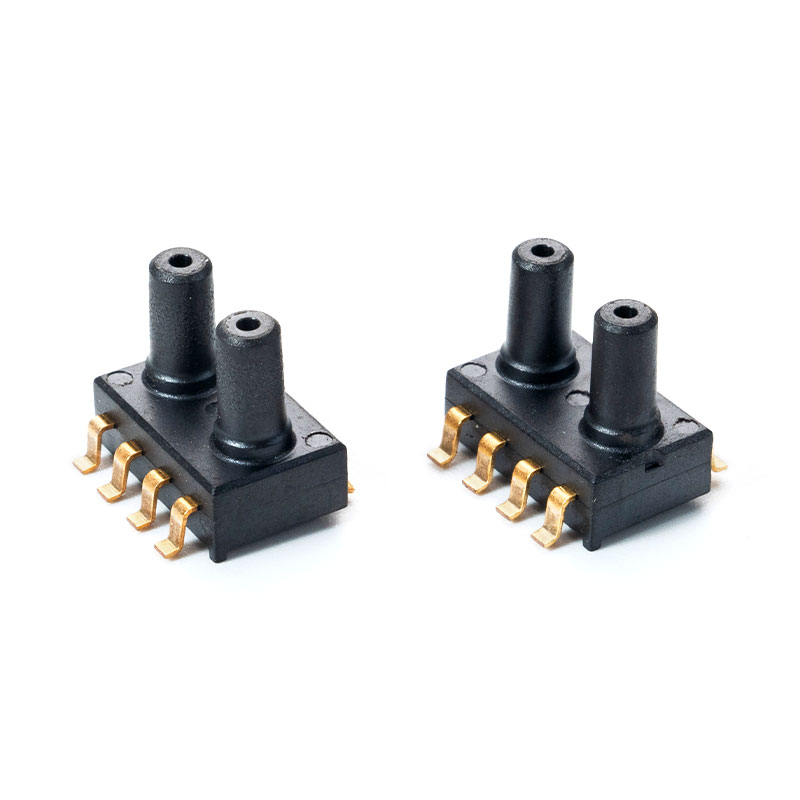 Wholesale DPT-R8 Micro pressure sensor Suppliers, FactoryWuxi Mems Tech Co., Ltd. Is a China wholesale DPT-R8 Micro pressure sensor Suppliers, factory,IntroductionThe subject of this document is...View Product →
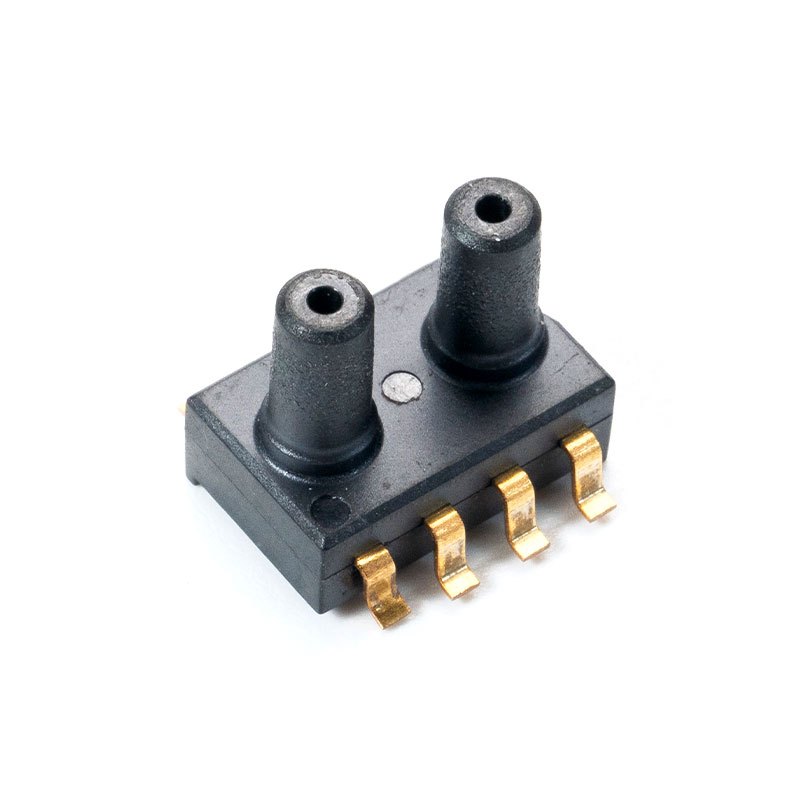
For low-pressure measurement, the MCPh20 and MCPh21 low-pressure sensors cover gauge, differential, and digital signal outputs. The digital version is useful in compact boards where the signal must travel without picking up noise. The same family appears in medical and drone application lists, indicating that its performance envelope is practical in real, field-deployed products.
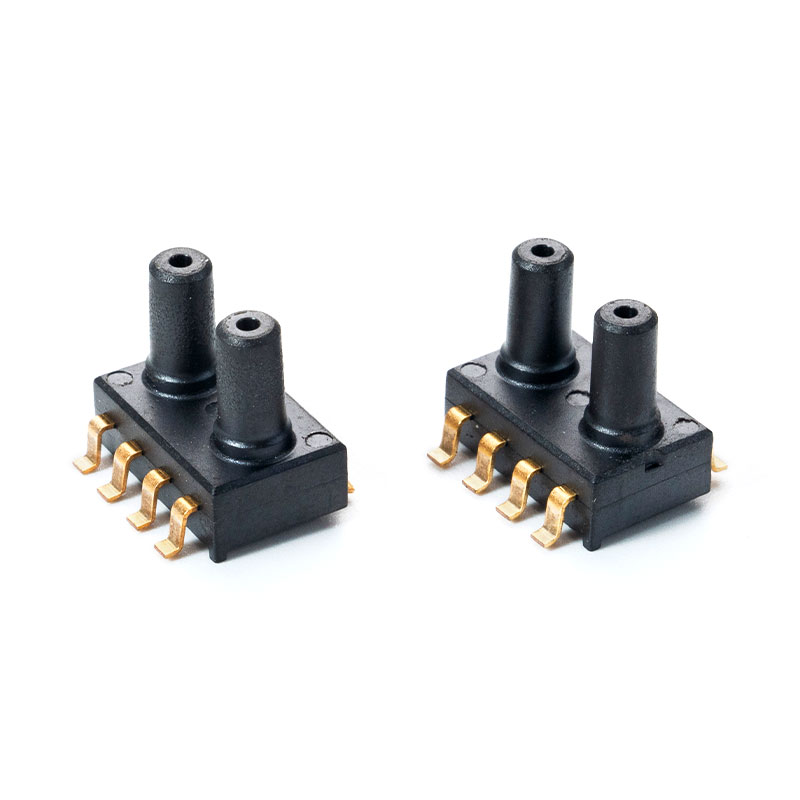 Wholesale MCP-H20, MCP-H21 Low pressure sensor Suppliers, FactoryWuxi Mems Tech Co., Ltd. Is a China wholesale MCP-H20, MCP-H21 Low pressure sensor Suppliers, factory,DESCRIPTION The MCP-H20 series is a...View Product →
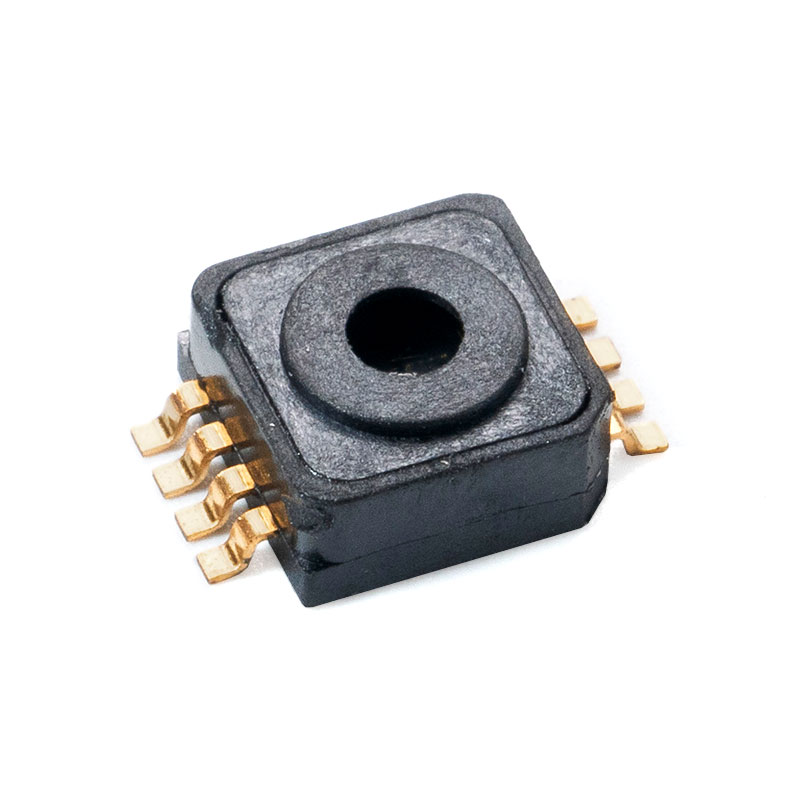
For medium-pressure measurement, the MCP5xxx medium-pressure sensor family combines a wider measurement span with the robustness of a thicker diaphragm. It is listed in the medium-pressure, analog-signal, and medical categories, suggesting a stable, mature platform suited to volume production. This family is often the default choice when a design needs broad range coverage without the extreme sensitivity of a micro-pressure part.
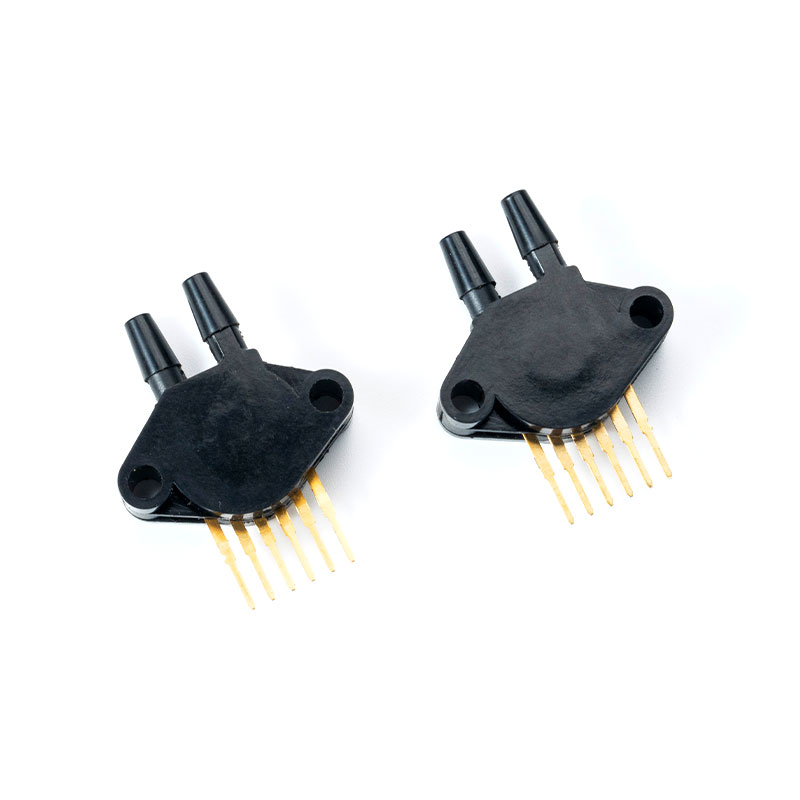 Wholesale MCP5XXX Medium pressure sensor Suppliers, FactoryWuxi Mems Tech Co., Ltd. Is a China wholesale MCP5XXX Medium pressure sensor Suppliers, factory,The MCP5XXXDP series has an integrated si...View Product →
If you are unsure which family fits your design, the micro-pressure sensor range page and the medium-pressure sensor lineup provide a structured view of the available options. Because one physical model can appear in several categories, it is also worth checking the medical application list if your product belongs to that sector.
The final decision comes down to the physical requirements of the system: the pressure type needed, the temperature variation the device will see, and whether the signal path can tolerate the noise of an analog connection. Once those are fixed, the range category selects itself, and the remaining choice is between specific models and suppliers.
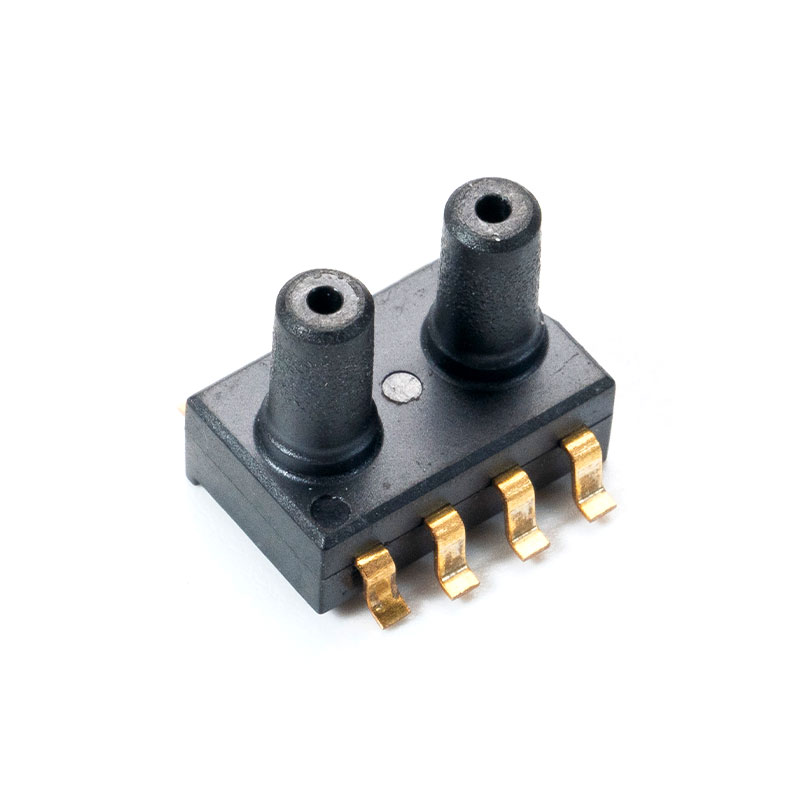

Mems Tech has specialized in the field of pressure sensors for over 14 years.
-
 [email protected]
-
 +86-18068257393
-
 50-1125 Zhongbang City Garden, No.2008 Taihu East Avenue, Xinwu District, Wuxi City, Jiangsu Province, China
Copyright © 2025 byWuxi Mems Tech Co., Ltd. Rights Reserved.
Custom MEMS Pressure Sensor Manufacturers
