

 English
 Français
 中文简体
中文简体Why Choose an Absolute Pressure Sensor Over Gauge Alternatives?
Date:2026-04-02
Content
- 1 Five High-Search-Volume Long-Tail Keywords for Industry Professionals
- 2 The Engineering Foundation of Absolute Pressure Measurement
- 3 Comparative Analysis: Absolute vs. Gauge vs. Differential
- 4 Industrial Applications and Technical Requirements
- 5 Smart Sensor Integration and Digital Output
- 6 Quality Assurance and Specification Verification
- 7 Frequently Asked Questions (FAQ)
- 8 References and Further Reading
Selecting the right pressure sensing technology is a critical engineering decision that impacts system accuracy, reliability, and cost. For procurement specialists and design engineers, the choice often narrows down to absolute versus gauge pressure measurement. An absolute pressure sensor measures pressure relative to a perfect vacuum, providing a stable reference point unaffected by atmospheric changes. This article delivers a technical deep dive into the engineering principles, material specifications, and industrial applications of absolute pressure sensing technology, with direct comparisons to alternative measurement types.
Five High-Search-Volume Long-Tail Keywords for Industry Professionals
Engineers and procurement managers use specific terminology when sourcing these components. Understanding these search terms helps align technical specifications with market demand.
- MEMS absolute pressure sensor: This term targets the miniaturized silicon-based technology used in high-volume, space-constrained applications [citation:1].
- Piezoresistive absolute pressure transmitter: A performance-focused query specifying the sensing mechanism and output type for industrial process control [citation:5].
- High-accuracy absolute pressure sensor 0-10 bar: This indicates a need for precise measurement within a specific industrial pressure range with defined performance tolerances.
- digital output absolute pressure sensor: Reflects the demand for smart sensors with integrated signal conditioning and digital communication protocols like I²C or SPI [citation:5][citation:8].
- absolute pressure transmitter for level measurement: An application-specific keyword for hydrostatic level sensing in closed tanks and submersible installations [citation:2][citation:6].
The Engineering Foundation of Absolute Pressure Measurement
The fundamental distinction of an absolute pressure sensor lies in its reference point. Unlike gauge sensors that reference ambient atmospheric pressure, absolute devices reference a sealed vacuum cavity integrated into the sensor package. This cavity is evacuated during manufacturing and hermetically sealed, creating a true zero-pressure reference [citation:3][citation:4].
Physical Principles and Reference Integrity
Absolute pressure (PSIA) represents the total force exerted by a fluid relative to a perfect vacuum. The relationship is expressed mathematically as:
P_absolute = P_gauge + P_atmospheric [citation:10].
At sea level, standard atmospheric pressure is approximately 14.7 PSI or 1.01 bar. Therefore, a gauge pressure reading of 0 PSIG corresponds to 14.7 PSIA [citation:3]. For applications requiring immunity to altitude changes, barometric fluctuations, or weather effects, the absolute reference provides inherent stability [citation:9].
Core Sensing Technologies
Modern absolute pressure sensors employ several distinct transduction principles, each with specific performance characteristics suitable for different applications.
MEMS Piezoresistive Sensors
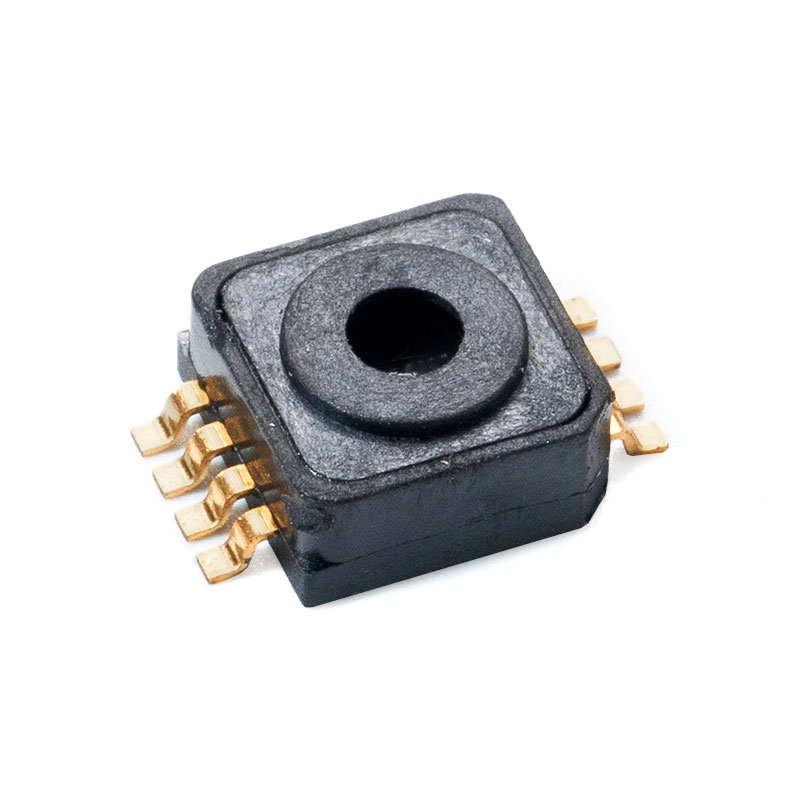
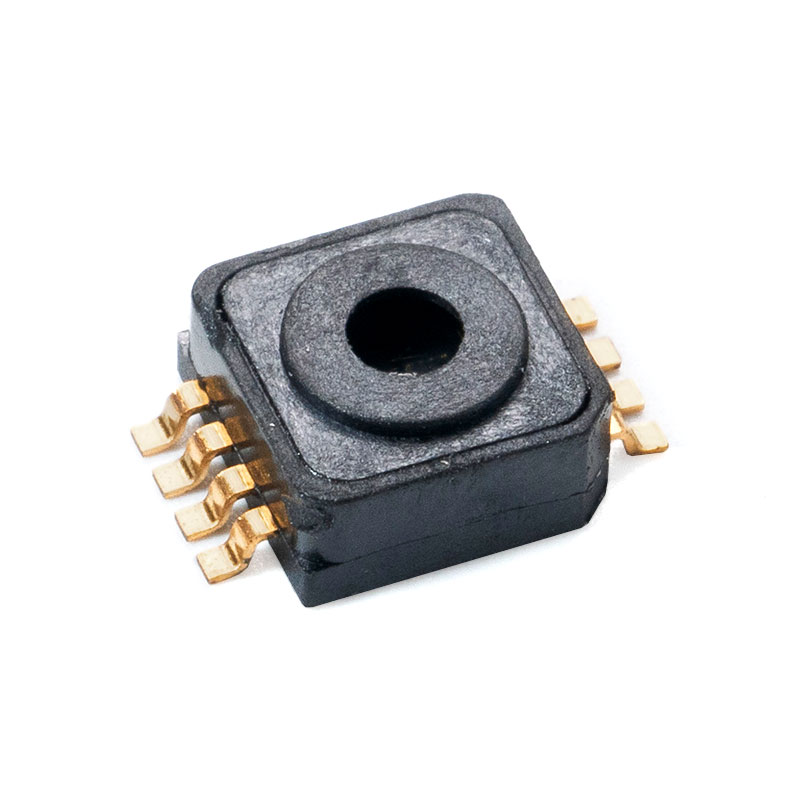
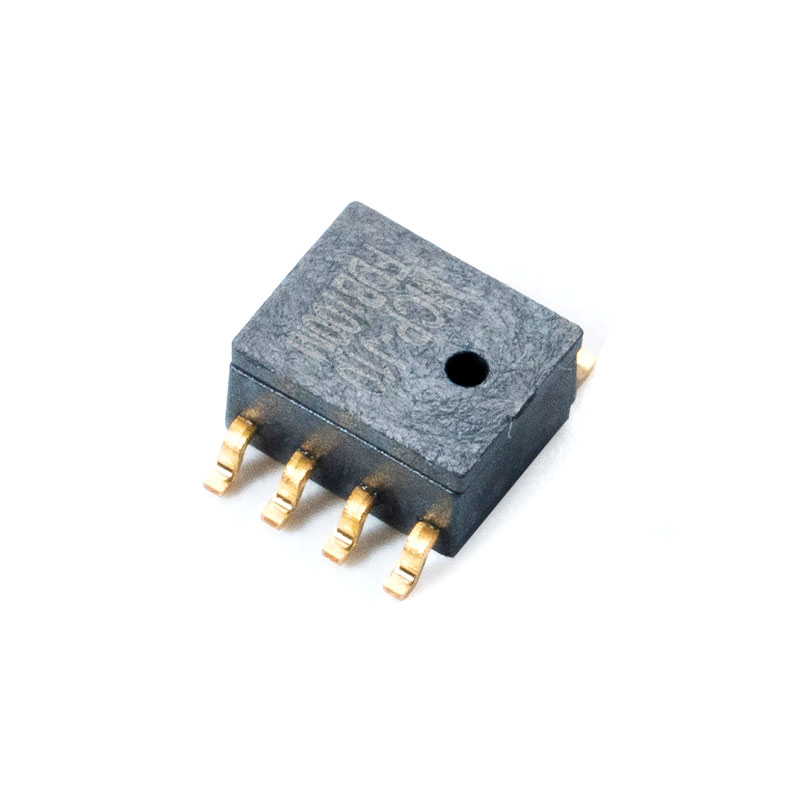
MEMS absolute pressure sensor technology dominates the market for applications requiring small form factors and high volume production. These devices are fabricated on silicon wafers using micro-machining techniques. A thin silicon diaphragm is etched with piezoresistors arranged in a Wheatstone bridge configuration. When pressure is applied, the diaphragm deflects, changing the resistance values proportionally to the applied pressure [citation:1]. The sealed vacuum cavity is created by bonding a silicon cap or substrate under vacuum conditions. These sensors offer gauge factors approximately 100 times greater than metal strain gauges, making them exceptionally sensitive for low-pressure measurements [citation:1].
Capacitive Pressure Sensors
Capacitive designs utilize a flexible conductive diaphragm and a rigid fixed plate separated by a dielectric medium. The sealed vacuum cavity serves as the reference chamber. Pressure-induced diaphragm deflection alters the gap distance, changing the capacitance value predictably [citation:1]. These sensors offer excellent stability, low power consumption, and immunity to temperature gradients.
Optical Pressure Sensing
For specialized applications requiring EMI/RFI immunity, optical pressure sensors use interferometry to measure pressure-induced changes in optical fiber characteristics. These devices are suitable for medical implantation and radiography equipment where electrical sensors present safety or interference concerns [citation:1].
Comparative Analysis: Absolute vs. Gauge vs. Differential
Selecting the appropriate pressure measurement type requires understanding the reference point implications for your specific application. The table below provides a technical comparison.
| Parameter | Absolute Pressure Sensor | Gauge Pressure Sensor | Differential Pressure Sensor |
|---|---|---|---|
| Reference Point | Perfect vacuum (0 PSIA) | Ambient atmospheric pressure | Second applied pressure |
| Typical Units | PSIA, bar absolute, kPa absolute | PSIG, bar gauge, kPa gauge | PSID, inches WC, mbar differential |
| Environmental Sensitivity | None—stable regardless of altitude or weather | Highly affected by barometric changes | Depends on reference port configuration |
| Typical Applications | Altimeters, barometry, vacuum monitoring, closed-tank level [citation:1][citation:4] | Tire pressure, hydraulic systems, open tank level [citation:3][citation:9] | Flow measurement, filter monitoring, HVAC pressure drop [citation:1][citation:10] |
| Sealing Requirements | Hermetically sealed reference cavity | Vented to atmosphere (vent tube or port) | Two pressure ports required |
For applications where atmospheric pressure variations would introduce measurement errors—such as altitude sensing in drones or absolute vacuum monitoring—the absolute pressure sensor is the technically correct choice [citation:1][citation:4].
Industrial Applications and Technical Requirements
Piezoresistive absolute pressure transmitter configurations are widely deployed across industrial sectors where robustness and accuracy are paramount. These devices typically incorporate signal conditioning electronics within stainless steel housings rated for harsh environments [citation:2][citation:5].
Barometric Pressure and Altitude Measurement
Weather stations, UAVs, and aircraft altimeters rely on absolute pressure sensors to determine altitude and atmospheric conditions. Since atmospheric pressure decreases predictably with altitude, measuring absolute pressure enables precise height calculation. Gauge sensors would be useless here because atmospheric pressure is precisely the variable being measured [citation:1].
Closed-Tank Level Measurement
An absolute pressure transmitter for level measurement is essential when monitoring liquid level in sealed or pressurized tanks. In a closed vessel, the vapor space pressure above the liquid is not atmospheric. A gauge sensor referenced to the atmosphere would produce significant errors because it would measure the sum of liquid head pressure plus tank vapor pressure minus atmospheric pressure. An absolute sensor, referenced to vacuum, allows calculation of true liquid level when combined with a separate vapor space pressure measurement [citation:4][citation:10].
Vacuum Processing and Semiconductor Manufacturing
Vacuum deposition, sputtering, and etching processes require precise control of sub-atmospheric pressures. Absolute pressure sensors directly measure chamber vacuum relative to true zero, providing the accuracy needed for repeatable thin-film deposition. Food packaging vacuum sealers similarly use absolute sensors to ensure consistent oxygen removal [citation:4].
High-Pressure Industrial Applications
High accuracy absolute pressure sensor 0-10 bar specifications are common in hydraulic systems, test stands, and process control. At elevated pressures, the atmospheric contribution becomes proportionally smaller, but absolute references still offer advantages for applications spanning large altitude ranges or requiring data comparability across different geographic locations [citation:2][citation:9].
Smart Sensor Integration and Digital Output
The trend toward Industry 4.0 and IoT-enabled devices has driven demand for digital output absolute pressure sensor configurations. Modern MEMS sensors integrate analog-to-digital converters, temperature compensation algorithms, and linearization circuitry directly within the sensor package [citation:5][citation:8].
Key Digital Interface Specifications
- I²C interface: Common for board-level integration, typically operating at 100 kHz or 400 kHz with 7-bit addressing. Suitable for battery-powered devices due to low power consumption [citation:5].
- SPI interface: Offers higher data rates (up to 2 kHz sample rates) for dynamic pressure measurements and real-time control applications [citation:7][citation:8].
- Resolution: High-end digital sensors provide up to 24-bit resolution, enabling detection of micro-pressure changes [citation:8].
- Temperature compensation: Integrated ASICs provide calibrated output over specified temperature ranges, typically -40°C to +85°C for industrial grades [citation:7][citation:8].
These smart sensors reduce design complexity by eliminating external signal conditioning circuitry and providing engineering-unit outputs directly to microcontrollers.
Quality Assurance and Specification Verification
When sourcing absolute pressure sensor components for volume production, procurement professionals should verify several key parameters beyond basic range and accuracy.
Critical Specification Parameters
- Total Error Band (TEB): Combines all accuracy errors, including offset, span, non-linearity, hysteresis, and temperature effects. Premium sensors achieve ±0.25% FSS TEB [citation:8].
- Long-term stability: Typically specified as ±0.1% to ±0.2% FSS per year, indicating drift performance over time [citation:2][citation:5].
- Overpressure rating: Maximum pressure that can be applied without damage, often 2x full scale or 1100 bar minimum [citation:2][citation:5].
- Media compatibility: Standard sensors are intended for non-corrosive, non-ionic gases; liquid-compatible versions require additional protection [citation:7].
- Certification: ISO 9001 manufacturing, REACH, and RoHS compliance indicate quality management and material safety standards [citation:8].
Frequently Asked Questions (FAQ)
What is the fundamental difference between an absolute pressure sensor and a gauge pressure sensor?
The difference lies entirely in the reference point. An absolute pressure sensor measures pressure relative to a perfect vacuum (zero pressure) sealed within the sensor. A gauge pressure sensor measures pressure relative to the current ambient atmospheric pressure, typically through a vent hole or tube connecting the reference side to the outside air [citation:3][citation:10]. This means gauge readings vary with weather and altitude changes, while absolute readings remain stable regardless of environmental conditions.
Can an absolute pressure sensor be used for gauge pressure measurements?
Yes, with appropriate signal processing. If you have an absolute pressure sensor measuring system pressure and a separate barometric reference measuring local atmospheric pressure, you can calculate gauge pressure by subtracting the barometric value from the absolute reading [citation:6][citation:10]. This approach is common in weather-compensated level measurement systems and high-precision applications where subtracting a real-time atmospheric reference provides better accuracy than a simple vented gauge.
How do I specify the correct absolute pressure sensor for submersible level measurement?
For submersible level measurement in open bodies of water, a gauge sensor with a vented cable is typically used. However, for closed tanks or applications requiring surface-mounted sensors with remote diaphragm seals, an absolute pressure transmitter for level measurement is appropriate. You must specify the specific gravity of the liquid, the expected level range in inches or meters, and convert that to a pressure range using P = ρgh. Additionally, specify the vapor space pressure range above the liquid if the tank is pressurized. The sensor must be rated for the sum of maximum liquid head plus maximum tank pressure [citation:2][citation:4].
References and Further Reading
- Electronics360. (2022). Differential vs absolute pressure sensors. GlobalSpec [citation:1].
- Gems Sensors. (2024). Absolute vs Gauge Pressure Measurement. Technical Guide [citation:3].
- The Transmitter Shop. (2020). Absolute and Gauge Pressure Transmitters - Overview and Working Principle [citation:4].
- AZoM. (2024). Understanding Absolute and Gauge Pressure Sensors. Superior Sensor Technology [citation:9].
- Micro Sensor Co., Ltd. (2020). Difference of Absolute, Gauge, Sealed Gauge, and Differential Pressure Type [citation:10].
- Honeywell Sensing & IoT. TruStability™ HSC Series Datasheet. GlobalSpec [citation:7].

Mems Tech has specialized in the field of pressure sensors for over 14 years.
-
 [email protected]
-
 +86-18068257393
-
 50-1125 Zhongbang City Garden, No.2008 Taihu East Avenue, Xinwu District, Wuxi City, Jiangsu Province, China
Copyright © 2025 byWuxi Mems Tech Co., Ltd. Rights Reserved.
Custom MEMS Pressure Sensor Manufacturers
