

 English
 Français
 中文简体
中文简体Engineering Evaluation of Diaphragm Metallurgy for sealed gauge pressure sensor Integration in Hydrogen-Rich Environments
Date:2026-05-10
Content
Hydrogen Embrittlement Mechanisms in High-Pressure Sensing
1. The primary structural threat to a sealed gauge pressure sensor in upstream oil and gas services is the diffusion of monatomic hydrogen into the metallic lattice of the sensing diaphragm. 2. For engineers investigating how to prevent hydrogen embrittlement in pressure sensors, the focus is on the partial pressure of H2 and the specific austenitic or nickel-alloy microstructure of the wetted parts. 3. Unlike vented units, a sealed gauge pressure sensor maintains a fixed internal reference of 101.325 kPa, meaning any hydrogen permeation through the diaphragm into the sealed oil cavity can cause significant zero-point drift and mechanical fatigue. 4. The risks of using stainless steel 316L in hydrogen services include the formation of brittle hydride phases, which significantly reduce the fracture toughness and leads to catastrophic diaphragm failure under cyclic loading.
Comparative Analysis of Diaphragm Material Performance
1. Determining which diaphragm material is best for oil and gas sensors involves a trade-off between corrosion resistance, elastic modulus, and hydrogen permeability. 2. For high-concentration H2S and H2 applications, Hastelloy C-276 vs Inconel 718 for pressure diaphragms is a critical engineering decision; Hastelloy C-276 provides a lower diffusion rate and higher resistance to pitting and stress corrosion cracking (SCC). 3. Another specialized solution is the application of a gold-plated diaphragm for hydrogen permeation resistance; a 3 to 5 micrometer gold layer acts as a dense kinetic barrier, reducing hydrogen ion migration by several orders of magnitude compared to bare alloys. 4. Material Performance Specification Table:
| Alloy Grade | Hydrogen Permeability Rate | Tensile Strength (MPa) | Primary Application Environment |
| 316L Stainless Steel | High | 485 | Standard Industrial / Low H2 |
| Hastelloy C-276 | Low | 790 | Sour Gas (H2S) / Chemical Processing |
| Inconel 718 | Moderate | 1035 | High-Pressure / High-Temperature (HPHT) |
| Gold-Plated 316L | Very Low | 485 (Base) | Ultra-Pure Hydrogen / Fuel Cells |
Sealed Reference Stability and Environmental Isolation
1. The sealed gauge pressure sensor design is preferred for submersible or high-humidity oilfield environments because it prevents moisture ingress into the reference side of the piezoresistive bridge. 2. When calculating the total error band of a sealed gauge sensor, technicians must account for the ideal gas law effects within the internal cavity; as ambient temperature increases, the internal reference pressure shifts, requiring precise on-board ASIC compensation. 3. For submersible sealed gauge pressure sensor installation, the use of a titanium or Hastelloy housing ensures that the external structure matches the chemical resilience of the sensing diaphragm. 4. The long-term stability of sealed gauge sensors in harsh environments is verified through ISO 15156/NACE MR0175 compliance testing, ensuring the sensors withstand sulfide stress cracking in "sour" oilfield conditions.
Advanced Thermal Compensation and Calibration Protocols
1. Achieving high-accuracy pressure measurement in HPHT wells requires a multi-point temperature calibration from -40 to 125 degrees Celsius to nullify the thermal expansion effects of the internal fill fluid and reference gas. 2. The impact of barometric pressure on sealed gauge accuracy is a known physical constraint; since the reference is fixed, local atmospheric fluctuations appear as an offset, which is typically corrected via software at the system integration level. 3. Implementing digital compensation for oil-filled pressure sensors allows for a Total Error Band (TEB) of less than 0.1 percent FSO (Full Scale Output), ensuring that diaphragm material selection is the only remaining variable in long-term reliability.
Hardcore FAQ
1. Why not use Titanium for all hydrogen-contact diaphragms? While Titanium is highly corrosion-resistant, it has a high affinity for hydrogen at elevated temperatures, leading to rapid hydriding and embrittlement, making nickel-alloys like Hastelloy generally safer. 2. How does a sealed gauge sensor handle extreme overpressure? Most industrial units are designed with a mechanical stop or "backing plate" that supports the diaphragm during overpressure events, preventing it from exceeding its elastic limit. 3. Does gold plating affect the sensitivity of the diaphragm? The gold layer is extremely thin (microns) compared to the diaphragm thickness (typically 50-100 microns), so the impact on the spring constant and overall sensitivity is negligible. 4. What is the maximum operating depth for a sealed gauge sensor? The depth is limited by the housing's collapse pressure and the IP68/69K seal integrity, but the sensing element can typically handle several thousand meters of water column. 5. How do I detect hydrogen permeation before sensor failure? A characteristic "zero-shift" or an increase in response time often precedes structural failure, as the diffused hydrogen alters the internal reference pressure and fluid viscosity.
Technical References
1. NACE MR0175 / ISO 15156: Materials for use in H2S-containing environments in oil and gas production. 2. ASTM G142: Standard Test Method for Determination of Susceptibility of Metals to Embrittlement in Hydrogen-Containing Environments. 3. IEC 60770: Transmitters for use in industrial-process control systems - Methods for performance evaluation.
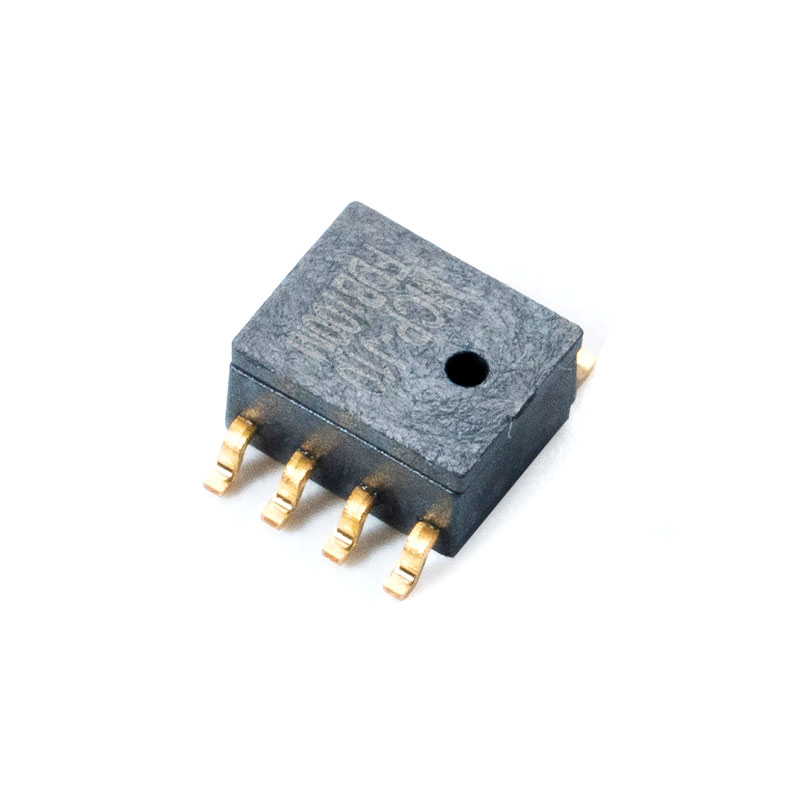

Mems Tech has specialized in the field of pressure sensors for over 14 years.
-
 [email protected]
-
 +86-18068257393
-
 50-1125 Zhongbang City Garden, No.2008 Taihu East Avenue, Xinwu District, Wuxi City, Jiangsu Province, China
Copyright © 2025 byWuxi Mems Tech Co., Ltd. Rights Reserved.
Custom MEMS Pressure Sensor Manufacturers
