

 English
 Français
 中文简体
中文简体What is an MCP Pressure Sensor?
Date:2025-12-17
Content
- 1 Core Concept: Bridging the MCP Brand and Pressure Sensing
- 2 Digital Solutions: The Integrated Approach
- 3 High-Performance Applications: Demands of Industrial Systems
- 4 Building Your Own Solution: The Discrete Design Path
- 5 Ensuring Precision: Calibration and Performance Validation
- 6 Navigating the Portfolio: A Strategic Selection Guide
- 7 FAQ
Core Concept: Bridging the MCP Brand and Pressure Sensing
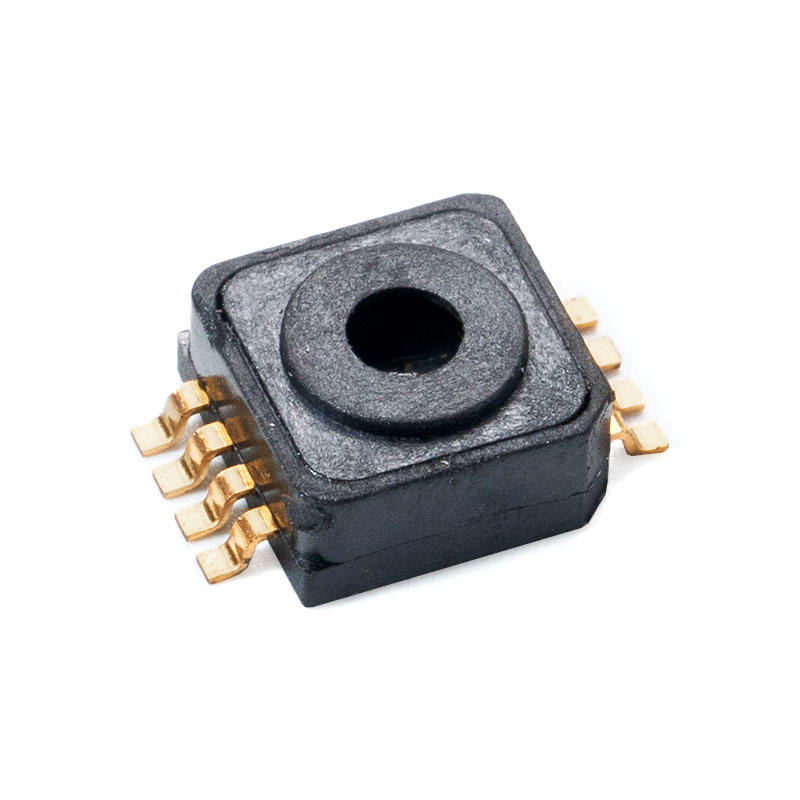
When encountering the term MCP pressure sensor, it's crucial to understand its dual meaning within the electronics industry. Primarily, "MCP" refers to a prolific series of integrated circuits (ICs) from Microchip Technology, a leading semiconductor manufacturer. While Microchip produces various sensors, the "MCP" prefix is most famously associated with their Analog-to-Digital Converters (ADCs), digital potentiometers, and temperature sensors. Therefore, a true, single-chip MCP pressure sensor with the MCP prefix is not a standard product line. Instead, the term commonly refers to a pressure sensing solution that utilizes Microchip's signal conditioning and data conversion ICs—such as MCP600x op-amps, MCP3421 ADCs, or MCP390x energy meter chips—at its heart. This system-level approach pairs a sensitive analog pressure transducer (like a piezoresistive wheatstone bridge) with high-performance MCP ICs to create a precise, reliable, and often digital output measurement system. This distinction is key for engineers seeking the right components for their design.
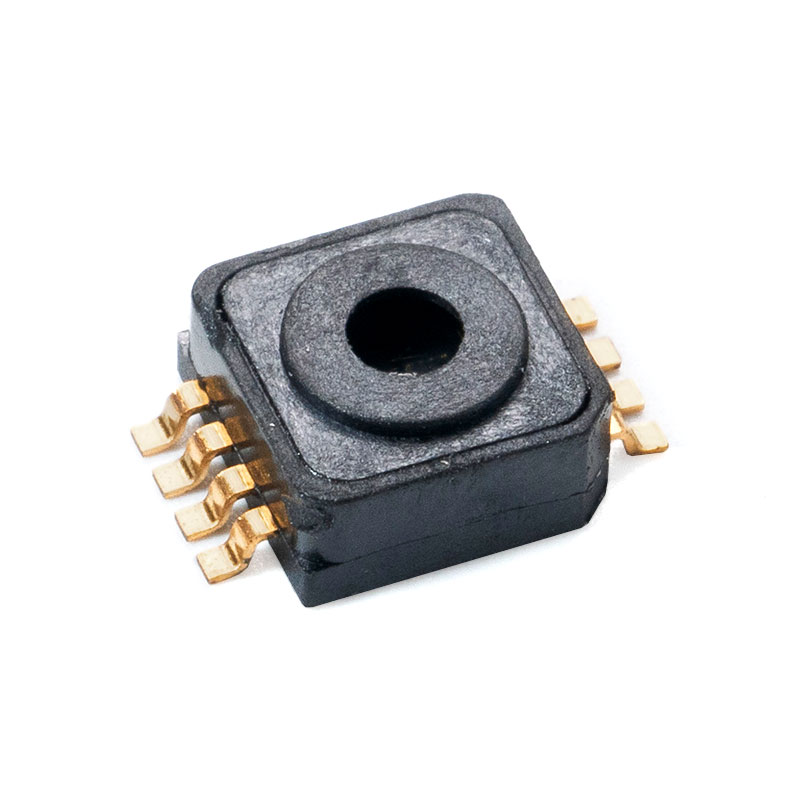
MCP Pressure Sensor
In a typical setup, the raw, millivolt-level signal from a pressure transducer is too weak and noisy for direct processing. This is where MCP components excel. A precision operational amplifier from the MCP6xxx series can amplify this signal. Next, a high-resolution ADC from the MCP3xxx or MCP34xx series digitizes the amplified voltage with minimal noise and error. Finally, a microcontroller communicates with the ADC via SPI or I2C to obtain a digital pressure reading. This modular, MCP series-based signal chain offers designers exceptional flexibility to optimize for cost, power, and performance, making it a cornerstone of modern pressure measurement systems from medical devices to industrial controls.
Digital Solutions: The Integrated Approach
The trend in sensor technology is towards greater integration and digital communication. While a discrete signal chain offers flexibility, designers often seek a streamlined solution. This is where understanding the concept of a digital output pressure sensor MCP series interface becomes valuable. Although Microchip may not market a monolithic MCP-branded digital pressure sensor, the ecosystem they enable is digital at its core. By selecting a pressure transducer with a compatible analog output and pairing it with an MCP ADC that features a direct digital interface (SPI or I2C), engineers effectively create a "digital pressure sensor module." The digital interface eliminates analog signal integrity concerns over longer distances, simplifies microcontroller firmware by providing direct digital values, and enables easy networking of multiple sensors on a shared bus. This approach, leveraging the robust MCP series of ADCs, provides a reliable and design-friendly path to digitizing pressure data, which is essential for IoT devices, smart industrial equipment, and any system where digital data acquisition is preferred.
Understanding Digital Output Pressure Sensor MCP Series Interface
Implementing a digital output for pressure sensing using MCP ICs typically involves the SPI (Serial Peripheral Interface) or I2C (Inter-Integrated Circuit) protocol. For instance, the MCP3201 (12-bit ADC) uses SPI, requiring a chip select (CS), serial clock (SCK), and data in/out (DIN/DOUT) lines. This provides fast, full-duplex communication ideal for higher-speed sampling. Conversely, the MCP3421 (18-bit ADC) uses I2C, requiring only two bidirectional lines (SDA and SCL), perfect for saving microcontroller pins and connecting multiple devices on a single bus. The choice depends on system priorities:
- SPI (e.g., MCP3201, MCP3008): Faster data transfer, simpler protocol timing, full-duplex. Best for single-sensor or high-speed applications.
- I2C (e.g., MCP3421, MCP9800): Uses fewer wires, supports multi-device networks, has built-in addressing. Ideal for systems with multiple sensors or limited I/O.
The interface choice directly impacts PCB layout complexity, firmware development, and overall system architecture, making it a fundamental decision in the design of a digital pressure sensing node.
High-Performance Applications: Demands of Industrial Systems
In industrial environments, pressure measurement is not merely about obtaining a reading; it's about guaranteeing long-term, trustworthy data under harsh conditions. Specifying a system that functions as a high accuracy MCP pressure transducer for industrial monitoring requires careful attention to parameters beyond basic resolution. These systems often use high-grade, isolated pressure transducers whose outputs are conditioned and digitized by robust MCP signal chain components. Key performance differentiators include long-term stability—the sensor's ability to maintain its calibration over months or years, minimizing drift. Comprehensive temperature compensation is also critical, often implemented both within the transducer and through software algorithms that use data from a separate temperature sensor (potentially an MCP9800) to correct the pressure reading. Furthermore, immunity to Electromagnetic Interference (EMI) is paramount, achieved through careful PCB shielding, filtering with MCP op-amps, and the use of isolated power supplies and signal paths. Compliance with standards like IEC 61000-6-2 (industrial immunity) may be necessary for deployment in certified environments.
Building Your Own Solution: The Discrete Design Path
For applications requiring ultimate customization, optimal performance, or cost control at high volumes, the discrete design path is paramount. A classic example is designing a circuit around the MCP3421 with pressure sensor circuit design. The MCP3421 is an 18-bit delta-sigma ADC with ultra-low noise and high resolution, ideal for capturing the subtle signal variations from a precision pressure transducer. The design process involves several critical stages. First, the millivolt output from the piezoresistive bridge must be amplified by a low-noise, low-drift instrumentation amplifier (which could be built with MCP6Vxx op-amps) to match the ADC's input range. Then, a precise voltage reference, such as the MCP1541, is used to establish the ADC's measurement baseline, directly impacting accuracy. The MCP3421 itself, with its I2C interface and programmable gain, is connected following strict layout guidelines to avoid noise coupling. This approach allows engineers to tailor bandwidth, filtering, and power consumption precisely, resulting in a bespoke pressure sensor solution that can outperform many off-the-shelf modules for specific, demanding applications like laboratory instrumentation or precision pneumatic control.
Ensuring Precision: Calibration and Performance Validation
Regardless of the components used, the stated accuracy of any measurement system is meaningless without proper calibration. While the search term MCP9800 pressure sensor accuracy and calibration references a temperature sensor, it highlights a universal need: understanding and verifying sensor accuracy. For a pressure sensing system built with MCP components, calibration is the process of mapping its digital output (from the ADC) to known physical pressure inputs. A simple single-point offset calibration corrects for a consistent zero-error. However, for high accuracy across a range, multi-point calibration is essential. This involves applying several known pressures (from a calibrated dead-weight tester or digital standard) across the operating range, recording the ADC outputs, and generating a correction curve (linear or polynomial). This curve is stored in the system's microcontroller and applied to all future readings. Key metrics from a datasheet, like Integral Non-Linearity (INL) for an MCP ADC or Full-Scale Error for the system, define the ultimate accuracy achievable post-calibration. Regular validation against a standard ensures the system maintains its specified performance over time, which is critical in medical, aerospace, or process control applications.
| Calibration Type | Method | Best For | Typical Accuracy Gain |
| Single-Point (Offset) | Apply zero pressure, measure output, subtract offset. | Applications where only zero-point error is significant. | Corrects for zero drift only. |
| Two-Point (Offset & Gain) | Apply zero and full-scale pressure, calculate linear correction. | Systems with linear response and consistent gain error. | Corrects for offset and span/gain error. |
| Multi-Point (Non-Linear) | Apply 5-10 pressures across range, generate polynomial fit. | High-precision systems where sensor non-linearity is a factor. | Corrects for offset, gain, and non-linearity errors. |
With a vast array of pressure transducers and supporting MCP ICs available, a systematic approach is needed. This Microchip MCP vacuum pressure sensor selection guide outlines a strategic framework. First, define the fundamental requirement: the pressure range (e.g., 0-100 psi, or -14.7 to 0 psi for vacuum) and type (absolute, gauge, differential). This selects the transducer. Next, assess media compatibility—will the sensor contact air, water, oil, or a corrosive gas? This determines the transducer's diaphragm material. Then, analyze the transducer's output: is it a ratiometric mV/V signal or a conditioned 0-5V/4-20mA output? This dictates the needed signal chain. For a weak mV signal, you'll need an MCP6Vxx auto-zero op-amp for amplification. For digitization, choose an MCP ADC based on needed resolution (e.g., 12-bit MCP3201 for basic, 18-bit MCP3421 for high-resolution) and interface (SPI/I2C). For vacuum or very low-pressure measurements, low-noise components and exceptional offset stability become critical. Finally, always consult the latest Microchip datasheets and application notes for reference designs, which are invaluable resources for implementing a robust MCP pressure sensor solution.
FAQ
Can I use an MCP ADC with any analog pressure sensor?
In principle, yes, any analog pressure sensor with a voltage output can be interfaced with an appropriate MCP ADC, but successful integration requires matching specifications. You must ensure the sensor's output voltage range falls within the ADC's input range (often 0V to VREF). If the signal is too small (e.g., a few millivolts from a piezoresistive bridge), you will need a precision amplifier like an MCP6Vxx between the sensor and ADC. Additionally, consider the sensor's output impedance and the ADC's sampling rate; a high-impedance source may require a buffer amplifier to prevent measurement errors during the ADC's sampling phase. Always design the interface circuit with the specific sensor and ADC datasheets in hand to account for offset voltages, bias currents, and noise characteristics.
What is the difference between absolute, gauge, and differential pressure sensing?
This is a fundamental concept in pressure measurement. Absolute pressure is measured relative to a perfect vacuum (zero pressure). It is used in barometers, altimeters, and processes where vacuum is a reference. Gauge pressure is measured relative to the local ambient atmospheric pressure. A tire pressure gauge reads zero at atmospheric pressure, showing only the pressure above it. Differential pressure measures the difference between two pressures, such as across a filter or in a flow meter. The choice affects which type of pressure transducer you need and has implications for the signal conditioning. For example, an absolute pressure sensor has a sealed vacuum reference chamber, while a gauge sensor is vented to the atmosphere.
How does temperature affect MCP-based pressure sensor readings?
Temperature is the most significant source of error in precision pressure sensing. It affects both the pressure transducer (causing span and zero drift) and the electronic components (changing resistor values and op-amp/ADC offsets). In an MCP-based system, several strategies combat this. First, use components with low temperature coefficients, like the MCP3421 ADC which has a very low offset drift. Second, employ hardware temperature compensation using a temperature sensor like the MCP9800. The microcontroller reads both the pressure ADC and the temperature sensor, then applies a software compensation algorithm using coefficients determined during a multi-temperature calibration cycle. This active temperature compensation is essential for achieving high accuracy across the operating environment of an industrial or automotive application.
What are the trending applications driving innovation in pressure sensing?
Several key trends are shaping demand for advanced pressure sensing solutions. The proliferation of IoT and smart agriculture requires networks of low-cost, battery-powered sensors for soil water potential (matric potential) and irrigation line pressure. Wearable health monitors are exploring continuous blood pressure measurement, demanding miniaturized, highly accurate sensors. The electric vehicle (EV) revolution increases the need for pressure monitoring in battery thermal management systems and hydrogen fuel cells. Finally, industrial predictive maintenance relies on monitoring pressure vibrations and trends in hydraulic and pneumatic systems to forecast failures. These applications push for higher integration, lower power (where MCP ADCs excel), digital outputs, and improved robustness, all areas where a well-designed signal chain using MCP components can provide a competitive solution.

Mems Tech has specialized in the field of pressure sensors for over 14 years.
-
 [email protected]
-
 +86-18068257393
-
 50-1125 Zhongbang City Garden, No.2008 Taihu East Avenue, Xinwu District, Wuxi City, Jiangsu Province, China
Copyright © 2025 byWuxi Mems Tech Co., Ltd. Rights Reserved.
Custom MEMS Pressure Sensor Manufacturers
