For automation engineers, instrumentation specialists, and industrial sourcing professionals, selecting the correct pressure sensor is a critical decision that affects measurement accuracy, process control quality, equipment reliability, and safety compliance. Three main pressure reference types dominate the industrial market: gauge pressure sensors, absolute pressure sensors, and differential pressure sensors. Gauge pressure sensors measure pressure relative to the ambient atmospheric pressure, using the surrounding air as the zero reference point. Absolute pressure sensors measure pressure relative to a perfect vacuum (absolute zero). Differential pressure sensors measure the difference in pressure between two points in a system. Gauge pressure sensors are the most common type in industrial applications because most processes operate above or below atmospheric pressure, and operators need to know the pressure relative to their environment. This technical guide compares gauge pressure sensors against absolute and differential pressure sensors, focusing on measurement principles, MEMS (Micro-Electro-Mechanical Systems) technology, pressure ranges, output signals, accuracy, temperature compensation, material design, and application-specific performance for hydraulic systems, pneumatic controls, liquid level monitoring, and vacuum applications.
1. Defining Gauge Pressure Sensors: Principles and Reference Pressure
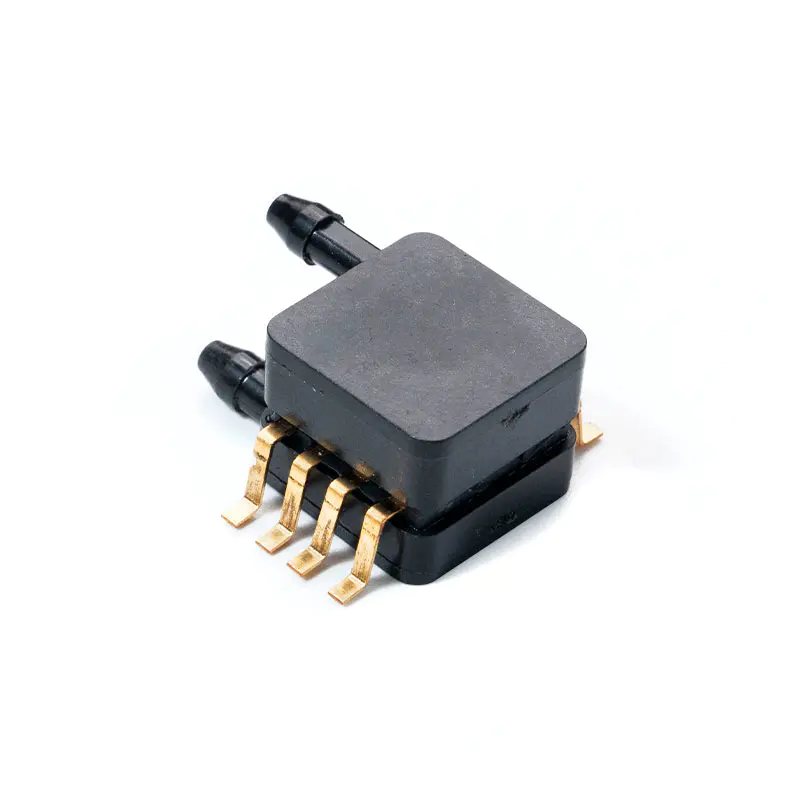
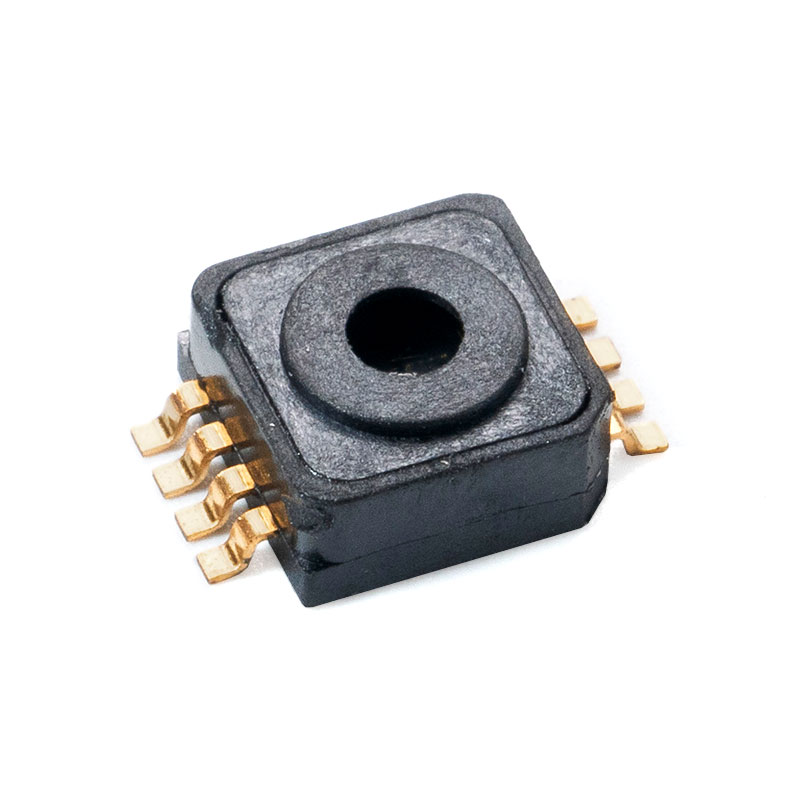
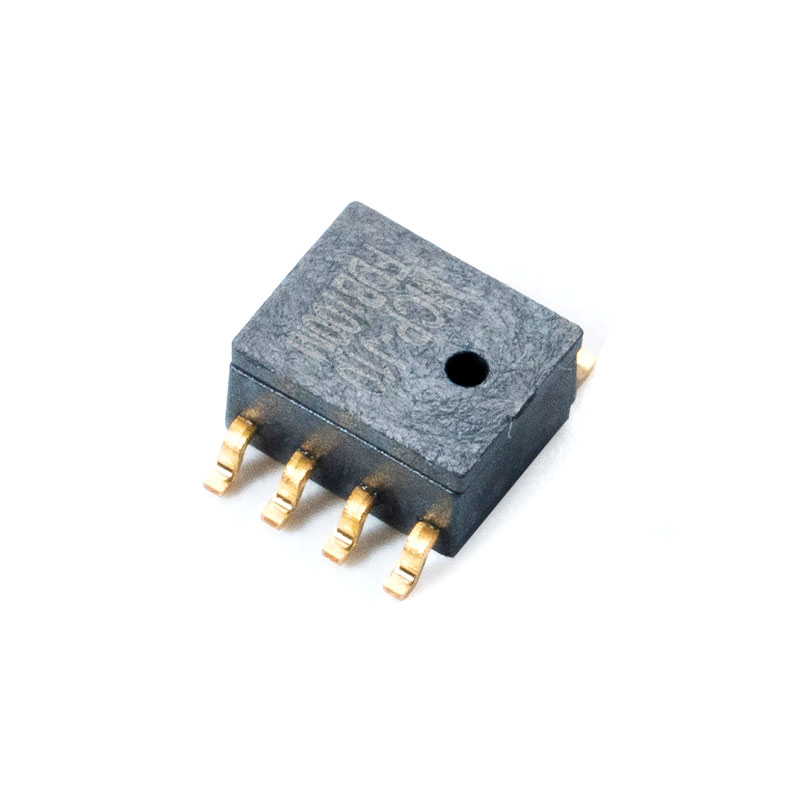
A gauge pressure sensor (also called relative pressure sensor) is a device that measures pressure relative to the ambient atmospheric pressure. The sensor has a vented reference port that is open to the surrounding atmosphere. The sensing element measures the difference between the process pressure applied to one side of the diaphragm and the atmospheric pressure applied to the other side. When the process pressure equals atmospheric pressure, the sensor output is zero (0 psi, 0 bar, or 0 kPa). When the process pressure is higher than atmospheric (positive pressure), the output is positive. When the process pressure is lower than atmospheric (vacuum or negative pressure), the output is negative. The sensing element is typically a piezoresistive silicon micro-machined diaphragm (MEMS) or a thin-film strain gauge on a metal diaphragm. As pressure deforms the diaphragm, the resistance of the piezoresistors changes, producing an electrical output proportional to the applied pressure. The output signal is typically amplified to standard industrial levels: 4-20 mA loop current, 0-5 VDC, 0-10 VDC, or digital outputs (I2C, SPI, CAN bus). Gauge pressure sensors are used in thousands of applications: hydraulic system pressure monitoring, compressed air systems, water distribution networks, pump control, tank level measurement (by measuring hydrostatic pressure), and pneumatic controls. For detailed technical specifications, sourcing professionals can refer to
gauge pressure sensors product pages for material data sheets and test reports.
2. Gauge vs. Absolute vs. Differential Pressure Sensors: Fundamental Differences
The fundamental difference between gauge, absolute, and differential pressure sensors lies in the reference pressure used for measurement. Gauge pressure sensors use atmospheric pressure as the reference. The sensor has a vented housing or a reference port open to the air. Output is zero at atmospheric pressure. Gauge sensors are suitable for most industrial processes because operators care about pressure relative to the environment (e.g., 100 psi above atmosphere). Absolute pressure sensors use a sealed vacuum reference chamber (perfect vacuum, 0 psi absolute) as the reference. The sensor is not vented to atmosphere. Output is zero only in a perfect vacuum. Absolute sensors are used for barometric pressure measurement, altitude sensing, and applications where atmospheric pressure variations would affect the measurement (e.g., leak testing of sealed containers, vacuum furnace pressure control). Differential pressure sensors measure the difference between two process pressures (P1 - P2). Neither port is vented to atmosphere. Differential sensors are used for flow measurement (using orifice plates), filter monitoring (pressure drop across a filter), and liquid level measurement in closed tanks (difference between bottom pressure and top vapor pressure). The choice depends on the application. For a vented tank, gauge is correct. For a sealed tank with varying atmospheric pressure, differential may be needed. For altitude measurement, absolute is required. The table below summarizes key differences.
3. MEMS Technology in Gauge Pressure Sensors: Structure and Operation
Modern gauge pressure sensors use MEMS (Micro-Electro-Mechanical Systems) technology, which integrates microscopic mechanical structures with electronic circuits on a single silicon chip. The core of the MEMS pressure sensor is a micromachined silicon diaphragm, typically 5 to 50 micrometers thick, fabricated using photolithography and etching processes. Piezoresistors (doped silicon regions that change resistance when stressed) are diffused into the diaphragm at high-stress locations (edges and center). When pressure is applied, the diaphragm deflects, causing strain in the piezoresistors. The resistance change is proportional to the applied pressure. The four piezoresistors are connected in a Wheatstone bridge configuration, which converts resistance changes into a differential voltage signal. The voltage signal is amplified, linearized, temperature-compensated, and converted to the desired output format (4-20 mA, voltage, or digital) by an ASIC (Application-Specific Integrated Circuit) or signal conditioning circuit. The MEMS chip is mounted on a substrate (ceramic, PCB, or metal), wire-bonded, and protected with gel coating or stainless steel isolation diaphragm for media compatibility. The gauge reference is achieved by venting the back side of the MEMS chip (or the back side of the isolation diaphragm) to the atmosphere through a vent hole in the sensor housing. MEMS technology offers several advantages: very small size (chip as small as 1mm x 1mm), high sensitivity (microvolt per pascal range), low power consumption (milliwatts), excellent repeatability, and low cost in high volumes. For harsh industrial environments (corrosive fluids, high temperature), the MEMS chip may be isolated from the media by a stainless steel diaphragm and filled with silicone oil (oil-filled gauge pressure sensor).
4. Pressure Ranges and Output Signals for Industrial Applications
Gauge pressure sensors are available in a wide range of pressure ranges to suit different industrial applications. Low-pressure ranges (0-1 psi to 0-15 psi, 0-0.07 bar to 0-1 bar) are used for HVAC air pressure monitoring, cleanroom differential pressure, and low-pressure pneumatic systems. Medium-pressure ranges (0-50 psi to 0-500 psi, 0-3.5 bar to 0-35 bar) are used for general industrial hydraulics, water distribution, pump discharge pressure, and process control. High-pressure ranges (0-1000 psi to 0-10,000 psi, 0-70 bar to 0-700 bar) are used for heavy equipment hydraulics, injection molding machines, hydraulic presses, and high-pressure water jet cutting. Vacuum or compound ranges (-14.7 psi to 0 psi, -1 bar to 0 bar) measure negative pressure (vacuum) for suction monitoring, vacuum packaging, and laboratory applications. Compound ranges (-14.7 to 30 psi, -1 to 2 bar) measure both vacuum and positive pressure. Output signals are standardized for industrial compatibility. Analog outputs: 4-20 mA loop current (most common for industrial control, long cable runs, noise immunity), 0-5 VDC, 0-10 VDC (common for PLCs and data acquisition), and 1-5 VDC. Digital outputs: I2C and SPI (for embedded systems and IoT devices), RS-485 Modbus (for industrial networks), and CAN bus (for automotive and heavy equipment). The excitation voltage is typically 5 VDC or 9-30 VDC (for loop-powered 4-20 mA sensors).
5. Accuracy, Linearity, Hysteresis, and Temperature Compensation
Accuracy is the most critical specification for a gauge pressure sensor. It is typically expressed as a percentage of full scale (%FS). Industrial-grade gauge pressure sensors achieve accuracy of ±0.5% FS, ±0.25% FS, or ±0.1% FS. High-precision sensors for laboratory or calibration applications achieve ±0.05% FS or better. Accuracy includes several error sources: linearity (deviation of the output from a straight line across the pressure range), hysteresis (difference in output when increasing pressure vs. decreasing pressure), repeatability (ability to produce the same output for the same pressure under identical conditions), and temperature effects (zero shift and span shift with temperature). For a ±0.5% FS sensor, the total error band (including linearity, hysteresis, repeatability, and temperature effects over the compensated temperature range) is within ±0.5% of the full scale reading. For example, a 0-100 psi sensor with ±0.5% FS accuracy has a maximum error of ±0.5 psi at any point. Temperature compensation is essential for accurate measurement across varying operating temperatures. The sensor is calibrated at multiple temperatures (typically -20°C, 25°C, and 85°C), and the compensation coefficients are stored in the sensor's ASIC or microcontroller. During operation, the sensor measures temperature and applies the correction factors to the pressure reading. The compensated temperature range is typically -20°C to +85°C for industrial sensors, or -40°C to +125°C for automotive and extended range sensors. Outside the compensated range, accuracy degrades at a specified rate (e.g., ±0.03% FS per °C).
6. Material and Design Considerations for Durable Sensors
The materials used in gauge pressure sensor construction determine chemical compatibility, temperature resistance, and long-term stability. Pressure port material: stainless steel (304, 316, or 316L) is the most common for industrial sensors, providing excellent corrosion resistance for water, oil, air, and mild chemicals. For highly corrosive media (acids, caustics, saltwater), Hastelloy C-276, Inconel, or titanium ports are available. For food and pharmaceutical applications, 316L stainless steel with sanitary Tri-Clamp connections is required. Diaphragm material: for general-purpose sensors, 316L stainless steel diaphragm (thickness 0.05-0.2 mm) provides good sensitivity and durability. For low-pressure sensors (under 5 psi), ceramic or silicon diaphragm (direct media contact) offers higher sensitivity. For ultra-high-purity applications (semiconductor, pharmaceutical), the diaphragm may be made of alumina ceramic or silicon with no metal wetted parts. Sensor housing material: IP65/IP67/IP68-rated enclosures are required for wash-down, outdoor, or submersible applications. Housing options include stainless steel (for corrosive environments), aluminum (for general industrial), and polycarbonate (for light-duty indoor). Sealing materials: O-rings (Viton, EPDM, NBR) or gaskets are used to seal the pressure port and housing. The seal material must be compatible with the process fluid. Viton (FKM) is suitable for most oils, fuels, and chemicals; EPDM is suitable for water, steam, and brake fluids; NBR is suitable for mineral oils and fuels. For high-temperature applications (above 125°C / 260°F), metal seals or glass-to-metal sealing may be required.
7. Application Guide: Hydraulic Systems, Pneumatics, Liquid Level, and Vacuum Monitoring
Gauge pressure sensors are used across multiple industries, with specifications varying by application. For hydraulic systems (industrial presses, injection molding machines, construction equipment, forklifts), a 0-5000 psi to 0-10,000 psi gauge pressure sensor with 4-20 mA output and IP67 rating is standard. The sensor must withstand pressure spikes (2-3x rated pressure) and have high overpressure capability. For pneumatic systems (compressed air monitoring, air tools, pneumatic actuators), a 0-150 psi or 0-300 psi gauge sensor with 0-10 VDC output and quick-response time (under 1 ms) is used. For liquid level measurement in open tanks (water towers, sumps, chemical tanks, wastewater basins), a submersible gauge pressure sensor measures hydrostatic pressure at the bottom of the tank. Pressure is proportional to liquid height: 1 psi ≈ 2.31 feet (0.7 meters) of water. For accurate level measurement, the sensor must be vented through the cable (vented gauge design) so atmospheric pressure variations are cancelled. For vacuum monitoring (vacuum packaging, suction cups, medical suction, laboratory vacuum chambers), a compound pressure sensor (-14.7 to 0 psi, -1 to 0 bar) is required to measure negative pressure relative to atmosphere. The sensor should have high resolution at low pressures (0.1% FS or better). For pump control and well monitoring (water wells, irrigation pumps, booster pumps), a 0-200 psi gauge sensor with 4-20 mA output and rugged stainless steel housing is used to monitor pump discharge pressure and protect against dry-run conditions. The table below matches applications with recommended specifications.
8. Quality Specifications for Export: Certifications and Performance Standards
For manufacturers exporting gauge pressure sensors, documented quality and compliance certifications are essential. The most requested standards and certifications include: CE marking (European Conformity) under the EMC Directive (2014/30/EU) and RoHS Directive (2011/65/EU), ISO 9001 (quality management system), and for hazardous area applications, ATEX (European) or IECEx (international) certification for intrinsic safety (Ex ia) or flameproof enclosure (Ex d). Specific performance tests include: accuracy test (measurement at 5-10 calibration points across the pressure range, up and down, to verify linearity, hysteresis, and repeatability), temperature compensation test (measurement at -20°C, 25°C, and 85°C or specified range to verify zero shift and span shift), long-term stability test (500-1000 hour drift test at rated pressure at 85°C to verify that output does not change more than specified percentage per year), overpressure test (application of 1.5x to 3x rated pressure without damage), burst pressure test (destructive test to verify safety margin), electrical safety test (insulation resistance, dielectric strength), and EMC test (radiated and conducted emissions per CISPR 11, immunity per IEC 61000-4-2 to -6). For pressure sensors used in medical devices, ISO 13485 certification is required. For automotive applications, IATF 16949 certification is required. For potable water applications, NSF/ANSI 61 certification may be required for materials in contact with drinking water. Many large industrial buyers also require factory audits covering ISO 9001 and documented calibration traceability to international standards (NIST, PTB, or other national metrology institutes). Manufacturers who maintain current certifications and transparent quality records gain a competitive advantage in international sourcing.
Frequently Asked Questions About Gauge Pressure Sensors
Q1: What is the difference between a gauge pressure sensor and an absolute pressure sensor?
A: A gauge pressure sensor measures pressure relative to the ambient atmospheric pressure (uses atmosphere as zero reference). It has a vented housing. An absolute pressure sensor measures pressure relative to a perfect vacuum (sealed reference chamber, 0 psi absolute). Gauge sensors are used for most industrial processes. Absolute sensors are used for barometric pressure, altimeters, and leak testing of sealed containers.
Q2: Can a gauge pressure sensor be used for liquid level measurement in an open tank?
A: Yes. A submersible gauge pressure sensor with a vented cable measures hydrostatic pressure at the bottom of an open tank. Pressure is proportional to liquid height (1 psi per 2.31 feet of water). The vented cable ensures that atmospheric pressure variations are cancelled, so the output only reflects liquid height.
Q3: What is the typical accuracy of an industrial gauge pressure sensor?
A: Industrial gauge pressure sensors typically achieve accuracy of ±0.5% of full scale (%FS) or ±0.25% FS for higher precision. For general-purpose applications, ±1.0% FS is acceptable. For critical processes or laboratory use, ±0.1% FS or ±0.05% FS sensors are available. Accuracy includes linearity, hysteresis, repeatability, and temperature effects over the compensated temperature range.
Q4: What is the difference between 4-20 mA and 0-10 VDC output for pressure sensors?
A: 4-20 mA (loop current) is a two-wire, current-loop output. It is immune to voltage drop over long cable runs (1000+ feet) and can be used in noisy industrial environments. Zero output is 4 mA (not 0 mA) to allow detection of wire breaks. 0-10 VDC is a three-wire voltage output. It is suitable for short cable runs (under 50 feet) and is common with PLCs and data acquisition systems with voltage inputs.
Q5: What certifications are required for a gauge pressure sensor exported to Europe for use in a hazardous area (explosive environment)?
A: For use in explosive atmospheres (gas or dust), the sensor must have ATEX (European) or IECEx (international) certification. The certification type depends on the zone: Zone 0/1/2 for gas, Zone 20/21/22 for dust. Intrinsic safety (Ex ia) is common for low-power sensors. Flameproof enclosure (Ex d) is used for higher-power sensors. The sensor must be marked with the certification code and must be installed per the manufacturer's control drawing. The CE marking is also required for EMC and RoHS compliance.
References and Further Reading
- International Electrotechnical Commission. (2023). IEC 61000-6-2:2016 – Electromagnetic compatibility (EMC) - Part 6-2: Generic standards - Immunity standard for industrial environments. Geneva: IEC.
- International Organization for Standardization. (2022). ISO 9001:2015 – Quality management systems — Requirements. Geneva: ISO.
- International Electrotechnical Commission. (2022). IEC 60079-11:2023 – Explosive atmospheres - Part 11: Equipment protection by intrinsic safety "i". Geneva: IEC.
- American Society of Mechanical Engineers. (2022). ASME B40.100-2018: Pressure Gauges and Gauge Attachments. New York, NY: ASME.
- SGS Group. (2024). Pressure Sensor Testing and Certification: A Technical Guide for Industrial Sourcing. Geneva: SGS Publications.


 English
 Français
 中文简体
中文简体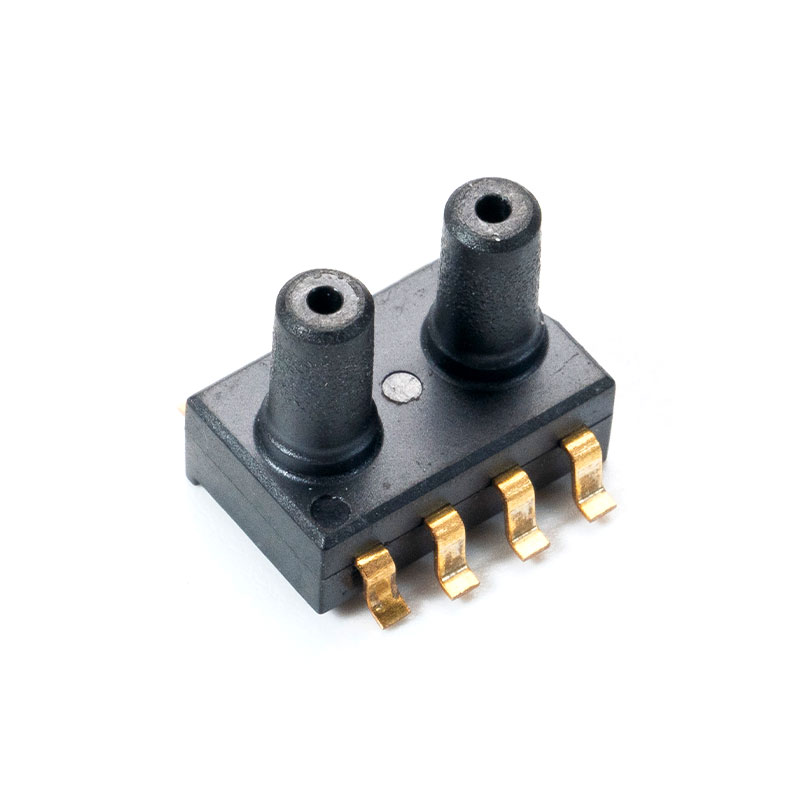

 [email protected]
 +86-18068257393
 50-1125 Zhongbang City Garden, No.2008 Taihu East Avenue, Xinwu District, Wuxi City, Jiangsu Province, China
