

 English
 Français
 中文简体
中文简体What Is an Absolute Pressure Sensor?
Date:2026-03-02
Content
- 1 1. How Does an Absolute Pressure Sensor Work?
- 2 2. Absolute Pressure Sensor vs Gauge Pressure Sensor — Deep Comparison
- 3 3. Key Applications by Industry
- 4 4. How to Choose the Right Absolute Pressure Sensor
- 5 5. About MemsTech — Your Trusted MEMS Pressure Sensor Partner
- 6 6. Frequently Asked Questions (FAQ)
- 6.1 Q1: What is the fundamental difference between an absolute pressure sensor and a gauge pressure sensor?
- 6.2 Q2: How does an absolute pressure sensor work in an altimeter application?
- 6.3 Q3: Can a low-cost absolute pressure sensor be used with Arduino for DIY altitude measurement?
- 6.4 Q4: What specifications are most critical when selecting an absolute pressure sensor for HVAC systems?
- 6.5 Q5: How does an absolute pressure sensor maintain accuracy over its lifetime?
- 7 References
An absolute pressure sensor is a transducer that measures pressure relative to a perfect vacuum (0 Pa), rather than relative to atmospheric or any other reference pressure. This makes it fundamentally different from gauge or differential sensors, and uniquely suited for applications where atmospheric fluctuations would introduce unacceptable measurement errors. From aerospace altimetry to industrial HVAC systems, absolute pressure sensors are a cornerstone of precision measurement engineering.
This guide covers everything engineers, procurement specialists, and system integrators need to know—from operating principles and comparison data to application-specific selection criteria and low-cost implementation options.
1. How Does an Absolute Pressure Sensor Work?
1.1 Core Working Principle
An absolute pressure sensor contains a sealed reference chamber evacuated to near-perfect vacuum (typically <10⁻³ Pa). A sensing diaphragm—commonly made from silicon, stainless steel, or ceramic—deflects in response to the process pressure applied on one side. This mechanical deflection is converted into an electrical signal using one of several transduction methods:
- Piezoresistive: Strain gauges on the diaphragm change resistance proportionally to deflection. Most common in MEMS-based sensors due to high sensitivity and low cost.
- Capacitive: Deflection changes the capacitance between the diaphragm and a fixed electrode. Offers excellent long-term stability and low temperature drift.
- Piezoelectric: Generates a charge under dynamic pressure. Best suited for fast transient measurements, not static pressure.
- Resonant: Pressure changes the resonant frequency of a vibrating element. High accuracy but higher cost.
The output is then conditioned through onboard ASIC circuits that provide temperature compensation, zero offset correction, and signal amplification—producing a calibrated analog (0–5 V, 4–20 mA) or digital (I²C, SPI) output.
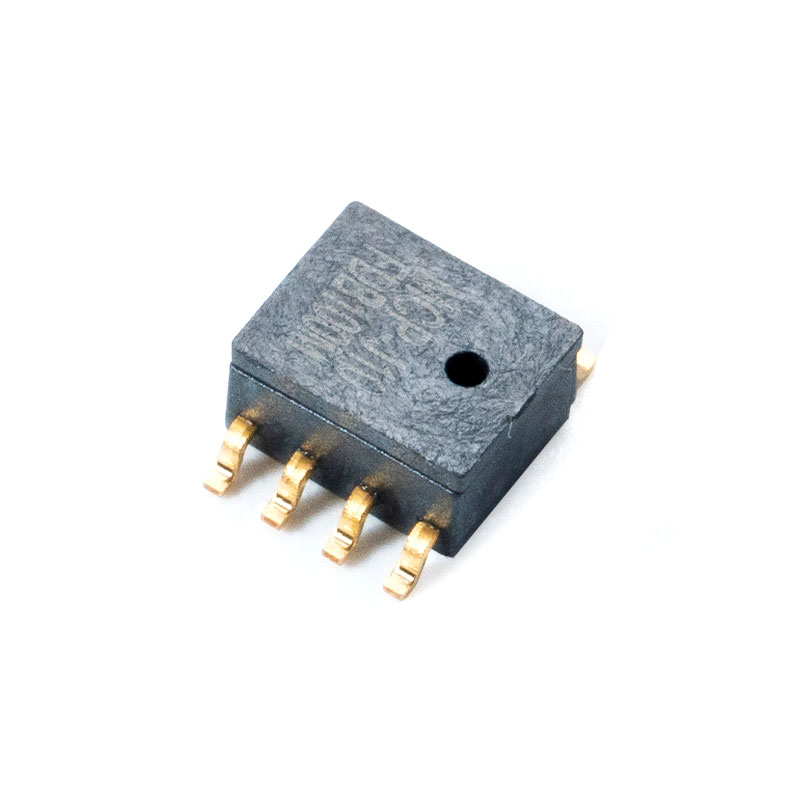
1.2 Absolute vs Gauge vs Differential — Key Differences
Understanding the distinction between sensor types is critical for correct system design. While gauge sensors measure pressure relative to ambient atmosphere and differential sensors compare two process pressures, an absolute pressure sensor vs gauge pressure sensor comparison reveals a fundamental reference point difference that affects measurement accuracy in variable-altitude or variable-climate environments.
| Parameter | Absolute Pressure Sensor | Gauge Pressure Sensor | Differential Pressure Sensor |
|---|---|---|---|
| Reference Point | Perfect vacuum (0 Pa) | Local atmospheric pressure | Two independent process pressures |
| Affected by Altitude | No | Yes | Depends on design |
| Affected by Weather | No | Yes | No |
| Typical Output at Sea Level | ~101.325 kPa | 0 kPa (ambient = zero) | Variable |
| Common Applications | Altimeters, barometers, medical | Tire pressure, hydraulics | Flow measurement, HVAC filters |
| Complexity | Medium-High | Low-Medium | Medium |
1.3 Why Vacuum Reference Matters
The sealed vacuum reference chamber is what makes absolute measurement possible. Unlike gauge sensors, which use a vent port open to atmosphere, an absolute pressure sensor is immune to barometric drift, altitude variation, and seasonal atmospheric changes. This is non-negotiable in applications like aviation altimetry, where a 1 hPa pressure error at altitude can translate to a ~8.5 m altitude error—a critical safety margin in controlled airspace.
In medical ventilators and infusion pumps, absolute pressure measurement ensures drug delivery and respiratory support remain unaffected by the elevation of the hospital or changes in ambient pressure during transport.
2. Absolute Pressure Sensor vs Gauge Pressure Sensor — Deep Comparison
2.1 Side-by-Side Specification Comparison
When evaluating an absolute pressure sensor vs gauge pressure sensor, engineers must consider not just the reference point but also how each type performs across key metrology parameters. The table below summarizes typical datasheet specifications for comparable MEMS-based devices in the 0–10 bar range:
| Spec | Absolute Sensor (typical) | Gauge Sensor (typical) |
|---|---|---|
| Zero Point Reference | 0 Pa (vacuum) | Atmospheric (~101.3 kPa) |
| Total Error Band (TEB) | ±0.1% to ±0.5% FS | ±0.05% to ±0.25% FS |
| Operating Temp Range | -40°C to +125°C | -40°C to +125°C |
| Long-term Stability | ±0.1% FS / year | ±0.1% FS / year |
| Pressure Port | Single port (sealed reference) | Single port + vent hole |
| Media Compatibility | Dry gas, liquids (media-isolated) | Dry gas, liquids (media-isolated) |
2.2 When to Choose Absolute Over Gauge
Choose an absolute pressure sensor when:
- The application operates at varying altitudes or locations with different barometric pressures (e.g., mobile equipment, aircraft, drones).
- Measurement traceability to an absolute standard (SI unit: Pascal) is required for regulatory compliance—common in medical and aerospace certification.
- Vacuum monitoring or sub-atmospheric process control is needed (e.g., semiconductor manufacturing, freeze-drying).
- Long-term data logging requires a stable, drift-free baseline that is not affected by day-to-day weather changes.
Gauge sensors remain the preferred choice in closed-loop hydraulic and pneumatic systems where relative pressure to atmosphere is the relevant engineering quantity (e.g., tire inflation, boiler pressure).
2.3 Common Misconceptions
- Misconception: "Absolute sensors read 0 at ambient." — They do not. At sea level, an absolute sensor reads ~101.325 kPa. Only a gauge sensor reads 0 at ambient.
- Misconception: "Absolute sensors are always more accurate." — Accuracy depends on the design and calibration, not the reference type. Gauge sensors can achieve equal or better accuracy for relative measurements.
- Misconception: "You can convert a gauge sensor to absolute by adding atmospheric pressure." — This only works if atmospheric pressure is known and stable, which defeats the purpose in mobile or high-altitude applications.
3. Key Applications by Industry
3.1 Absolute Pressure Sensor for Altimeter Applications
The absolute pressure sensor for altimeter applications is one of the most technically demanding use cases. Aircraft altimeters rely on the International Standard Atmosphere (ISA) model, which defines a predictable pressure-altitude relationship: pressure decreases roughly 1.2 hPa per 10 m gain in altitude at sea level.
For certified avionics, sensors must meet DO-160G environmental standards and RTCA/DO-178C software assurance levels. Key specifications include:
- Pressure range: 10–110 kPa (covering altitudes from -500 m to ~30,000 m)
- Resolution: <1 Pa (equivalent to ~8 cm altitude resolution)
- Temperature compensation: -55°C to +85°C
- Shock and vibration resistance per MIL-STD-810
Consumer-grade drones and UAVs use lower-cost MEMS barometric sensors (e.g., 24-bit resolution, I²C interface) that still achieve <±1 m altitude accuracy in calm conditions, sufficient for automated flight control and return-to-home functions.
3.2 Absolute Pressure Sensor for HVAC Systems
In absolute pressure sensor for HVAC systems, the primary role is monitoring refrigerant pressure in compressor circuits, air handling unit (AHU) supply and return plenums, and building automation systems (BAS). Unlike filter differential pressure monitoring (which uses differential sensors), refrigerant circuit management requires absolute pressure to calculate refrigerant superheat and subcooling accurately using pressure-enthalpy (P-H) diagrams.
| HVAC Use Case | Sensor Type Recommended | Typical Pressure Range | Key Requirement |
|---|---|---|---|
| Refrigerant circuit monitoring | Absolute | 0–4 MPa | Chemical compatibility (R-410A, R-32) |
| AHU plenum pressure | Differential or Gauge | 0–2.5 kPa | Low-range accuracy |
| Barometric compensation | Absolute | 70–110 kPa | Low cost, I²C output |
| Chiller suction pressure | Absolute or Gauge | 0–1 MPa | High reliability, 4–20 mA output |
3.3 Medical Devices
Medical-grade absolute pressure sensors are embedded in ventilators, anesthesia machines, infusion pumps, blood pressure monitors, and dialysis equipment. Regulatory requirements (IEC 60601-1, ISO 80601) mandate biocompatibility for fluid-contact materials, electromagnetic compatibility (EMC), and rigorous calibration traceability.
Key medical sensor characteristics:
- Accuracy: ±0.1% FS or better, with NIST-traceable calibration
- Long-term drift: <±0.05% FS/year
- Media compatibility: saline, oxygen, anesthetic gas mixtures
- Output: Digital (I²C/SPI) with onboard temperature compensation preferred for modern embedded architectures
3.4 Automotive Systems
Automotive applications of absolute pressure sensors include manifold absolute pressure (MAP) sensors, tire pressure monitoring systems (TPMS, though these are typically gauge), turbocharger boost pressure, and fuel tank vapor pressure. MAP sensors are critical for engine control unit (ECU) fuel injection and ignition timing calculations. They must survive AEC-Q100 Grade 1 qualification (−40°C to +125°C), high vibration, and exposure to fuel vapors.
- Operating range: 10–400 kPa absolute (covers idle vacuum through maximum boost)
- Output: Ratiometric analog (0.5–4.5 V) or SENT digital protocol
- Response time: <1 ms for dynamic engine events
3.5 Low-Cost Absolute Pressure Sensor for Arduino Projects
The rise of open-source hardware has created strong demand for a low cost absolute pressure sensor Arduino-compatible solution. These sensors—typically MEMS barometric devices with I²C or SPI output—enable weather stations, altitude loggers, indoor navigation, and drone projects at minimal cost.
Popular MEMS absolute barometric sensors used in Arduino ecosystems offer:
- Pressure range: 300–1100 hPa (covers altitudes from -500 m to ~9,000 m)
- Interface: I²C (400 kHz fast mode) or SPI
- Resolution: 24-bit ADC, <0.18 Pa resolution in ultra-high-resolution mode
- Supply voltage: 1.8–5 V (3.3 V logic compatible)
- Package: LGA-8, QFN, or breakout module for prototyping
- Current consumption: <1 µA in sleep mode (critical for battery-powered IoT nodes)
4. How to Choose the Right Absolute Pressure Sensor
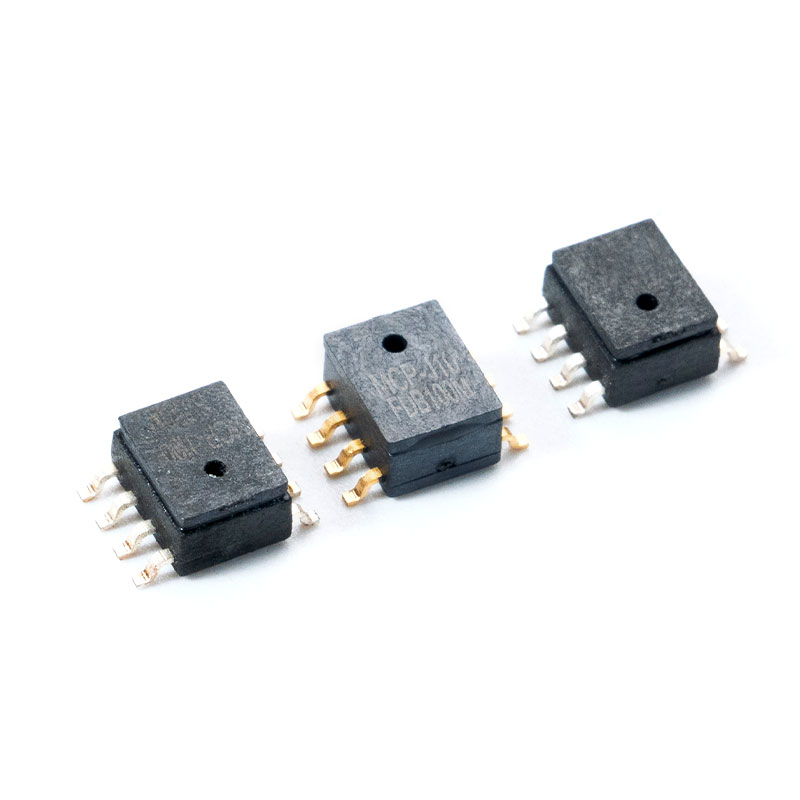
4.1 Key Specifications to Evaluate
Selecting the correct absolute pressure sensor requires systematic evaluation across several specification dimensions. Engineers should avoid over-specifying (which drives cost) and under-specifying (which causes field failures).
| Specification | What It Means | Typical Range | Engineering Guidance |
|---|---|---|---|
| Full Scale Pressure (FSP) | Maximum rated pressure | 1 kPa – 70 MPa | Select 1.5–2× your max operating pressure |
| Total Error Band (TEB) | Combined accuracy over temp range | ±0.05% – ±2% FS | Use TEB, not just "accuracy," for real-world performance |
| Proof Pressure | Max pressure without damage | 2–3× FSP typical | Must survive worst-case surge or water hammer |
| Burst Pressure | Pressure causing mechanical failure | 3–5× FSP typical | Safety-critical systems require margin above burst |
| Output Type | Signal format | Analog / I²C / SPI / 4–20 mA | Match to existing MCU or PLC interface |
| Compensated Temp Range | Range over which accuracy is guaranteed | -20°C to +85°C common | Must cover full application operating environment |
| Media Compatibility | What the sensor can contact | Dry gas, oil, water, refrigerants | Wetted materials must resist corrosion/chemical attack |
| Long-term Stability | Drift over time | ±0.05% – ±0.5% FS/year | Critical for calibration intervals in certified systems |
4.2 Selection Criteria for Arduino and Embedded Systems
For a low cost absolute pressure sensor Arduino or embedded microcontroller application, the priority shifts toward interface compatibility, power consumption, and form factor. Consider:
- Interface voltage levels: Ensure I²C/SPI logic levels match your MCU (3.3 V or 5 V). Many MEMS sensors are 3.3 V native; use level shifters if connecting to 5 V Arduino Uno.
- Library support: Confirmed Arduino library availability drastically reduces development time.
- On-chip temperature sensor: Most MEMS barometric sensors include an integrated temperature sensor for compensation and dual-function monitoring.
- Sampling rate: For weather stations, 1 Hz is sufficient. For altitude hold in UAVs, 25–100 Hz is needed.
- Sleep and standby modes: Essential for battery-powered applications targeting years of operation on coin cells or small LiPo packs.
4.3 Price vs Performance Tradeoffs
The cost of an absolute pressure sensor scales with accuracy, certifications, media compatibility, and packaging. Understanding these tradeoffs helps procurement teams and system architects balance budget with engineering requirements.
| Tier | Typical Cost Range (USD) | Accuracy | Certifications | Best For |
|---|---|---|---|---|
| Consumer / IoT | $0.50 – $5 | ±1–2% FS | RoHS, CE | Arduino, weather stations, wearables |
| Industrial | $10 – $80 | ±0.1–0.5% FS | IP67, ATEX (optional) | HVAC, process control, automation |
| Automotive | $3 – $20 | ±0.5–1% FS over -40°C to 125°C | AEC-Q100 | MAP sensors, EGR, turbo boost |
| Medical | $20 – $200+ | ±0.05–0.1% FS | ISO 13485, biocompatible | Ventilators, infusion, diagnostics |
| Aerospace | $100 – $2000+ | ±0.01–0.05% FS | DO-160G, MIL-SPEC | Altimeters, flight control, avionics |
5. About MemsTech — Your Trusted MEMS Pressure Sensor Partner
5.1 Founded in Wuxi, Built for Innovation
Founded in 2011 and located in Wuxi National Hi-tech District—China's hub for IoT innovation—MemsTech is an enterprise specializing in the R&D, production, and sales of MEMS pressure sensors. The Wuxi National Hi-tech District has established itself as one of Asia's premier ecosystems for semiconductor and MEMS manufacturing, providing MemsTech with access to advanced fabrication resources, research partnerships, and supply chain infrastructure critical for high-volume, high-quality sensor production.
5.2 Products and Industries Served
MemsTech's absolute pressure sensor product line covers a broad range of pressure ranges, output types, and packaging options designed to serve B2B customers across:
- Medical: Sensors engineered for respiratory equipment, infusion systems, and diagnostic instruments—compliant with ISO 13485 quality management requirements.
- Automotive: MEMS pressure sensors meeting AEC-Q100 Grade 1 qualification for manifold pressure, fuel vapor, and brake system monitoring.
- Consumer Electronics: Compact, low-power MEMS sensors for smartphones, smart home devices, wearables, and IoT nodes.
5.3 Why Procurement Teams and Wholesale Partners Choose MemsTech
- Professional R&D capability: In-house MEMS design and process engineering enables customized solutions for OEM and ODM customers.
- Scientific production management: ISO-controlled manufacturing lines with statistical process control (SPC) ensure consistent yield and quality at scale.
- Rigorous packaging and testing: Every sensor undergoes full calibration and functional testing before shipment, with optional 100% HTOL (High-Temperature Operating Life) screening available.
- Competitive pricing: Vertical integration and volume production efficiencies allow MemsTech to deliver high-performance, cost-effective sensing solutions that reduce total system BOM cost without compromising reliability.
6. Frequently Asked Questions (FAQ)
Q1: What is the fundamental difference between an absolute pressure sensor and a gauge pressure sensor?
An absolute pressure sensor measures pressure relative to a perfect vacuum (0 Pa). A gauge pressure sensor measures pressure relative to the local atmospheric pressure, which varies with altitude and weather. As a result, an absolute pressure sensor vs gauge pressure sensor comparison shows that absolute sensors provide a stable, location-independent measurement, while gauge sensors are more appropriate when the engineering quantity of interest is pressure above or below ambient—such as tire inflation or tank pressurization relative to atmosphere.
Q2: How does an absolute pressure sensor work in an altimeter application?
In an absolute pressure sensor for altimeter applications, the sensor measures the actual barometric pressure of the atmosphere at the aircraft or UAV's current altitude. Using the International Standard Atmosphere (ISA) model—where pressure decreases approximately 1.2 hPa per 10 m altitude gain at low altitudes—the system converts pressure readings into altitude values. The sealed vacuum reference inside the sensor ensures this measurement is unaffected by cabin pressurization or local weather, providing a stable and repeatable altitude signal for flight control systems.
Q3: Can a low-cost absolute pressure sensor be used with Arduino for DIY altitude measurement?
Yes. A low cost absolute pressure sensor Arduino-compatible MEMS device—typically a 24-bit I²C barometric sensor—can achieve altitude resolution better than 0.5 m in still air. The Arduino reads raw pressure data via I²C, applies the hypsometric formula (or a simplified ISA approximation), and outputs altitude in meters. For best results, perform a local ground-level pressure calibration before each session, as absolute pressure at sea level varies daily by ±2–3 hPa due to weather, which translates to ±17–25 m of altitude error without correction.
Q4: What specifications are most critical when selecting an absolute pressure sensor for HVAC systems?
For absolute pressure sensor for HVAC systems applications, the most critical specifications are: (1) pressure range—must cover the full refrigerant operating pressure including transients; (2) media compatibility—wetted materials must be compatible with refrigerants such as R-410A, R-32, or R-134a; (3) total error band (TEB) over the full operating temperature range; (4) output interface—4–20 mA current loop is preferred for long cable runs in building systems; and (5) ingress protection—IP67 minimum for equipment room environments exposed to moisture and cleaning agents.
Q5: How does an absolute pressure sensor maintain accuracy over its lifetime?
Long-term stability in an absolute pressure sensor depends on the integrity of the sealed vacuum reference chamber, the creep resistance of the diaphragm material, and the quality of the ASIC compensation algorithm. High-quality MEMS sensors achieve long-term stability of ±0.1% FS per year or better. To maintain certified accuracy, sensors should be periodically recalibrated—typically every 1–3 years depending on the application's regulatory requirements. In critical applications (medical, aerospace), manufacturers should provide NIST-traceable calibration certificates and published drift characterization data.
References
- Fraden, J. (2016). Handbook of Modern Sensors: Physics, Designs, and Applications (5th ed.). Springer. https://doi.org/10.1007/978-3-319-19303-8
- International Electrotechnical Commission. (2005). IEC 60770-1: Transmitters for use in industrial-process control systems – Part 1: Methods for performance evaluation. IEC.
- MEMS & Sensors Industry Group (MSIG). (2023). MEMS & Sensors Market Report. https://www.semi.org/en/communities/msig
- RTCA. (2010). DO-160G: Environmental Conditions and Test Procedures for Airborne Equipment. RTCA, Inc.
- National Instruments. (2022). Pressure Sensor Fundamentals: Sensor Types and Selection Guide. https://www.ni.com/en-us/shop/data-acquisition/sensor-fundamentals/pressure-sensor.html
- Bosch Sensortec. (2023). BST-BMP390-DS002: BMP390 Pressure Sensor Datasheet. Bosch Sensortec GmbH. https://www.bosch-sensortec.com/products/environmental-sensors/pressure-sensors/bmp390/
- International Organization for Standardization. (2016). ISO 13485:2016 – Medical devices – Quality management systems. ISO. https://www.iso.org/standard/59752.html
- AEC. (2014). AEC-Q100 Rev-H: Failure Mechanism Based Stress Test Qualification for Integrated Circuits. Automotive Electronics Council.
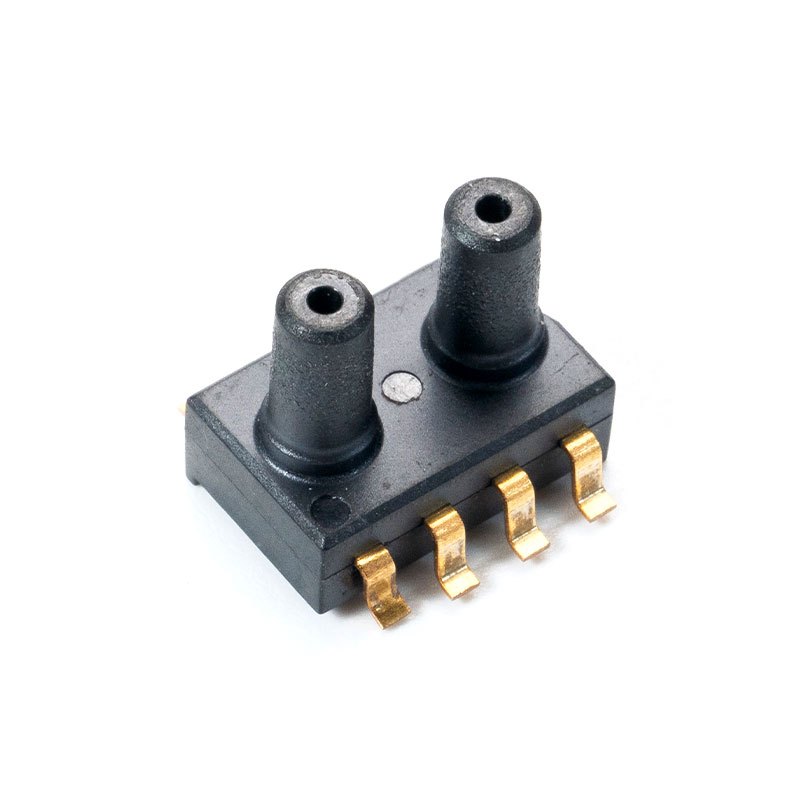
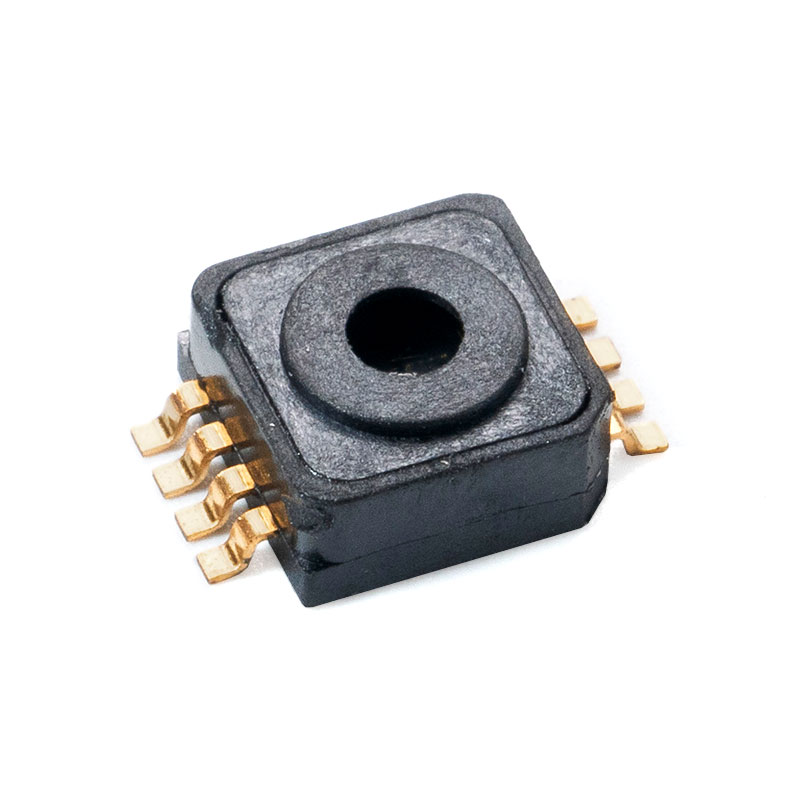
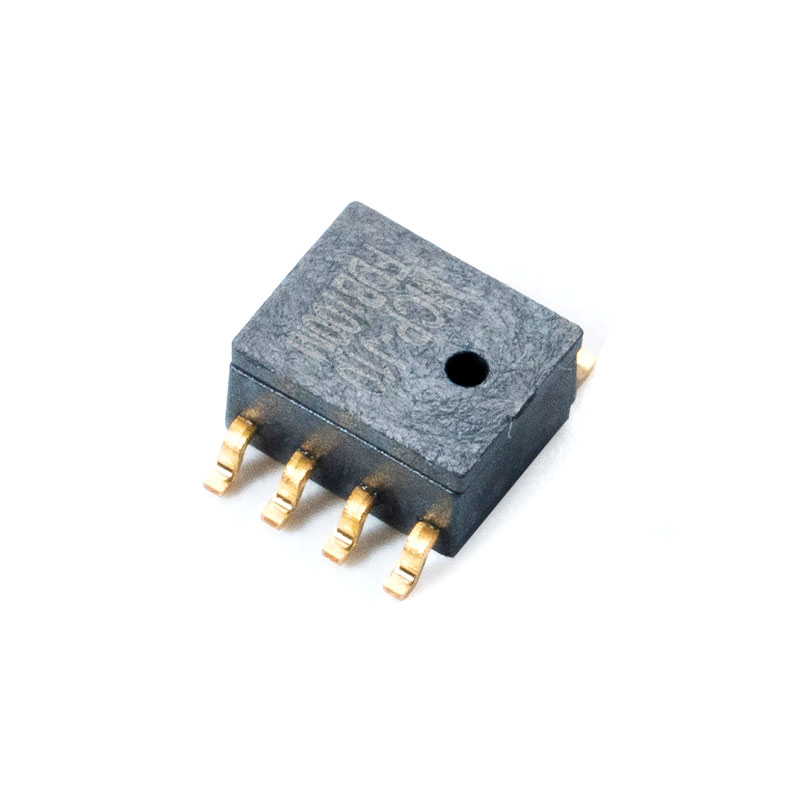

Mems Tech has specialized in the field of pressure sensors for over 14 years.
-
 [email protected]
-
 +86-18068257393
-
 50-1125 Zhongbang City Garden, No.2008 Taihu East Avenue, Xinwu District, Wuxi City, Jiangsu Province, China
Copyright © 2025 byWuxi Mems Tech Co., Ltd. Rights Reserved.
Custom MEMS Pressure Sensor Manufacturers
